

How to Clean Gutters Safely: 7 Essential Steps
Step-by-step guide to inspect, clear, flush, and repair gutters safely; includes tools, ladder tips, downspout fixes, and common mistakes.
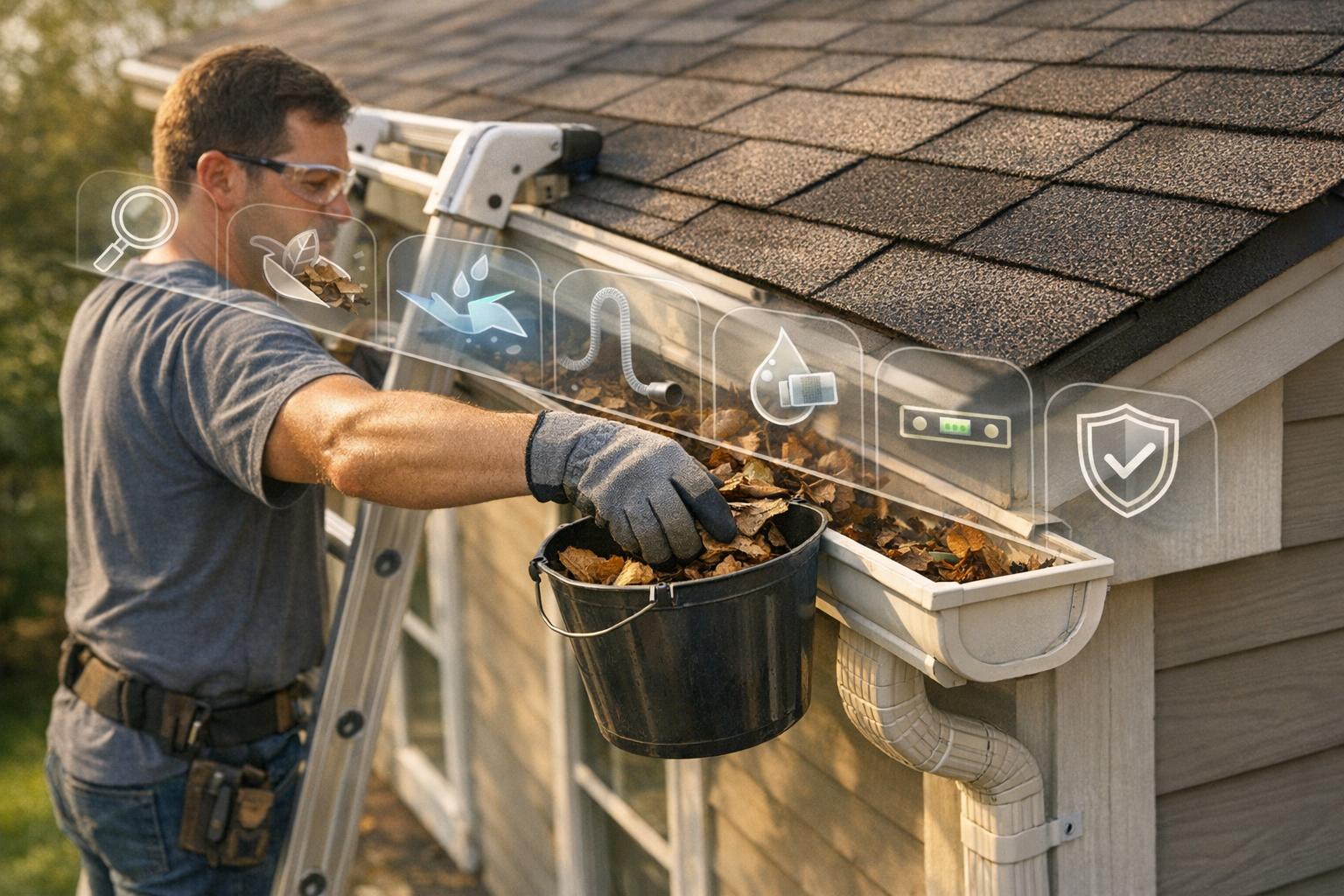
Cleaning your gutters is critical to protecting your home from water damage, pests, and costly repairs. A clogged gutter can lead to foundation issues, roof leaks, and even mold growth. This guide breaks down the process into seven simple steps to help you clean your gutters safely and efficiently.
Key Takeaways:
- Inspect first: Look for blockages, damage, or loose fasteners.
- Ladder safety: Use a stable, properly positioned ladder with a stabilizer.
- Clear debris: Use a plastic scoop and gloves to remove leaves and twigs.
- Flush gutters: Rinse with a garden hose to clear fine sediment.
- Unclog downspouts: Detach elbows or use a plumber’s snake if needed.
- Check alignment: Ensure proper slope and tighten loose hardware.
- Final check: Clean up debris and confirm proper water flow.
Tools You’ll Need:
- Extension ladder with stabilizer ($150–$450)
- Gutter scoop ($6–$15)
- Garden hose with spray nozzle ($15–$65)
- Work gloves ($15–$30)
- Safety goggles ($10–$20)
Tip: Clean gutters twice a year (spring and fall) or after heavy storms to prevent long-term damage. If heights or steep roofs make you uneasy, hire a professional.
Read on for detailed instructions and safety tips to keep your home protected.

7 Steps to Clean Gutters Safely: Complete Visual Guide
Best Way to Clean Gutters
sbb-itb-634c8b2
Tools and Safety Gear You'll Need
Having the right tools and safety gear on hand can help you avoid extra trips up and down the ladder and significantly reduce the risk of accidents.
Required Tools
Start with an extension ladder. If your home is one story with a roofline just under 11 feet, you'll need a ladder at least 13 feet long. For two-story homes with rooflines around 19 feet, a 26-foot ladder is necessary. These ladders typically cost between $150 and $450.
A ladder stabilizer is a smart addition. It keeps the ladder about a foot away from the wall, protecting your gutters and reducing the chance of slips. Stabilizers usually cost between $40 and $100.
You'll also need a plastic gutter scoop to clear out debris. These scoops are affordable, usually priced between $6 and $15. One popular option is the Amerimax 8300 Getter Gutter Scoop, which has a 4.2 out of 5 rating and fits standard K-style gutters perfectly. To manage the debris, use a bucket or lay down a tarp to keep it off your landscaping.
A garden hose with a high-pressure spray nozzle is essential for flushing out smaller debris and testing downspout flow. Garden hoses range from $15 to $65. To reduce your reliance on ladders, consider a telescopic extension pole. These poles can improve efficiency by up to 30% and cost between $30 and $60.
Once you've got these tools, make sure you're properly equipped with protective gear to keep yourself safe.
Protective Gear
Heavy-duty work gloves are a must for protecting your hands from sharp edges, bacteria, and mold. You can expect to spend about $15 to $30 on a good pair. Nitrile gloves are ideal for better dexterity and chemical resistance, while thick rubber gloves offer extra durability.
Protect your eyes with safety glasses or goggles, which cost around $10 to $20. These will shield you from falling debris and water splashes.
For secure footing, wear rubber-soled, non-slip shoes or boots to prevent slips and falls.
"Safety should always come first. Cleaning storm gutters involves more than just scooping out leaves; it requires balance, protective gear, and the right tools to ensure efficient and accident-free work." - Chad Soles, Horticulturist
Lastly, wear long sleeves, pants, and a dust mask to protect your skin from scrapes and guard against airborne allergens.
7 Steps to Clean Your Gutters Safely
Once your tools and gear are ready, it’s time to tackle the actual cleaning. These seven steps will guide you through the process, helping you work efficiently while reducing risks.
Step 1: Inspect Gutters Before You Start
Take a walk around your home to look for any blockages, damage, or loose fasteners in your gutters. Pay attention to signs like pooling water, stains, or erosion near your foundation. Check that downspouts are securely attached and direct water at least 6–10 feet away from your home. Clear the area around your work zone by removing obstacles and laying tarps to protect your landscaping. If you notice any problem areas, consider snapping a few photos to track changes over time. For best results, do this inspection twice a year - once in spring and again in fall - or after heavy storms.
Step 2: Position Your Ladder Safely
Set up your ladder on stable, level ground, following the 1:4 rule: for every four units of height, position the base one unit away from the wall. Attach a ladder stabilizer to keep a one-foot gap between the ladder and the wall, which protects your gutters and provides extra stability. If the ground is uneven, use a leveling mat or adjustable leg levelers. Stick to your ladder safety measures and avoid working in bad weather conditions like wind, rain, or ice.
Step 3: Remove Leaves and Large Debris
Put on your work gloves and use a plastic scoop to clear out leaves and other large debris. Start near the downspout and work your way inward. Drop the debris onto your tarp or into a bucket as you go. Keep your body centered between the ladder rails, and don’t overstretch - move the ladder if needed. To stay safe, take a break after about 30 minutes of continuous ladder work. Once the big stuff is cleared, use a garden hose to flush out finer sediment.
Step 4: Flush Gutters with Water
Grab a garden hose with a spray nozzle and rinse the gutters, starting at the end farthest from the downspout and working toward it. This helps wash away fine sediment and ensures water flows properly toward the drainage points.
"A regular garden hose with a spray nozzle is strong enough in most cases." – This Old House
If you spot stubborn sediment, use a stiff-bristle brush to scrub it away. After rinsing, check for any blockages in the downspouts and clear them out.
Step 5: Clear Blocked Downspouts
Flush out downspouts by running water from the top using your garden hose. If water doesn’t drain easily, detach the gutter elbow and remove any clogs. For tougher blockages, try a plumber’s snake or backfeed the hose. Make sure water exits at least 6–10 feet from your foundation to protect your home.
Step 6: Check Gutter Pitch and Hardware
As water flows through the gutters, check the alignment and hardware. Gutters should slope about 1/4 inch for every 10 feet toward the downspouts. Tighten any loose fasteners and seal leaks right away. Well-maintained gutters can last at least 20 years, but high-quality materials with proper care can extend their lifespan up to 100 years. Fixing small issues now can save you from costly repairs down the road. If repairs aren’t enough, replacing gutters can range from $4 to $30 per linear foot.
Step 7: Clean Up and Do a Final Check
Dispose of the debris you’ve collected and remove any tarps from your landscaping. Finally, do a ground-level check to ensure everything is securely in place and draining properly.
Mistakes to Avoid When Cleaning Gutters
Even with the right tools and safety precautions, being aware of common mistakes can help you clean your gutters more effectively and safely. Here are some pitfalls to steer clear of during the process.
Overreaching or Using an Unstable Ladder
Stretching too far while on a ladder is a serious safety risk. Many homeowners try to save time by leaning beyond the ladder's rails instead of moving it, which can throw off their balance and lead to accidents.
"Avoid leaning too far to the side; instead, climb down and move your ladder frequently to maintain a centered and secure stance." – Chad Soles, Horticulturist
Always keep your hips between the ladder rails. If you can't reach a section, climb down and reposition the ladder as described earlier. Make sure your ladder is placed on firm, level ground, and avoid using things like bricks or boards to stabilize it on uneven surfaces. These quick fixes can make the ladder unstable and increase the risk of tipping.
Using Metal Tools That Damage Gutters
While metal tools might seem sturdy, they can cause unintended damage. They can scratch protective coatings, dent the gutters, or even puncture roofing materials. Over time, these small damages can lead to rust, corrosion, and expensive repairs.
"Don't use metal scoops or tools. They can scrape and dent your gutters." – Mitch Owens, Roofing Expert, RoofCrafters
Opt for plastic gutter scoops or garden trowels that fit the shape of your gutters. For tough debris, use a stiff-bristled brush made of non-metal materials, especially for aluminum gutters, to avoid unnecessary damage.
Cleaning in Bad Weather
Bad weather makes gutter cleaning much more hazardous. Rain and wind can destabilize your ladder, and cold temperatures can make surfaces slippery or freeze debris, turning it into a safety hazard.
"Plan to clean out clogged gutters on a day when the temperature outside is above freezing and the sun is shining." – Timothy Dale, Home Repair Expert
Choose a clear, dry day when the roof and gutters are completely dry. If the temperature is above freezing, you'll avoid ice hazards and make it easier to remove debris. Moisture not only makes debris heavier but also increases the risk of slipping.
Forgetting to Check Downspouts
Clearing the gutter trough is only part of the job. Blocked downspouts can stop water from draining properly, leading to overflows that can damage your foundation or landscaping. This step, which is covered in Step 5, is often overlooked.
If water isn't draining, detach the gutter elbow and use a plumber's snake to remove the blockage. Ensure the water flows at least 6–10 feet away from your home's foundation to keep it protected. Ignoring this step can undo all your hard work and lead to bigger issues down the line.
Conclusion
To clean your gutters safely, follow a clear process: inspect the gutters, secure your ladder properly, remove debris, flush with water, clear the downspouts, check the hardware, and finish with a thorough inspection. This step-by-step approach helps protect you and keeps your gutter system working efficiently for years to come.
Regular gutter cleaning is key to preventing issues like foundation cracks, flooding, roof damage, and pest infestations. Aim to clean your gutters at least twice a year - once in late spring and again in late fall - or more frequently if your home is surrounded by trees. Sticking to this schedule can save you from costly repairs that typically range from $2,300 to $6,000.
"Regular gutter cleaning enhances your home's curb appeal, maintains essential home systems, and helps prevent expensive repairs." – Stephanie Minasian-Koncewicz, Digital Content Strategist, This Old House
If your home has multiple stories, a steep roof, or if you're uneasy with heights, consider hiring professionals. For residents in Rhode Island and Connecticut, Downspout Services offers expert cleaning, following safety protocols and using specialized equipment to handle even the most challenging jobs.
FAQs
How do I know my gutters need cleaning?
If you see water overflowing during rainstorms, sagging parts of your gutters, or stains on your home's exterior, it might be time to clean your gutters. Other warning signs include plants sprouting in the gutters, nests from birds or pests, or water spilling over the sides. Keeping an eye out for these problems can help you avoid costly water damage and foundation issues caused by clogged or debris-filled gutters.
Can I clean gutters without climbing a ladder?
Yes, cleaning gutters from the ground is possible with the right tools. You can use options like garden hoses with spray attachments, telescopic gutter cleaning tools, or even leaf blowers and vacuums equipped with specific extensions. These tools allow you to clear out debris effectively while staying safely on the ground, eliminating the risks that come with climbing ladders. Just make sure to follow the instructions for your tools to ensure proper and safe use.
When should I hire a professional for gutter cleaning?
If you spot overflowing water, sagging gutters, leaks, or stains on your home, it’s time to call in a professional. Gutter cleaning should ideally be done twice a year, typically in spring and fall. However, if your home is surrounded by trees, you may need more frequent cleanings to keep everything clear and functional.
Professionals not only clean your gutters but also check for issues like cracked seams or loose fasteners. Plus, they can handle the job safely - especially if working from a ladder or the ground feels unsafe for you.
.jpg)