Best Gutter Materials for Rhode Island Homes
Aluminum fits most Rhode Island homes; copper resists salt air, vinyl is cheapest, and galvanized steel adds strength but needs more upkeep.
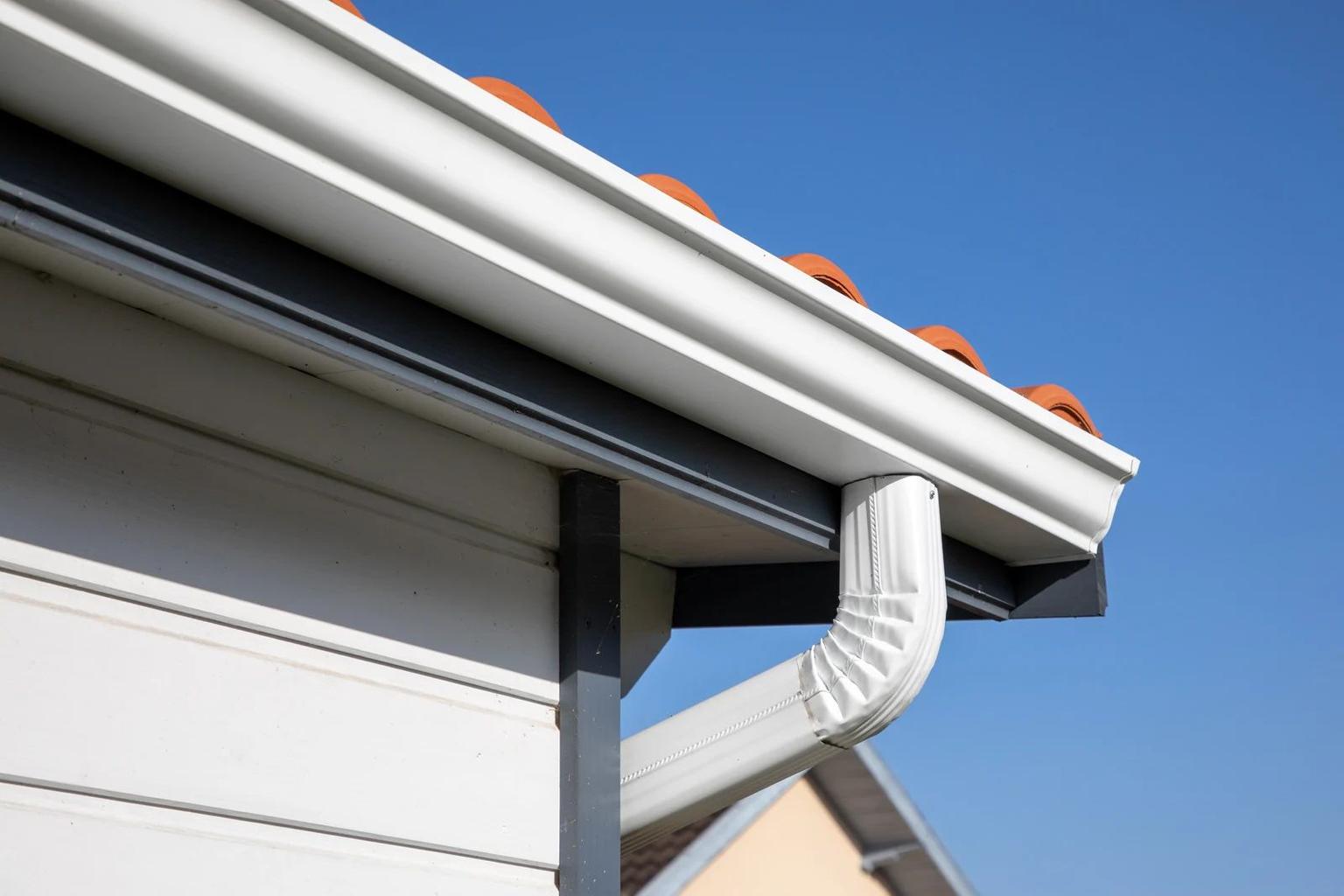
The short answer: aluminum is the best fit for most Rhode Island homes, copper is the top pick near the coast, vinyl is the low-cost choice with the shortest life, and galvanized steel is for homeowners who want more strength and can handle more upkeep.
Rhode Island weather is hard on gutters. Homes here get about 47 inches of rain a year, plus nor'easters, salt air, ice, snow load, and freeze-thaw swings. That means the cheapest gutter material can cost more later if it fails early.
Here's the breakdown in plain English:
- Aluminum: best overall for many inland homes; fair price; usually lasts 20 to 30 years
- Copper: best for coastal homes and long-term use; high upfront cost; can last 50 to 150 years
- Vinyl: lowest upfront cost; more likely to crack in Rhode Island winters; often lasts 10 to 15 years
- Galvanized steel: stronger under snow and ice; more rust risk, especially near salt air; often lasts 20 to 25 years inland
What matters most when picking a gutter material:
- Climate durability
- Lifespan
- Upkeep
- Installed cost
Quick rule of thumb: if you live near the water in places like Newport, Bristol, or Barrington, lean toward copper first and aluminum second. If you live inland in places like Providence or Smithfield, aluminum is usually the better middle ground on price and service life.
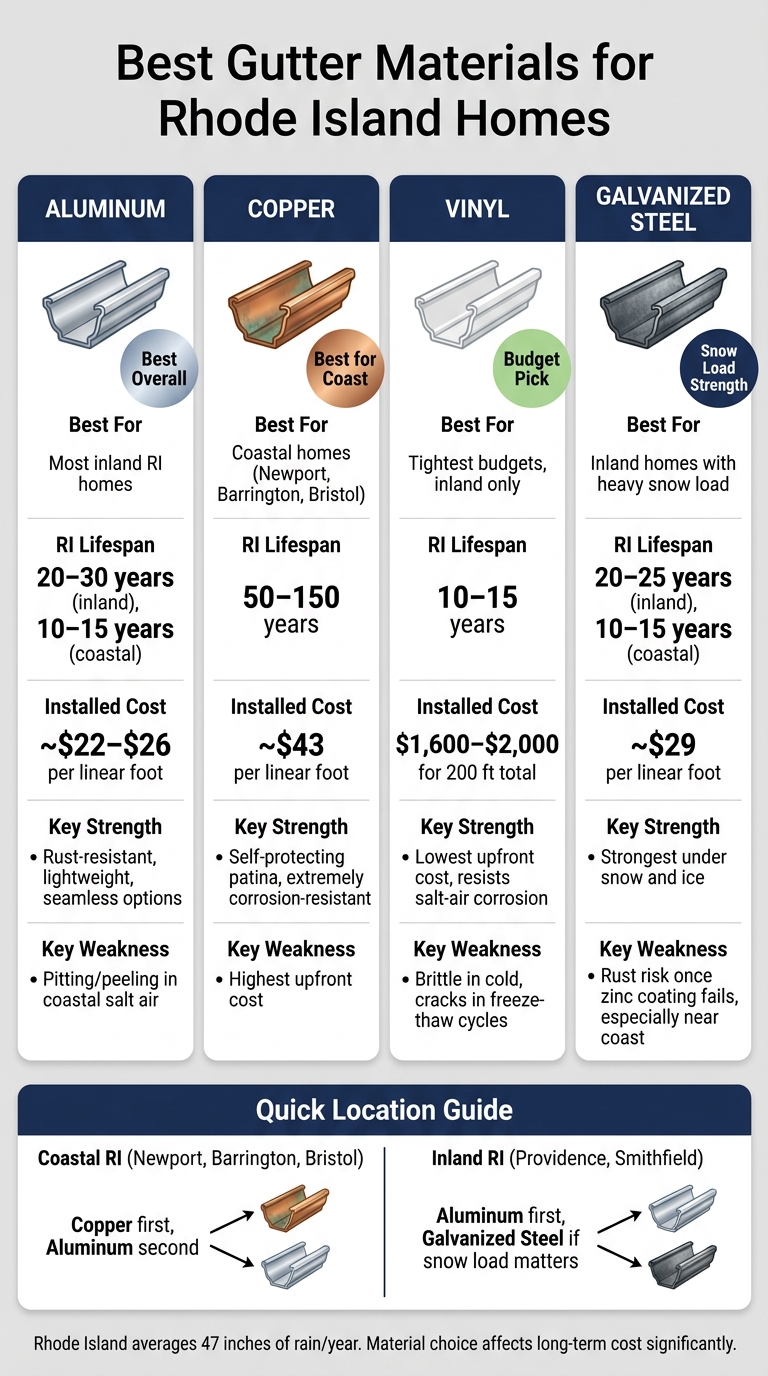
Best Gutter Materials for Rhode Island Homes: Side-by-Side Comparison
What Are The Best Gutters For Your Home? | Cost, Material, Styles and More
sbb-itb-634c8b2
Quick Comparison
| Material | Best For | Main Problem in RI | Typical RI Lifespan | Typical Cost |
|---|---|---|---|---|
| Aluminum | Most inland homes | Salt-air wear near the coast | 20–30 years | About $22–$26/lf installed |
| Copper | Coastal homes, long-term owners | High upfront price | 50–150 years | About $43/lf installed |
| Vinyl | Tight budgets | Cracking in cold weather | 10–15 years | About $1,600–$2,000 for 200 ft |
| Galvanized Steel | Snow-load strength | Rust after coating wear | 20–25 years inland | About $29/lf installed |
So if you want the shortest version: most people should choose aluminum, coastal homeowners should look hard at copper, and vinyl only makes sense when price is the main concern.
1. Aluminum Gutters
Aluminum is the most practical all-around gutter material for many Rhode Island homes. It’s light, resists rust, and works well in the state’s weather. It also holds up in freezing temperatures and does a better job against rust than coated steel.
RI Climate Durability
Aluminum deals well with Rhode Island’s freeze-thaw cycles and heavy rain. Near the coast, though, things get trickier. Salt air can cause pitting, which is a form of localized corrosion that can blister paint and wear down the finish over time.
This often starts at the weak spots: miters, end caps, and raw cut edges.
There are two smart ways to lower that risk:
- Use 0.032-inch aluminum
- Choose a seamless system to cut down on joints
For coastal installs, steel fasteners and aluminum gutters are a bad mix. Salt water can act as an electrolyte between the two metals, which leads to galvanic corrosion and can eat away at the system from the inside out.
Lifespan
Inland, aluminum gutters usually last 20 to 30 years. Seamless aluminum can stretch that to 25 to 30+ years with steady upkeep. Along the coast, standard aluminum systems often need replacement much sooner, often after 10 to 15 years.
| System Type | Inland Lifespan | Coastal Lifespan (RI) |
|---|---|---|
| Sectional Aluminum | 20–25 years | 10–15 years |
| Seamless Aluminum | 25–30+ years | 15–20 years |
Maintenance
Plan for residential gutter cleaning in late fall and early spring. After nor'easters, check for sagging, loose downspouts, and bent sections. If the home is close to the water, an occasional rinse with fresh water can help remove salt crust and protect the finish.
Cost
In Providence, RI, installed pricing is about $22 per linear foot for sectional aluminum and $26 per linear foot for seamless aluminum. For a typical 200-foot install, total cost usually lands around $3,200 to $4,400, including labor.
Minor repairs, such as a leaky joint or a loose bracket, usually run $100 to $500. That gives aluminum a strong price-to-life ratio for a lot of Rhode Island homes.
If aluminum is the practical baseline, copper is the premium option to compare next.
2. Copper Gutters
Copper is the premium pick for Rhode Island homeowners who want gutters that are built to last. The upfront cost is high, no way around it. But over time, copper forms a protective patina that helps it stand up to corrosion in both coastal and inland parts of the state.
Compared with aluminum, copper costs more at the start. But in Rhode Island’s coastal climate, it tends to deliver better long-term performance.
RI Climate Durability
Copper does not rust. In Rhode Island, it oxidizes into a protective patina that helps it resist salt air, rain, and corrosion.
That’s a big deal in coastal towns like Barrington, Bristol, and Warren. Copper holds up well against salty air, high winds, and frequent storms. And if the surface gets scratched, the oxidation process can rebuild that protective layer.
It also performs well in winter. Soldered seams create a watertight system that handles freeze-thaw cycles better than sealant-based joints.
One thing you can’t ignore: never mix copper with aluminum or steel fasteners. Direct contact can trigger galvanic corrosion.
Lifespan
Copper gutters can last 50 to 150 years with proper maintenance. Custom copper flashing and gutters can stay functional for 75+ years when they’re professionally detailed and soldered.
Maintenance
Copper gutters should be cleaned twice a year to prevent debris buildup and ice dams.
Cost
Copper is the most expensive gutter material. In Rhode Island, copper gutters usually cost $25 to $40+ per linear foot for materials. In the Providence market, installed pricing is about $43 per linear foot.
For a large home in Providence, a high-end copper installation can range from $7,666 to over $16,289.
| Install Scope | Estimated Cost (RI) |
|---|---|
| 200-ft standard install | $10,000+ |
| Large home in Providence | $7,666–$16,289+ |
| Per linear foot (installed) | ~$43 |
That puts copper squarely in the premium tier. It makes the most sense for historic homes and waterfront properties where long service life matters most.
3. Vinyl Gutters
Vinyl is the cheapest gutter option for Rhode Island homes. The catch is simple: the low price usually comes with a shorter life span in freeze-thaw weather.
RI Climate Durability
In Rhode Island, vinyl struggles more with temperature swings than with salt air. Freeze-thaw cycles make the material expand and contract, and that movement can strain sectional joints until they separate and leak. On top of that, UV exposure makes vinyl brittle. Once that happens, it’s more likely to crack during nor'easters or pull loose under snow and ice.
Local roofers see this all the time in New England. They report that vinyl often turns brittle, sags, and leaks at sectional joints in cold weather.
Vinyl does resist salt-air corrosion, which helps near the coast. But Rhode Island’s winter stress still makes it a poor long-term pick for many homes.
Lifespan
In Rhode Island’s climate, vinyl gutters usually last 10 to 15 years. That’s less than aluminum and nowhere near copper.
When cracking, sagging, or seam separation shows up across the system, patching often doesn’t do much for long. Brittle vinyl doesn’t hold repairs well, so full replacement is often the better move.
Maintenance
Vinyl should be cleaned at least twice a year. Leaves and debris add weight to the troughs, while standing moisture puts more stress on the material when freezes hit.
After major storms, check for:
- Sagging sections
- Loose fasteners
- Joints pulling away from the fascia
These are common trouble spots and worth catching early.
Cost
Vinyl is the entry-level option. In Rhode Island, material costs run $3 to $5 per linear foot, and labor averages about $10 per linear foot. For a standard 200-foot installation, total cost usually lands between $1,600 and $2,000.
| Install Scope | Estimated Cost (RI) |
|---|---|
| Material only (per linear foot) | $3–$5 |
| Labor (per linear foot) | ~$10 |
| Total 200-ft installation | $1,600–$2,000 |
That low upfront price is the main selling point. The trade-off is earlier replacement. Vinyl makes the most sense for short-term needs or a tight budget. If you want more strength, galvanized steel is the next material to compare.
4. Galvanized Steel Gutters
Galvanized steel stands out for one big reason: strength. It handles heavy snow loads and ice dam pressure better than aluminum or vinyl , though they still require regular roof cleaning to prevent debris buildup, which makes it look like a solid match for Rhode Island winters.
But there’s a catch. Its weak point is long-term wear, mainly after the zinc coating starts to give out.
RI Climate Durability
Galvanized steel gutters depend on a thin zinc coating to keep rust away. Along the Rhode Island coast, salt air eats through that layer faster than it does farther inland. Once that coating is damaged, the steel underneath can start to oxidize fast.
Even a small scratch or chip can expose bare steel and get rust going.
There’s another issue too: galvanized steel should never touch copper flashing directly. When those two metals meet, corrosion can start at the contact point.
So while galvanized steel scores well on raw strength, it’s not as strong when it comes to long-term use near the coast.
Lifespan
Under normal conditions, galvanized steel gutters usually last 20 to 25 years. In coastal Rhode Island, that range drops to 10 to 15 years.
Maintenance
Plan to clean galvanized steel gutters twice a year and check them after nor'easters. If you spot rust or peeling paint, that usually means the coating has started to fail.
You can prime and repaint the gutters to help them last longer, but that means more upkeep, more time, and more money over the years.
Cost
Material costs range from $9 to $20 per linear foot, and the average installed price in Providence is about $29 per linear foot.
| Cost Factor | Galvanized Steel (RI) |
|---|---|
| Material (per linear foot) | $9–$20 |
| Installed cost (Providence) | ~$29/lf |
| Repair (RI average) | $100–$500 |
This option tends to fit homeowners who care more about strength than easy upkeep. That trade-off becomes clearer in the pros-and-cons summary below.
Pros and Cons of Each Gutter Material
Here’s the short version: the best gutter material comes down to budget, coastal exposure, and how much upkeep you can live with. Some options cost less up front but wear out faster. Others cost more now and save you trouble later.
Here’s the fastest way to compare them:
| Material | Key Strengths | Key Weaknesses | Typical RI Lifespan | Material Cost per Linear Foot |
|---|---|---|---|---|
| Aluminum | Rust-resistant, lightweight, widely available in seamless form | Can pit and peel in high-salinity coastal air | 20–30 years | $6–$12 |
| Copper | Extremely corrosion-resistant, self-protecting patina, low maintenance | High upfront cost, requires compatible fasteners | 50–150 years | $25–$40+ |
| Vinyl | Cheapest option, resists salt-air corrosion | Brittle in cold temps, cracks under UV exposure and freeze-thaw cycles | 10–15 years | $3–$5 |
| Galvanized Steel | Very strong against snow loads and dents | Coating can fail if scratched; rust can follow quickly in salty air | 20–25 years | $9–$20 |
A few points matter here that basic side-by-side charts often miss.
Vinyl looks cheap at first, and that’s the appeal. But Rhode Island winters can make it brittle, and once freeze-thaw cycles start doing their thing, cracking becomes a real risk. In many cases, the bigger cost isn’t upkeep labor. It’s having to replace the system sooner.
Copper is the opposite story. The up-front price is steep, no way around it. But that higher cost can make sense over time, especially near the coast, where durability matters more than bargain pricing.
Aluminum lands in the middle. It’s affordable, rust-resistant, and a practical fit for most homes. That’s why so many homeowners end up here.
Galvanized steel brings strength, which can help with snow loads and impact resistance. The catch is salt air. If the coating gets scratched or starts to fail, rust can move in fast.
With those trade-offs in mind, the next step is figuring out which material fits your home’s location and your budget.
Which Gutter Material Is Right for Your Rhode Island Home?
Pick your gutter material based on where you live, how long you want it to last, and what you want to spend.
For coastal homes in Newport, Narragansett, Barrington, and similar areas, copper is the best long-term pick. Salt air is tough on materials, and copper holds up better over time. If you want a lower-cost option, aluminum is the fallback.
For inland homes in Providence, Smithfield, and similar areas, aluminum is the go-to choice. It gives most homeowners a solid middle ground on cost and lifespan. Galvanized steel makes more sense only if handling snow load matters more to you than the extra upkeep.
Vinyl works only for the tightest budgets. It doesn't rust, which sounds good at first. But Rhode Island's freeze-thaw cycles and UV exposure can make it brittle, so cracking is a common problem.
| Your Situation | Best Fit |
|---|---|
| Coastal property, long-term investment | Copper |
| Most inland homes, balanced budget | Aluminum |
| Inland, heavy snow, willing to maintain | Galvanized Steel |
| Tightest upfront budget, inland location | Vinyl |
One more thing: never mix copper with aluminum or steel components. That can lead to galvanic corrosion and damage the gutter system fast.
For a quote matched to your home's layout and material, schedule a gutter installation assessment with Downspout Services.
FAQs
How do I know if my home counts as coastal?
A coastal area usually means any spot within 50 miles of the shoreline. In Rhode Island, salt air in that zone can speed up corrosion and cut the life of some gutter materials.
Not sure how much your home is affected? A professional gutter technician can inspect your property and recommend the best material for your location.
Are seamless gutters worth the extra cost?
Yes. For Rhode Island homes, seamless gutters are often a smart investment because they cut down on leaks and weak points by removing joints, which are a common source of trouble.
They also tend to perform better in heavy rain, snow, and repeated freeze-thaw cycles than sectional gutters. On top of that, they need less upkeep and can help protect your home’s foundation and siding over time.
Which gutter material adds the most home value?
Copper adds the most home value thanks to its long lifespan, classic look, and high-end architectural appeal.
It costs more upfront, but copper holds up for the long haul. It resists corrosion in Rhode Island’s coastal salt-air conditions and can last up to 100 years. That long life, paired with its polished, upscale appearance, can also help support resale value over time.
Related Blog Posts
Heading 1
Heading 2
Heading 3
Heading 4
Heading 5
Heading 6
Lorem ipsum dolor sit amet, consectetur adipiscing elit, sed do eiusmod tempor incididunt ut labore et dolore magna aliqua. Ut enim ad minim veniam, quis nostrud exercitation ullamco laboris nisi ut aliquip ex ea commodo consequat. Duis aute irure dolor in reprehenderit in voluptate velit esse cillum dolore eu fugiat nulla pariatur.
Block quote
Ordered list
- Item 1
- Item 2
- Item 3
Unordered list
- Item A
- Item B
- Item C
Bold text
Emphasis
Superscript
Subscript