Should You Cover Your Deck for Winter in Rhode Island?
Don't cover your deck all winter in Rhode Island—seal wood, clear gaps, remove snow, and avoid season-long tarps.
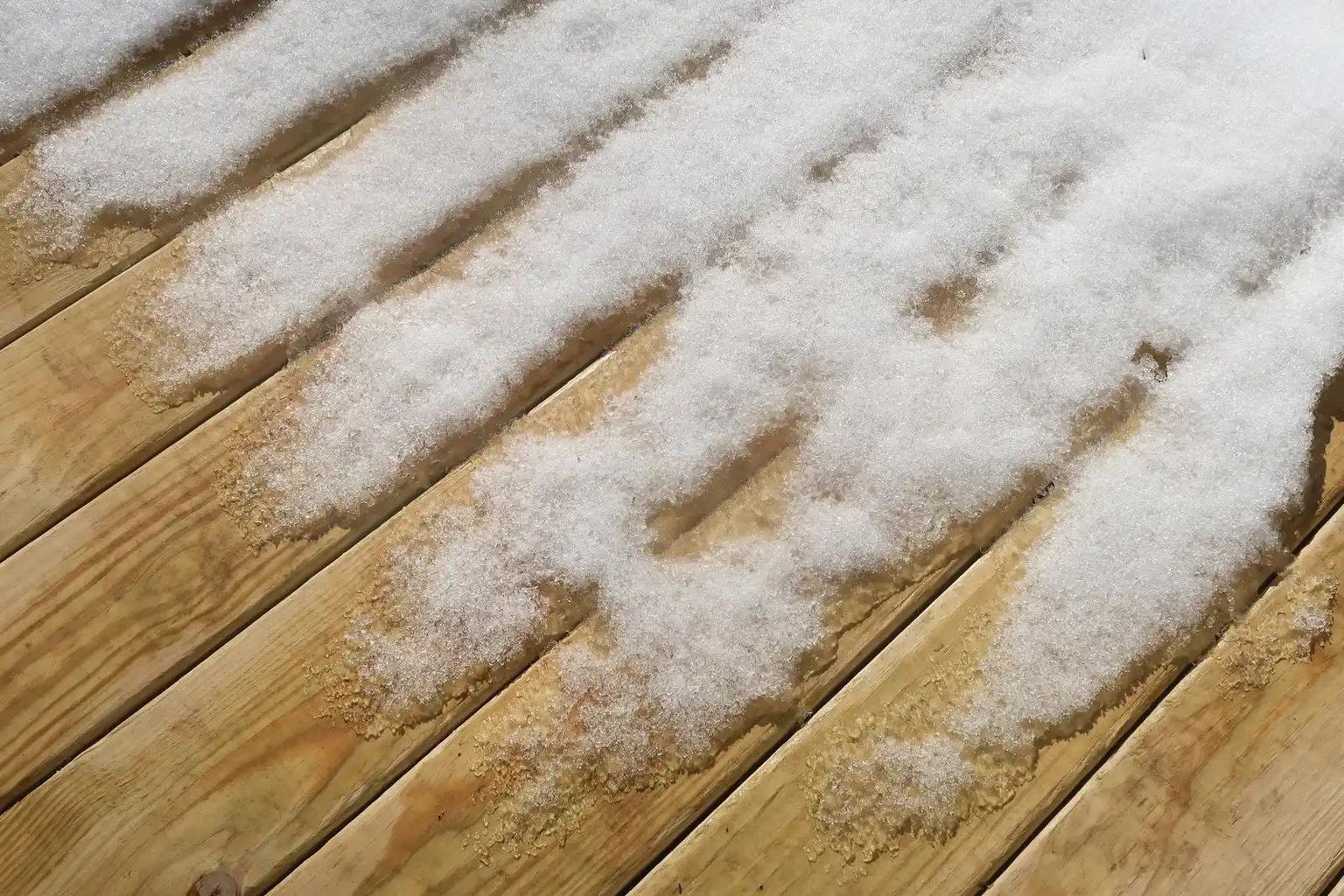
In most cases, no - your deck should not be covered all winter in Rhode Island. A tight tarp often traps moisture, which can lead to mold, rot, stained boards, and more wear from freeze-thaw cycles.
Here's the short answer:
- Most decks do better uncovered
- Short-term covers can help during a major storm on unsealed wood decks
- Season-long tarps usually cause more problems than they stop
- Snow removal, drainage, sealing, and gutter cleanup matter more than full coverage
- Composite decks usually do not need a cover
- Wood decks need airflow, clean board gaps, and water protection before the first freeze
Rhode Island winters bring 30–40 inches of snow a year in many areas, and some decks in the Providence area may face 200+ freeze-thaw cycles per year. Add coastal salt air and heavy wet snow, and the main risk becomes clear: water that sits too long. A deck and patio cleaning before the first freeze clears out the trapped moisture and debris in board gaps that tarps tend to seal in instead of keeping out.
Fall Deck Care Checklist: Protect Your Deck for Winter
sbb-itb-634c8b2
Quick Comparison
| Deck type | Full winter cover | Short-term storm cover | Main winter focus |
|---|---|---|---|
| Pressure-treated wood | No | Yes, if unsealed | Seal, drain, clear snow |
| Cedar | No | Rarely | Airflow, reseal, keep dry |
| Composite | No | Usually not needed | Safe snow removal, approved ice melt |
If you want the simple rule, it’s this: keep your deck dry, open, and able to drain. That usually protects it better than wrapping it in plastic for months.
How Rhode Island Weather Affects the Winter Cover Decision
A tarp seems like the easy answer before the first snowfall. But in Rhode Island, the bigger issue usually isn’t the cold itself. It’s moisture that gets trapped and has nowhere to go. That’s why drainage often matters more than full coverage.
Freeze-Thaw Moisture Does More Damage Than Cold Exposure
Here’s what happens all winter long: snow melts during a mild afternoon, water slips into cracks and wood pores, and then nighttime temperatures drop. That water freezes. Over time, those freeze-thaw cycles can crack boards, lift the grain, and loosen fasteners.
A solid plastic tarp doesn’t stop that cycle. In some cases, it makes things worse. If a tight cover holds moisture against the deck surface and blocks airflow, it can create the kind of damp conditions where mold, mildew, and rot start to grow. A deck that stays open, drains well, and dries out between storms is often in better shape by spring than one that spent the season sealed under plastic.
Snow Load and Drainage Are a Concern on Older Decks
Heavy, wet snow is a different issue altogether. A single cubic foot of wet snow can weigh up to 20 pounds. And Rhode Island gets plenty of it, averaging 30–40 inches of snow each year, with northern parts of the state seeing even more.
Older decks tend to have the most trouble when that heavy snow sits on the surface and keeps the wood soaked. The problem isn’t just the weight. Packed snow also slows drainage, and that mix of water and extra load can speed up board failure and structural damage. If your deck has low spots where water pools, or if the gaps between boards are clogged with debris, clearing those gaps before winter will usually do more good than covering the entire surface.
The right winter plan depends on whether your deck is pressure-treated wood, cedar, or composite decking.
Deck Material Matters: Different Winter Care for Pressure-Treated, Cedar, and Composite
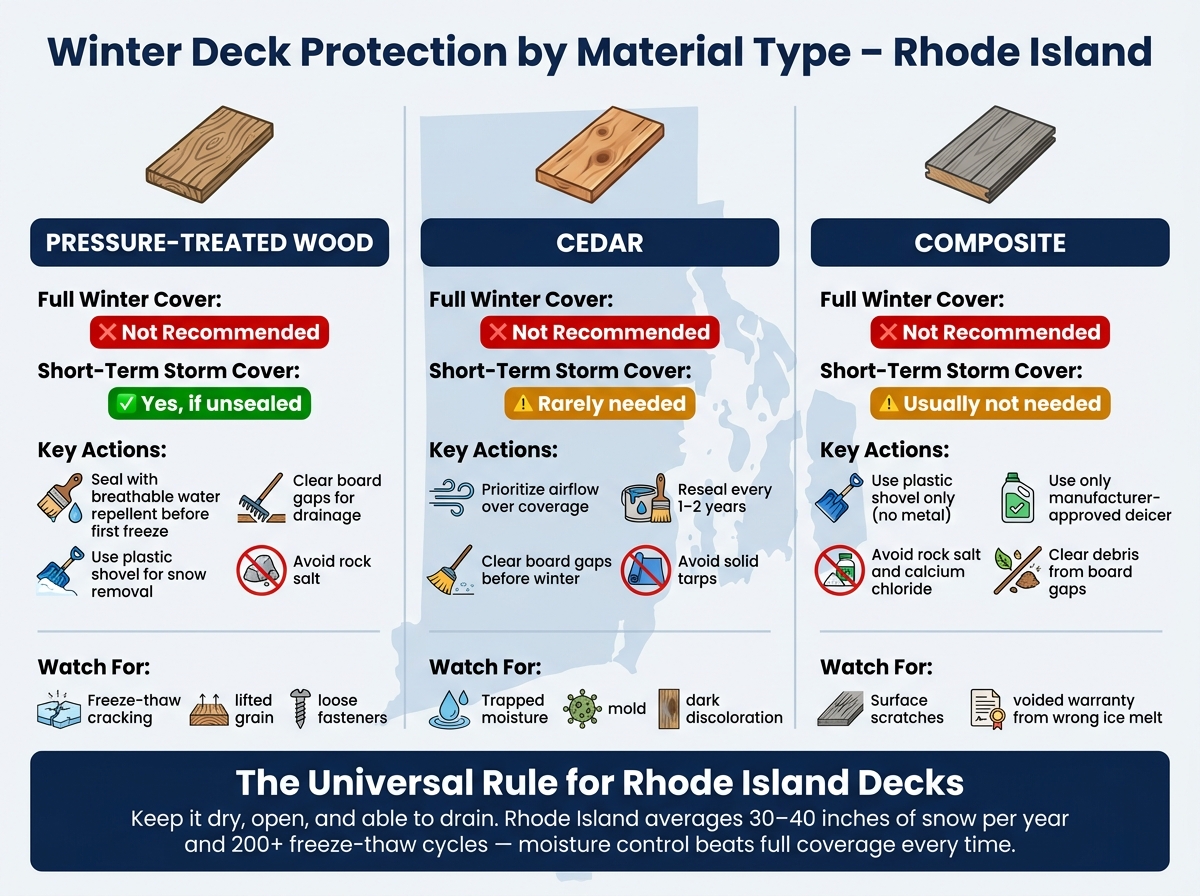
Winter Deck Cover Guide by Deck Type – Rhode Island
Your deck material changes the whole equation. A winter cover might help one deck and cause problems for another. So the better way to think about it isn't just winter vs. no winter cover. It's what the deck is made of.
Pressure-Treated Wood: Seal, Drain, and Skip the Tight Tarp
Pressure-treated wood still expands and contracts with repeat cycles of moisture and freezing. Because of that, sealing and drainage matter more than wrapping the deck up.
Seal it in the fall with a breathable water repellent before the first freeze. A simple test works here: if water soaks into the wood instead of beading on top, it's time to reseal. Also, keep the gaps between boards clear so melting snow and ice can drain off instead of sitting on the surface.
A tight tarp sounds like protection, but it often does the opposite. It can hold in dampness right where you don't want it.
Cedar: Airflow Usually Beats Full Plastic Covering
Cedar does better with airflow than with a tight plastic cover. The main issue is trapped moisture. When damp air gets stuck under a cover, mold and mildew can follow.
That trapped moisture can also lead to dark discoloration, and on cedar, that's often harder to fix than it is to prevent. Before winter, clear out the board gaps, avoid solid tarps, and reseal the wood every 1–2 years.
With cedar, air movement usually matters more than full coverage.
Composite: Winter Covers Are Usually Not Needed
Composite decks usually don't need a winter cover at all. The bigger job is handling snow and ice the right way.
Use a plastic shovel, not a metal one, so you don't scratch the surface. And avoid rock salt or calcium chloride unless the manufacturer says those products are okay to use. For most composite decks, a cover is extra hassle without much payoff.
The one exception is short-term storm protection. Outside of that, a cover is usually unnecessary.
The next piece is figuring out the small set of cases where a cover helps - and when it ends up trapping more moisture than it keeps out.
When a Winter Deck Cover Helps and When It Causes Problems
A winter deck cover makes sense in very limited cases. It mostly comes down to your deck material and how much moisture it’s likely to deal with.
Short-Term Storm Protection Can Make Sense
If you have an unsealed wood deck and a major nor'easter is headed for Rhode Island, a temporary cover can help shield the surface from wind-blown debris. The key word here is temporary. Put the cover on before the storm, then take it off as soon as the storm passes.
Once the weather clears, it’s usually better to leave the deck uncovered so it can dry out.
Season-Long Tarping Often Creates Moisture and Mold Problems
That small exception aside, season-long tarping is usually the bigger issue. A tight plastic tarp stretched over a deck all winter often does more harm than good. It can trap condensation, lead to rot and mold, and even stain deck finishes.
A well-maintained deck is meant to handle direct weather exposure. What it’s not meant to do is sit under damp, trapped air for months.
Here’s the simple version:
- Open deck: best airflow
- Short-term cover: only for storm debris on unsealed wood
- Season-long tarp: not recommended
Better winter protection usually comes from snow removal, safer ice control, and making sure runoff keeps moving off the deck.
Winter Deck Protection Steps That Matter More Than Covering
If you skip a deck cover for winter, put your attention on snow, ice, and runoff. That’s where the bigger problems start. A smarter winter plan comes down to snow removal, traction, and drainage.
Snow Removal and Ice Melt Choices Can Protect or Damage Your Deck
How you clear snow matters just as much as when you clear it. Use a plastic shovel or broom, and push with the grain of the boards. Push across the grain, and you’re more likely to catch board edges and cause splintering, especially on softer woods like pressure-treated lumber and cedar.
Skip rock salt on decks. It can dry out wood fibers and corrode metal fasteners fast. That’s a serious issue in coastal Rhode Island, where salt air already speeds up rust. Sand is the safest traction aid for all deck types. If you have a composite deck, use only manufacturer-approved deicer, and use it lightly.
It also helps to clear debris from between the boards before the first snow. Packed leaves and pine needles hold moisture against the wood all winter. That kind of long-term dampness is exactly what leads to rot and mold growth.
The same idea applies above the deck too: keep water moving away from the house.
Pre-Winter Deck Maintenance with Downspout Services
Even a clean deck can run into trouble if gutters and downspouts send water back onto it. When gutters clog, they can overflow onto the deck surface and the ledger board. That can create repeat ice patches and freeze-thaw stress right where the deck connects to the house. It’s one of the most damaging winter issues, and one of the easiest to prevent.
Getting gutters and downspouts cleaned before winter helps keep runoff off the deck and away from the ledger board. On cedar, a pre-winter deck washing can remove mildew that holds moisture against the wood. Downspout Services offers pre-winter deck cleaning, cedar wash, and gutter cleaning for Rhode Island homeowners. Those services help cut down moisture around the deck before freeze-thaw season starts.
FAQs
How do I know if my deck needs resealing before winter?
Check the finish first and see how the wood reacts to moisture. If the stain is peeling or flaking, or water sinks in right away instead of beading on the surface, the protective layer is probably wearing down.
Next, look for discolored areas or soft spots. Those can point to rot or moisture damage. If the finish looks thin, or it’s been 1 to 2 years since the deck was last sealed, resealing in the fall is a smart move.
What kind of tarp is safest for short-term storm protection?
None. A tarp isn’t recommended for winter deck protection because it can trap moisture, block airflow, and create the kind of damp setup that leads to mold, mildew, and rot.
For short-term storm protection, focus on proper deck prep, good drainage, and snow removal with a plastic shovel to help avoid surface damage.
When should you remove snow from your deck in Rhode Island?
Remove snow from your deck when buildup gets heavy or when it sits long enough to hold moisture against the wood.
Use a plastic shovel and push in the same direction as the deck boards. For a light layer of snow, a broom works well.
Stay away from:
- Metal shovels
- Ice chippers
- Salt
- Harsh ice-melt chemicals
Those can scratch the surface or wear away protective sealants.