How to Clear a Blocked Downspout in Rhode Island
Step-by-step guide to locating and clearing downspout blockages in Rhode Island — hose tests, snaking, elbow removal, and when to call pros.
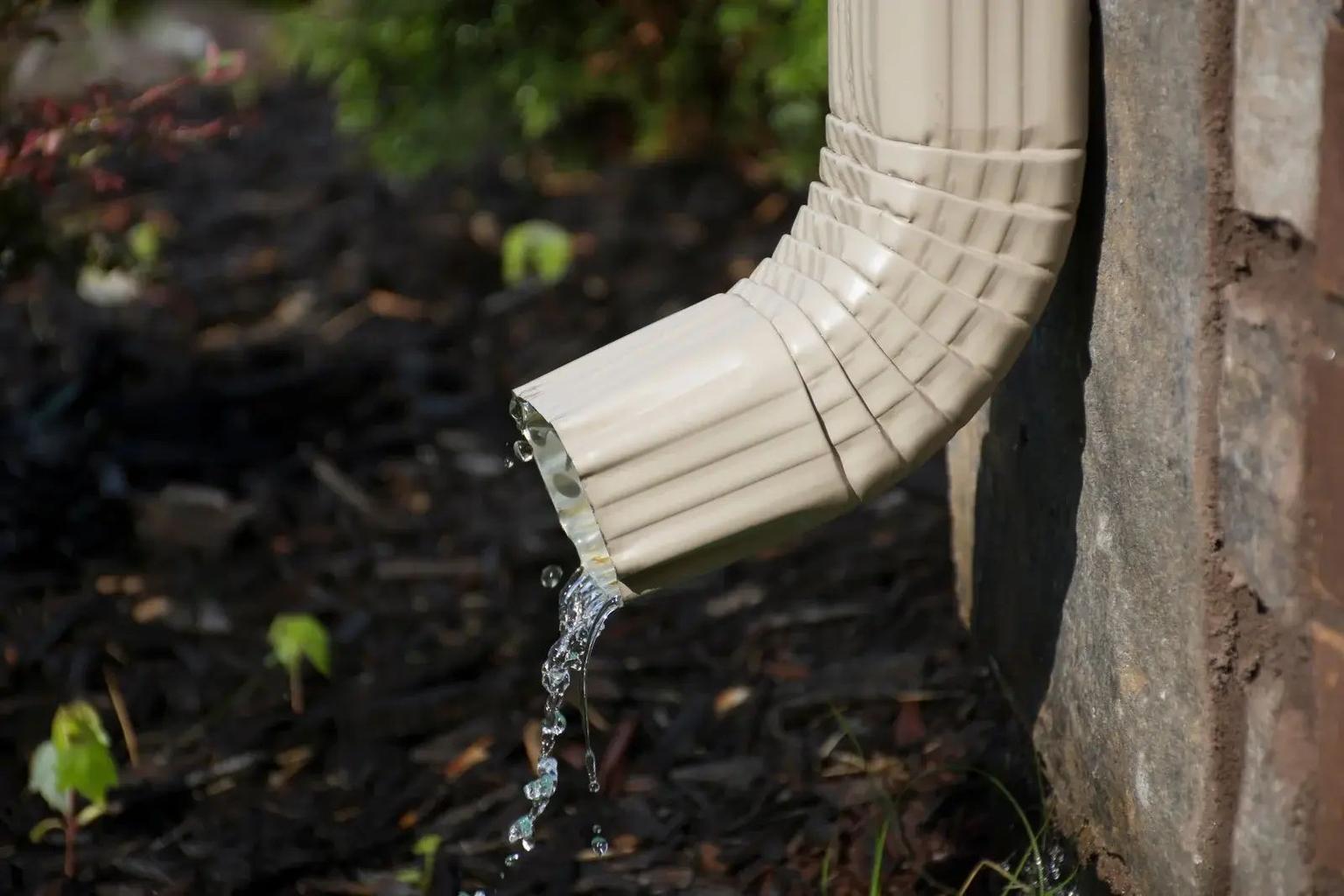
A blocked downspout can make rain spill over your gutters even when the gutter itself looks clear. In Rhode Island, summer storms can drop 1 inch of rain in 20 minutes, so a clog can send water down siding and into soil near the house fast.
Your shortest path is simple: find where the clog is, clear that spot, then test the flow. In most cases, the blockage is in the bottom elbow, the vertical downspout, or the buried drain line. A hose test, a tap test, and a look at the top and bottom openings usually show which one you’re dealing with.
Before getting into the full steps, here’s the plain answer:
- Check the bottom elbow first for leaves, acorns, and roof grit
- Tap the pipe to find packed sections
- Run a hose from the top and watch where water backs up
- Remove and clean the elbow if the clog is low
- Flush or snake the vertical run if the clog is stuck higher up
- Stop and switch methods if water clears the downspout but backs up at ground level
- Test again after clearing so you know water flows out within 3–5 seconds
- Flush it monthly for 3–5 minutes and check after storms above 35 mph
A blocked downspout is often a simple fix, but the job changes if the problem is in the buried line. The guide below walks through that split so you can avoid taking apart parts that aren’t blocked.
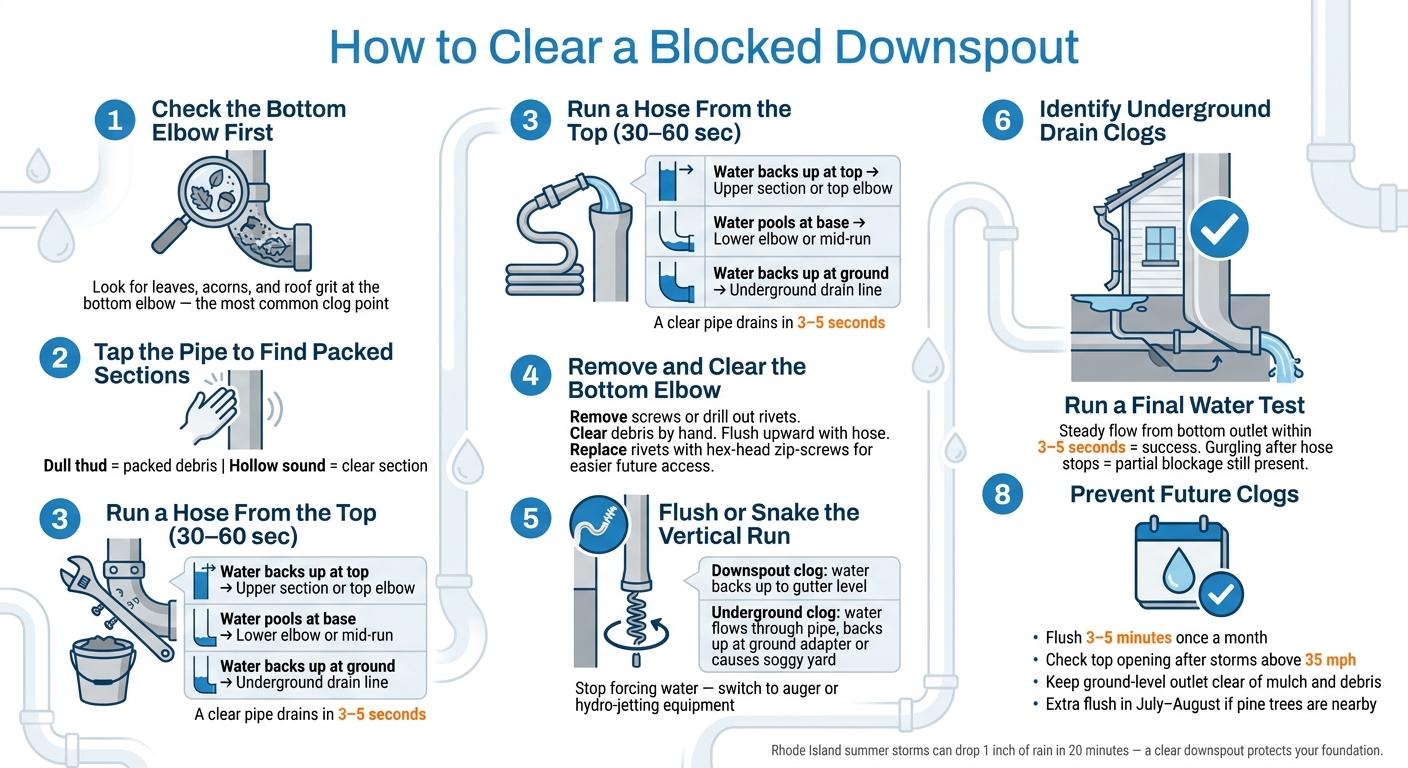
How to Clear a Blocked Downspout: Step-by-Step Guide
How to Unclog a Downspout 5 Ways
sbb-itb-634c8b2
Find the Blockage Before Taking the Downspout Apart
Start with a quick check from the outside. Go with the fastest test first, then move to the next step only if the clog is still hiding.
Check the Top Opening, Bottom Outlet, and Each Elbow
Begin at the bottom. Remove the splash block or lower extension and look straight into the bottom outlet. Leaves, acorns, and packed roof grit often collect at the bottom elbow first because water slows down when it turns. If debris is jammed in that spot, you may have found the clog without going up a ladder.
Next, look over the outside of each elbow joint. Watch for rust streaks, white mineral deposits, or damp staining on the pipe. Those marks can mean water has been sitting in that section instead of moving through it.
Then check the top opening from a stable ladder set at the right angle. Shine a flashlight into the opening and look for matted debris in the first foot or so.
Tap the Pipe to Find Packed Sections
If a visual check doesn't show the clog, try the tap test. Move down the downspout and tap it at a few different heights with a rubber mallet or your hand.
A dull thud usually points to packed debris. A hollow sound usually means that section is open. This is handy for clogs stuck in the middle of a long vertical run, where the top and bottom checks don't show much.
If the sound shifts but you still can't tell the exact spot, use a hose test to confirm it.
Run a Hose From the Top to Confirm the Clog Location
After the tap test, a controlled hose test gives you a plain visual answer. Feed a garden hose 6 to 12 inches into the top opening and run a steady flow for 30 to 60 seconds.
The result tells you where to look next:
| What You See | What It Means |
|---|---|
| Water backs up immediately at the top | Upper section or top elbow |
| Water drains slowly or pools at the base | Lower elbow or mid-run |
| Water flows through but backs up at ground level | Underground drain line |
A clear downspout should send water out the bottom outlet within 3 to 5 seconds after you start the test. If it takes longer, that delay points to the clog's location before you remove any parts.
Once you know where the blockage is, clear it based on the type of clog.
Clear the Downspout Based on the Type of Clog
Use the fix that fits where the clog is sitting: the bottom elbow, the vertical run, or the buried drain line. If the blockage is at the elbow, deal with that first. If it’s higher up, move to the vertical section.
Remove a Leaf Pack at the Bottom Elbow
Take off the elbow and clear it by hand. This is the spot that clogs most often because debris tends to pile up where the water changes direction.
Before removing anything, put a bucket or tarp underneath the elbow. Dirty water and soggy debris can come out all at once. Remove the screws that hold the elbow in place. If it was fastened with pop rivets, drill those out first so the elbow can come free.
Once it’s off, pull out the leaf pack by hand or with a small plastic tool. Skip sharp metal rods or coat hangers. They can puncture thin aluminum or scrape off the protective finish.
After the debris is out, stick a garden hose into the bottom of the vertical pipe and spray upward to wash out anything left inside before you reattach the elbow. When you put it back on, it can help to replace the old pop rivets with hex-head sheet metal screws ("zip-screws"). That makes the next removal much less of a hassle.
If the elbow is clear and water still won’t move through, the clog is likely higher up in the vertical run.
Flush or Snake a Compacted Clog in the Vertical Run
If the tap test suggests the clog is in the middle of the vertical run, start with a garden hose. Insert the nozzle 6–12 inches into the top opening and run a steady stream. To cut down on splash and push more water into the pipe, wrap a rag around the hose .
Don’t hit it with a pressure washer at full power. At 2,000+ PSI, it can split aluminum seams or blow apart joints . For most light-to-moderate debris, a standard garden hose does the job.
If water alone doesn’t move the clog, use a plumber's snake with at least a 25-foot length and 1/4-inch diameter . Feed it in through the bottom opening. That route is often easier to work with. Turn it clockwise as you push so it can break up the blockage. Go back and forth between snaking and flushing to wash out loosened pieces as they break free.
Tell the Difference Between a Downspout Clog and an Underground Drain Obstruction
If water runs out of the bottom outlet with no trouble, the downspout itself is clear. But if water still pools near the foundation or backs up at the ground-level adapter, the issue is in the buried drain line.
That difference matters. A downspout clog can usually be fixed with hand removal, flushing, or a snake. An underground blockage is a different beast. Compacted sediment, root intrusion, or even a collapsed pipe may be involved, and that usually calls for powered tools like an auger or hydro-jetting .
| Symptom | Downspout Clog | Underground Drain Clog |
|---|---|---|
| Hose test result | Water backs up to gutter level immediately | Water flows through vertical pipe, backs up at ground level |
| Overflow location | At the downspout/gutter connection | At the ground-level adapter or pop-up emitter |
| Yard condition | Generally dry near the foundation | Soggy patches or pooling along the buried pipe path |
If water moves through the downspout but backs up at the ground-level outlet, the clog is in the buried line. Stop forcing more water through it and switch to drain-line equipment.
When to Use Professional Equipment Instead of DIY Methods
If flushing and snaking didn’t clear the line, stop there and move to pro equipment. A garden hose and a 25-foot snake can often handle loose debris in a straight vertical section or a simple elbow clog. But some blockages sit deeper in the line or get packed too tight for hand tools to clear without risk.
Signs the Clog Needs Professional Drain-Cleaning Equipment
If you’ve snaked the pipe and flushed it with a hose, but the water still won’t move - or it backs up in the same spot - the clog is likely too dense for basic tools. Roots, sediment, or pipe damage can create a blockage that a hose and hand snake just can’t break through. In those cases, professional jetting can clear material that hand tools leave behind.
If your snake comes back with roots or wood debris, stop right away. Pushing farther can puncture or further damage a compromised pipe.
When both flushing and snaking fail, the problem has likely moved past normal DIY range. At that point, what looked like a simple downspout clog is now a drain-line issue.
When to Call Downspout Services for Rhode Island Properties
Some Rhode Island properties call for help sooner because access is tight or the downspout is tough to reach. High downspouts and historic materials also need a careful touch.
If backups keep happening at the same elbow or ground-level adapter after a few DIY attempts, that usually points to a blockage that hand tools aren’t fully clearing. Waiting too long on a deep clog can lead to bigger foundation repairs.
Run a Final Water Test and Prevent Future Clogs
Once you've cleared the blockage, don't skip the last check. A quick water test shows whether the fix worked before the next storm rolls in.
Test the Downspout After Clearing and Watch for Repeat Backups
After flushing or snaking, run a final hose test to make sure the downspout is open. A fully cleared pipe should send out a steady, continuous flow from the bottom outlet within 3–5 seconds. If the discharge is slow or starts gurgling, debris is still stuck inside.
If the pipe keeps gurgling after the hose stops, air is still pushing through a partial blockage. That means the clog isn't fully gone.
If the flow seems weak, tap the outside of the downspout with a broom handle while the water runs. That light vibration can knock loose part of a broken-up clog.
If the water test looks good, move right into basic prevention.
| Symptom During Test | Likely Location of Remaining Clog |
|---|---|
| Water backs up immediately to gutter level | Top outlet or upper vertical section |
| Water flows through but gushes back at the ground-level adapter | Underground drainage pipe |
| Slow, gurgling discharge at bottom | Partial blockage at a mid-pipe elbow |
Cut Down on Re-Clogging From Leaves, Twigs, Roof Grit, and Mud
Once the downspout is flowing cleanly, the next job is keeping debris from piling up again. The goal is simple: reduce what gets into the downspout in the first place.
After any storm with winds above 35 mph, do a quick visual check of the top opening. Broken twigs and roofing grit are easy to pull out when they're still loose. Once they get wet and packed down, saturated debris can weigh 20 to 50 pounds per cubic foot. Run water through the downspout for 3 to 5 minutes once a month to keep sediment from hardening inside the elbows.
Check the ground-level outlet too. Pop-up emitters and exit pipes blocked by mulch, grass clippings, or spider webs can force water back through the whole system upstream. Downspout Services cleans and inspects Rhode Island gutter systems from the top opening down to the ground-level outlet so nothing gets missed between those two points. Gutter installation that positions downspouts away from mulch beds and dense ground cover cuts down on outlet blockages before they start. Keep that outlet open so water can move away from the foundation.
If you have pine trees on the property, add one extra flush in July or August to deal with year-round needle drop. For heavy debris loads, strainer baskets can help cut down on clogs in the downspout.
FAQs
How do I know if the clog is in the downspout or the buried drain line?
Disconnect the downspout from the underground inlet. Then feed a garden hose into the buried pipe and turn the water on full blast.
If water comes out of the terminal exit without any trouble, the buried line is clear.
If water backs up at the inlet, or barely reaches the exit, there’s a clog somewhere in the buried drain line. And if water sprays out at the seams or pushes back up through the downspout during rain, that usually points to a problem farther down the buried line.
Can I clear a blocked downspout without taking it apart?
Yes. In many cases, you can clear a blocked downspout without taking it apart.
Start by flushing it from the top with a high-pressure garden hose. If that doesn't do the trick, try reverse-flushing from the bottom opening instead.
If the clog is packed in tight, run a plumber's snake or drain auger through the downspout from either end. Most blockages come loose with one of these methods. Disassembly is usually the last step, not the first.
When should I stop DIY and call for professional help?
Stop the DIY approach and call a professional if basic flushing and snaking don’t clear the clog, or if you think you’re dealing with a collapsed pipe, root intrusion, or heavy sediment buildup that calls for hydro-jetting equipment.
You should also bring in a pro if you notice pooling at ground level during dry weather, or if the job involves height, uneven ground, or steep slopes that make the work unsafe.