What Clogged Rain Gutters Do to a Rhode Island Home
Clogged gutters force water into roof edges, fascia, and foundations, causing rot, ice dams, basement leaks, and costly repairs.
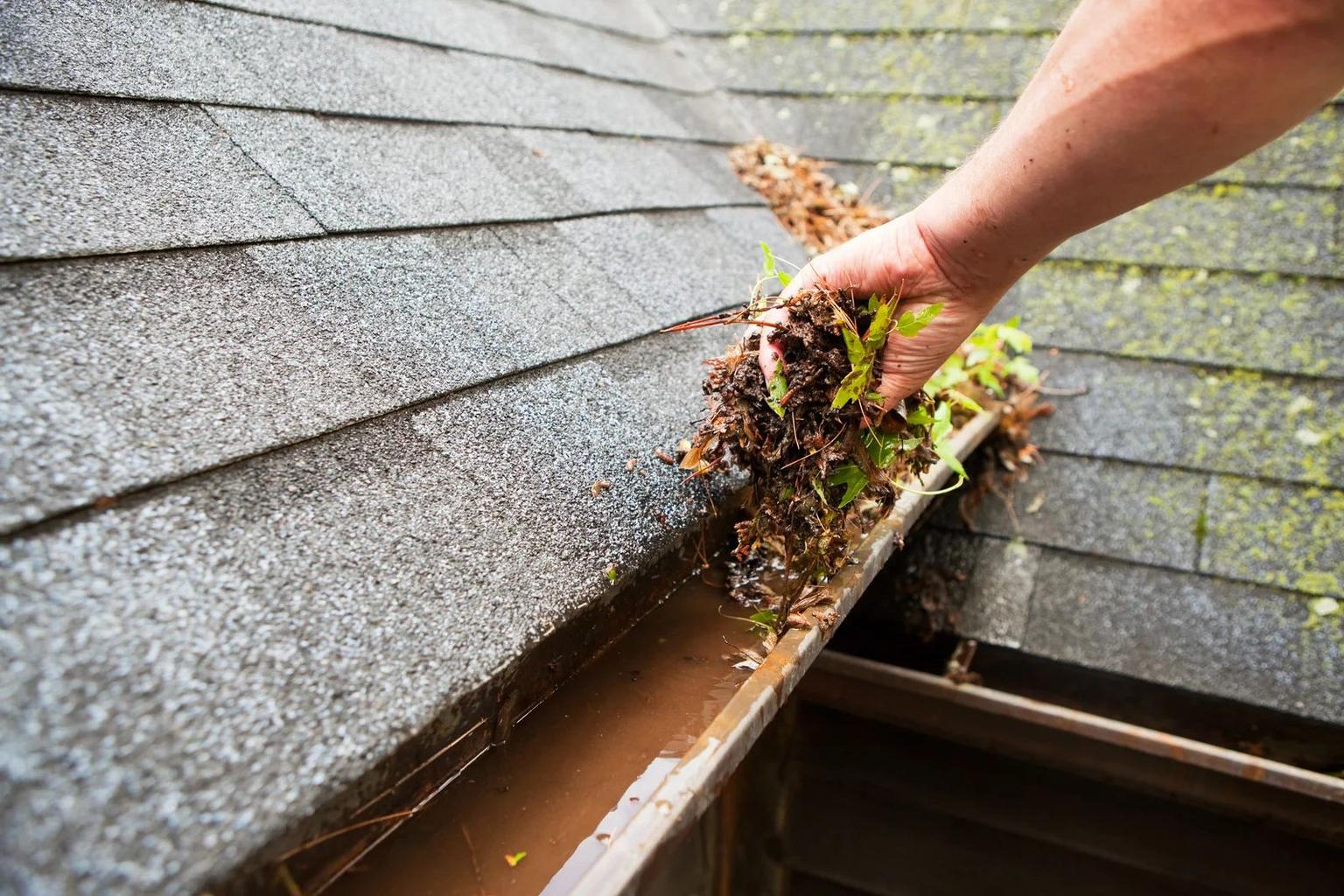
Clogged gutters can damage your roof edge, fascia, soffits, siding, soil, and basement. In Rhode Island, heavy rain, coastal storms, fall leaves, and winter freeze-thaw weather make that damage happen faster.
If I had to give the short answer, it’s this: when gutters clog, water stops draining away from the house and starts soaking parts of the home that should stay dry. That can lead to:
- Roof-edge leaks from water backing up under shingles
- Fascia and soffit rot from water running behind the gutter
- Ice dams in winter that push water into roof decking and attic areas
- Soil washout near the house from repeated overflow
- Basement or crawl space water from wet soil and pressure against the foundation
- Mold and pest problems from long-term moisture and standing water
- Higher repair costs, including $4,000 to $15,000 for foundation repair and $1,500 to $6,000 for mold cleanup
A few details stand out. Fascia and soffit rot make up 27% of gutter-related restoration calls. And if a 5-inch gutter overflows during a moderate rain after cleaning, the issue may be poor sizing, bad pitch, or a damaged section, not just debris.
The main point: gutter cleaning fixes a clog, but it does not fix sagging gutters, split joints, rust holes, soft fascia, or water running behind the system.
Here’s the simple breakdown:
| Issue | What usually causes it | What it can lead to |
|---|---|---|
| Overflow at the front | Leaves, needles, shingle grit | Siding stains, puddling, soil erosion |
| Water behind the gutter | Clogs, gaps, bad pitch, split joints | Fascia rot, soffit damage, roof-edge leaks |
| Ice buildup | Debris plus freeze-thaw weather | Ice dams, loose gutters, water under shingles |
| Water near foundation | Repeated overflow in one area | Wet basement, cracks, mold, wall pressure |
| Sagging or separation | Heavy wet debris, ice, weak fasteners | Gutter failure, wood rot, repair bills |
So if you see staining, sagging, gaps, pulled fasteners, puddling, or musty basement odors, I’d treat that as a sign the problem may have moved past simple cleaning.
That’s the core of this article: what clogged gutters damage first, how that damage spreads, and how to tell when cleaning is enough versus when repair is the next step.
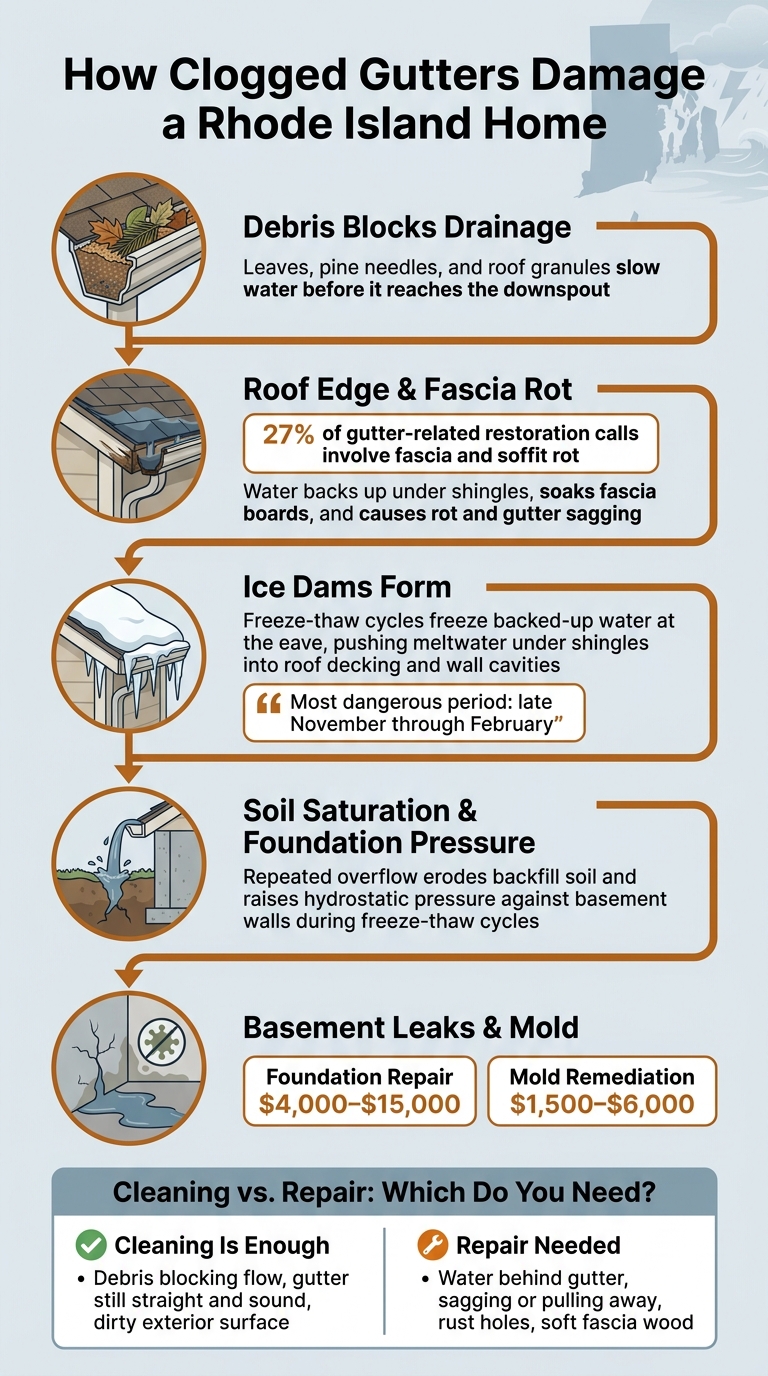
How Clogged Gutters Damage a Rhode Island Home: The Full Damage Chain
Top 5 Problems Caused by Clogged Gutters
sbb-itb-634c8b2
Why Skipping Gutter Cleaning Causes Faster Damage in Rhode Island
When gutters drain the way they should, they push water off the roof and away from the foundation. That helps keep the fascia, siding, and the soil around the house dry. But once that path gets blocked, water starts backing up and spilling into places it was never supposed to go.
How Debris Turns Normal Runoff Into Overflow
Leaves and twigs get most of the blame, and for good reason. But roof grit can be just as much of a problem. As asphalt shingles get older, they shed ceramic granules that wash into the gutter channel and settle along the bottom. Mix that with packed leaves and pine needles, and you get a heavy layer that slows water down long before it reaches the downspout.
That slowdown is where trouble starts. Even a partial blockage can force water into seams or behind the gutter. And water behind the gutter is often the worst case. It hits the fascia board directly, soaks the wood, and starts the rot process.
Late-winter thaws can pile on even more stress. When frozen ground starts to thaw at the same time heavy rain moves in, roofs can dump water in big, fast surges. Older 5-inch K-style gutters may not be able to handle that amount of runoff, especially if a clog is already slowing drainage.
Once water spills past the gutter, the first signs of damage often show up right along the roof edge.
How Freeze-Thaw Cycles Add Weight and Split Gutter Joints
Winter adds another layer of strain. Wet debris and frozen water make clogged gutters much heavier, which can bend hangers and create sagging that holds even more water.
Then the freeze-thaw cycle starts working on the joints. Water stuck inside the channel expands as it freezes, and that pressure can split gutter joints and open gaps behind fascia boards. After enough cycles, those openings let meltwater run behind the fascia board and under the shingles.
When debris blocks drainage, meltwater freezes, expands, and starts damaging the gutter system from the outside in. What begins as a small gap can turn into hidden water damage in a short stretch of time.
What Clogged Gutters Damage First: Roof Edges, Fascia, and Soffits
Once gutters overflow, the roof edge usually gets hit first. These are often the earliest visible signs in the damage chain, well before water starts affecting walls, the foundation, or basement areas.
How Backed-Up Water Reaches Shingles and Roof Decking
When a gutter backs up, water can collect at the eave and slip under the bottom row of shingles. From there, it soaks the underlayment and the wood roof decking below. Professional roof cleaning can help identify these issues before they escalate.
If that happens over and over, moisture starts reaching the roof structure itself. That’s when rot and mold can begin forming out of sight.
In plain terms, the damage doesn’t stop at the shingles. It moves into the wood underneath.
How Fascia and Soffits Stay Wet Long Enough to Rot
The fascia board sits right behind the gutter, so it’s in the line of fire when overflow starts. Once water keeps hitting that board, the wood absorbs moisture fast. And when it stays damp, decay can begin sooner than many homeowners expect.
That kind of long-lasting moisture gives decay fungi the conditions they need to spread. Over time, the wood softens, paint begins to peel, and dark stains show up along the board. But the bigger issue is structural. As the fascia weakens, it starts losing its hold on the gutter fasteners, which can make the gutter sag or pull away from the house.
Fascia and soffit rot accounts for 27% of gutter-related restoration calls.
A few warning signs tend to show up early:
- Gaps between the back of the gutter and the fascia
- Fasteners pulling out of the wood
- Water streaks running down the siding below the gutter line
If you’re seeing those signs, the fascia is already compromised.
As that board weakens, the gutter may start separating from the house.
How Ice Dams Form When Gutters Are Clogged With Debris
In cold weather, the same backed-up water can freeze at the eave and trap meltwater behind it. In Rhode Island winters, clogged gutters make ice dams more likely.
Here’s how it usually happens: heat escaping through the roof melts snow on the upper part of the roof. That water runs down the slope, reaches the colder eave, and then refreezes there. If the gutter is packed with debris, the water has nowhere to go, so the ice keeps building.
That ridge of ice acts like a dam. New meltwater collects behind it and gets pushed back under the shingles. From there, it can reach the underlayment, the roof decking, and eventually interior wall cavities and ceiling edges.
"The most dangerous period for gutter-related damage is late November through February, when clogged gutters combine with freezing temperatures to create ice dams." - Tyler McClelland, Mitigation Manager, Advanced DRI
How Gutter Overflow Leads to Basement Water, Mold, and Higher Repair Costs
The damage described above starts at the roofline. But the same overflow doesn’t stop there. It keeps moving down toward the foundation. And that’s where things often get more expensive.
Once runoff spills past the roof edge, the foundation becomes the next weak spot. This part of the damage path is usually slower and quieter. You may not notice it right away. But over time, it can lead to basement leaks, mold, and much bigger repair bills.
How Repeated Overflow Erodes Soil and Raises Pressure Against the Foundation
After roof-edge damage begins, that same overflow starts wearing away the ground around the house. When gutters spill over, they dump water into the same area again and again. That repeated runoff cuts trenches beside the home and soaks the backfill soil over time.
That backfill - the loose, disturbed soil packed in when the house was built - takes in water faster than undisturbed ground and stays wet longer. In Rhode Island winters, that wet soil freezes and expands, pushing against basement walls with more force. That force is hydrostatic pressure. During freeze-thaw weather, it keeps building until basement walls bow, shift, or crack.
What makes this so frustrating is how gradual it is. You might see a little washout near the house and think it’s no big deal. Meanwhile, the soil next to the foundation is staying wet for days longer than it should.
How Water Gets Into Basements and Crawl Spaces
Once the soil stays saturated long enough, water starts finding a way inside. It usually gets in through hairline cracks, the wall-floor joint, or window wells. Even poured concrete can leak when hydrostatic pressure stays high.
One of the first signs is efflorescence, the white, chalky residue left behind when seeped water dries. After that, peeling paint and a musty smell often show up.
And the repair costs add up fast:
- Foundation repair can run $4,000 to $15,000
- Mold remediation can add $1,500 to $6,000
Short-Term Overflow Signs vs. Long-Term Structural Damage
In the short term, you’re usually looking at things like exterior staining, puddling, displaced mulch, or damp odors. Those signs are easy to brush off after a storm.
The long-term damage is much harder to ignore. Saturated soil can lead to foundation failure, and trapped moisture can lead to mold. In other words, the small signs outside often point to a bigger problem building below the surface.
That’s why a little puddling near the house isn’t just a cosmetic issue. Across multiple seasons of Rhode Island weather, those early warning signs can turn into basement water problems and structural damage.
When Cleaning Fixes the Problem and When the Gutter System Needs Repair
Not every gutter issue means you need a repair bill. Sometimes the fix is simple: clear out the debris or compare gutter guards vs. regular cleaning. Other times, the gutter system itself is starting to fail.
Once you notice overflow, staining, or sagging, the question is no longer just "Does it need to be cleaned?" It becomes: Is the system still sound?
Signs That Pests and Structural Strain Are Already Setting In
Standing water in clogged gutters does more than spill over. It can turn into a breeding spot for mosquitoes and draw in carpenter ants and termites that are pulled to wet leaves and sludge. That’s a clear sign the gutter is holding water longer than it should.
If you’re spotting bird or insect nests near downspouts or soffits, that usually means the gutters have been ignored long enough for pests to move in.
The physical warning signs are just as clear. Sagging runs, rusted seams, and gutters pulling away from the fascia point to failing hardware or worn material. On coastal homes, salt air can make corrosion show up sooner.
Problems Cleaning Alone Can Fix vs. Problems That Need Repair or Replacement
A simple rule works here: if the gutter is still in good shape but packed with debris, cleaning should solve it. But if water is escaping through a rusted seam, leaking behind the gutter, or sitting in the channel even after debris is gone, you’re dealing with a physical defect. Cleaning won’t fix that.
Water behind the gutter, rusted seams, and soft fascia are signs of damage, not just buildup.
A quick rain check can help sort out a clog from a failing gutter system.
| Problem | Cleaning Is Enough | Repair or Replacement Needed |
|---|---|---|
| Blockage and overflow | Leaves, twigs, or debris blocking flow | Undersized gutters or failed pitch causing pooling in a clear section |
| Water location | Spilling over the front edge | Running behind the gutter or dripping from seams |
| Physical condition | Gutter is straight but packed with debris | Sagging, pulling away from fascia, or detached brackets |
| Material condition | Dirty or stained exterior surface | Rust holes, cracked joints, or soft, rotted fascia wood |
One useful test: watch the gutters during a moderate rain, not a heavy storm. If a 5-inch gutter overflows in moderate rain, it’s undersized, not just clogged.
If water still spills over after cleaning, debris is no longer the only problem.
Conclusion: Stop the Damage Chain Early With Professional Gutter Cleaning
Gutter damage usually doesn’t show up overnight. It builds season by season, and it often starts with leaves piling up in a gutter that should be moving water away from the house.
If the gutter itself is still sound, cleaning fixes the issue. If it’s sagging, rusted, or the fascia is starting to rot, repair is the next step. Caught early, a clogged gutter is a quick fix. Caught late, it's a fascia replacement. Downspout Services handles both for Rhode Island homeowners.
FAQs
How often should gutters be cleaned in Rhode Island?
In Rhode Island, gutters should be cleaned at least twice a year - once in spring and once in fall.
Spring cleanings help clear out winter debris and residue left behind by melting ice before the heavy rains that often hit in April and May. Fall cleanings, usually best scheduled from late October through early December, remove leaves before snow and ice start to build up.
If your home has a lot of tree coverage, you may need to clean the gutters more often. The same goes after major storms or hurricanes, when branches, leaves, and other debris can pile up fast.
Can clogged gutters really cause basement leaks?
Yes. If debris blocks water from moving through the downspouts, gutters can overflow and dump water near your home’s foundation.
That might not seem like a big deal at first. But over time, that extra moisture can soak into the soil, seep through foundation walls, and lead to damp areas, standing water, and mold.
There’s another problem too: repeated water exposure can wear away the soil that supports the foundation. As that support weakens, the foundation can shift or crack, which gives water even bigger gaps to get in.
How do I know if cleaning is enough?
Cleaning is enough when your gutters are simply packed with leaves, twigs, and other debris and the gutter system itself is still in good shape.
That said, cleaning alone won’t fix sagging gutters, detached sections, cracks, or soft, peeling, stained fascia. The same goes if water keeps running behind the gutter, basement moisture doesn’t stop, or the gutters keep pulling away from the roofline. In those cases, you’re looking at repair or full replacement.