How to Stop Ice Dams Before They Start in Rhode Island
Seal attic air leaks, add R-49 insulation, keep soffit/ridge vents clear, and clean gutters to prevent costly ice dams.
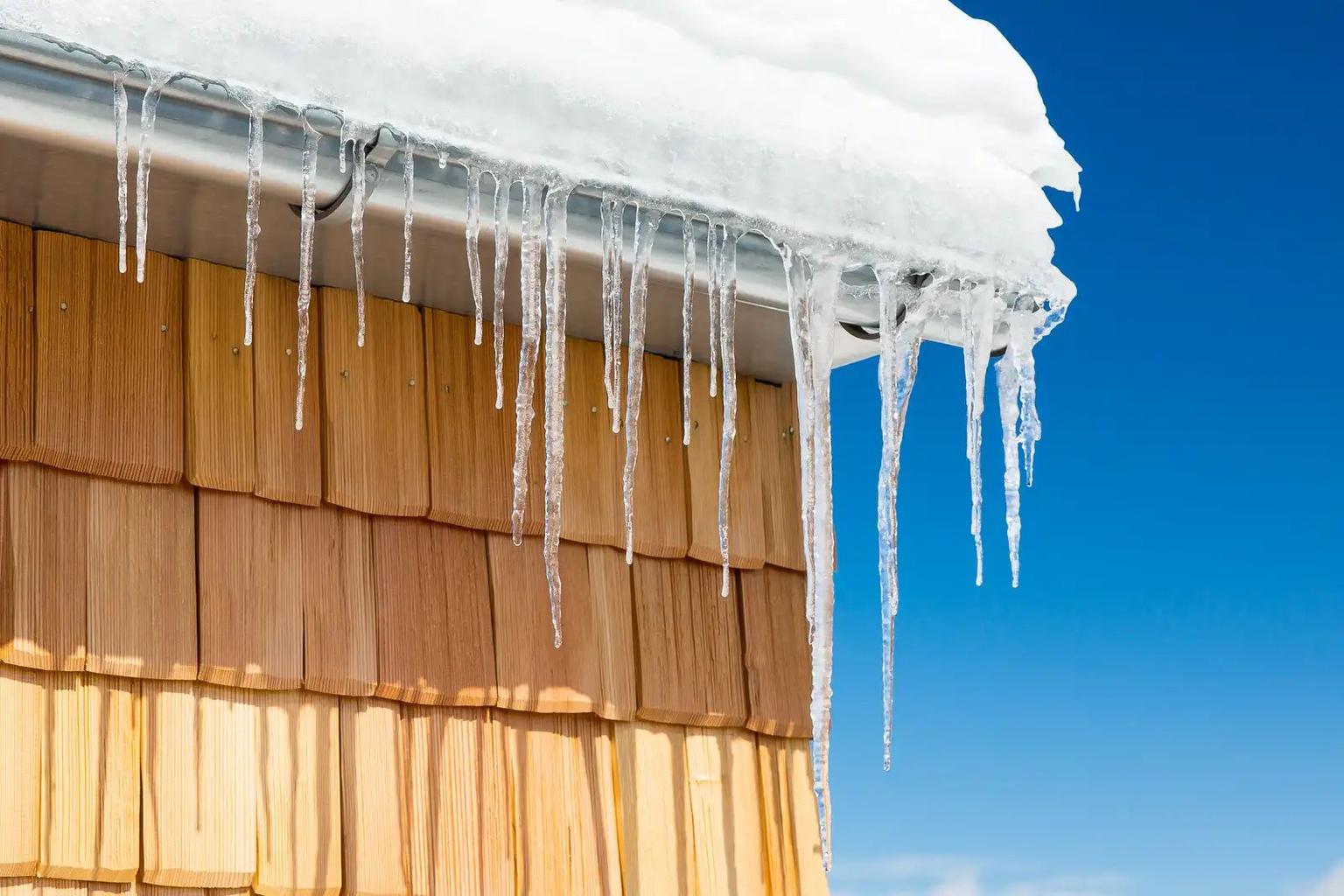
Ice dams usually start in your attic, not in your gutters.
If you want to lower the risk, fix heat leaks, bring attic insulation close to R-49, keep soffit and ridge vents open, and make sure gutters and downspouts drain well. That matters because ice-dam damage in Rhode Island can cost $3,000 to $15,000, while snow and ice removal can still run $700 to $1,400.
Here’s the short answer:
- Seal attic air leaks first
- Check insulation depth
- Keep vent paths open at the eaves
- Clean gutters and flush downspouts
- Watch north-facing roof edges and shaded valleys
- Rake the lower 3–6 feet of roof after heavy snow
- Use calcium chloride socks for small leak spots
- Call for steam removal if the dam is already set and leaking
The main point: attic work helps stop the cause, while gutter work helps move water after snow starts melting.
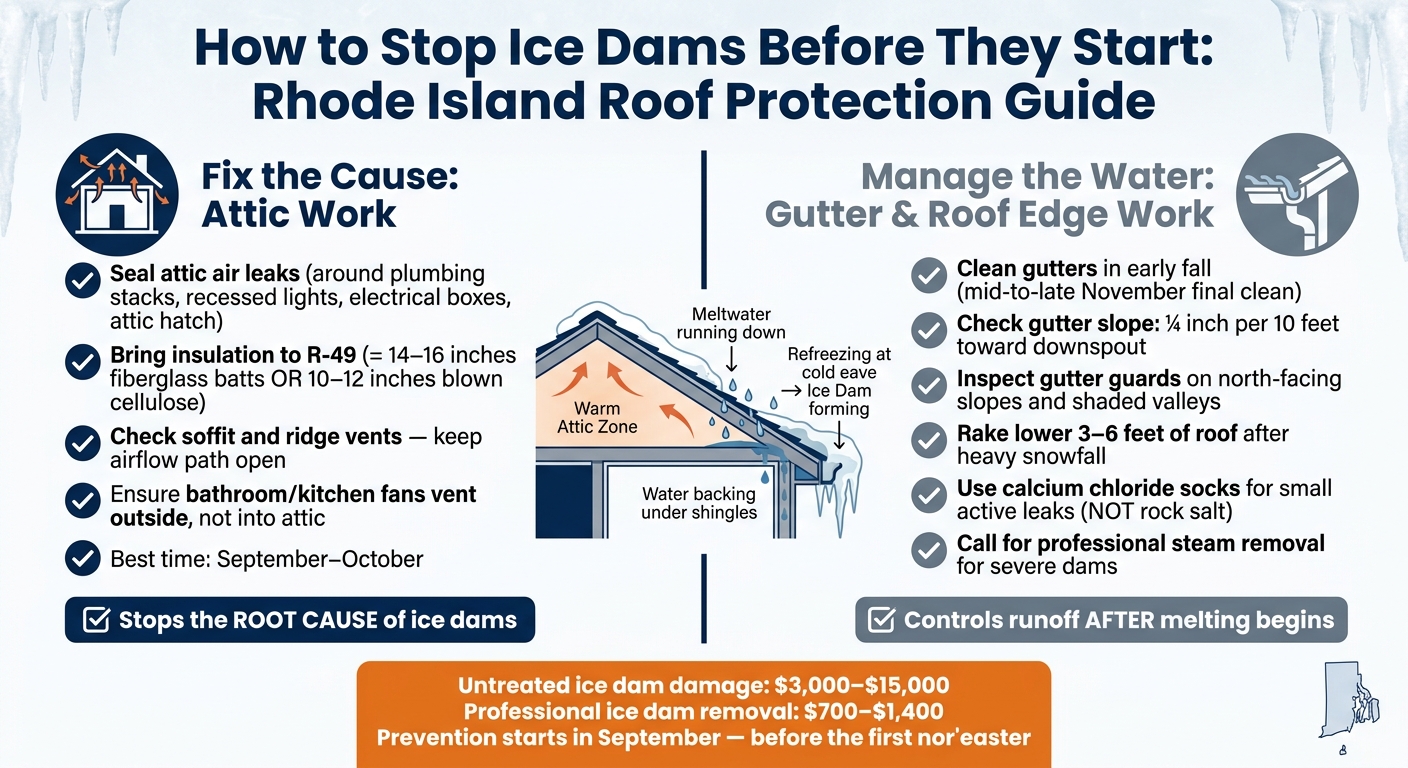
Ice Dam Prevention: Attic Fixes vs. Gutter Solutions (Rhode Island Guide)
How to Prevent Ice Dams | This Old House

sbb-itb-634c8b2
Quick Comparison
| Action | Stops the main cause? | Helps with drainage? | Best time |
|---|---|---|---|
| Attic air sealing | Yes | No | September |
| Attic insulation to R-49 | Yes | No | September to October |
| Soffit and ridge vent check | Yes | No | September to October |
| Gutter cleaning | No | Yes | Mid-to-late November |
| Gutter guard check | No | Yes | October |
| Roof raking after storms | No | Yes | After heavy snowfall |
| Calcium chloride sock | No | Yes | When a small dam starts leaking |
| Steam removal | No | Yes | When a dam is severe |
This article walks through what to check first, what to fix before winter, and what to do after Rhode Island snowstorms hit.
How Ice Dams Form on Rhode Island Roofs
Ice dams start with heat loss.
When heat escapes into the attic, it warms the roof deck and melts the snow sitting above it. That meltwater runs down the roof until it reaches the eaves. And because the eaves extend past the heated part of the house, they stay cold. The water refreezes there and forms a ridge of ice.
That ridge becomes a dam. Water starts pooling behind it, and shingles aren’t built to handle water that gets pushed back uphill. They’re meant to shed water downhill. So when meltwater gets trapped, it can slip under the shingles and soak the roof decking, insulation, and then your ceilings and walls.
In Rhode Island, winter freeze-thaw swings keep this cycle going for months.
Older Rhode Island homes tend to have more trouble with ice dams. Dormers, valleys, and older insulation often make heat loss less even and give ice more places to build up. That’s why attic leaks and insulation need attention first.
Why Attic Heat Loss Leads to Uneven Snow Melt
A roof doesn’t heat up the same way from edge to edge. The area above your living space gets warmer because heat is leaking through the attic floor, mostly through attic air leaks. The eaves stay colder because they sit outside that heated zone. That split between warm and cold is what sets the whole cycle in motion.
The usual trouble spots are:
- Air leaks around plumbing stacks
- Recessed light fixtures
- Attic access hatches
- Bathroom fans that dump warm, humid air into the attic
"A roof can be installed correctly and still be vulnerable if attic insulation, air sealing, and ventilation are not working together." - Mighty Dog Roofing of Rhode Island
Insulation depth matters too. Many older homes still miss the attic insulation target noted earlier. If insulation is thin or compressed, heat moves through it faster. That warms the roof deck above more quickly after a snowfall. North-facing roof sections are often hit harder because they get less direct sun and stay colder longer, which gives ice more time to build.
What Gutters and Guards Can and Cannot Do
Once snow starts melting, drainage only deals with the runoff.
Gutters sit right at the eave, which is the same spot where meltwater refreezes. So when you see a gutter packed with ice, it’s easy to blame the gutter. But the gutter didn’t start the problem.
Its job is much simpler: it gives meltwater a path to flow once melting is already underway. If the gutters are clear, water can move through the gutters and downspouts. If they’re clogged, water backs up and freezes more easily. Gutter guards can help keep that drainage path open, but they do not stop ice dams from forming.
That’s the key point: gutters and guards don’t change the roof temperature. They don’t fix the warm upper roof and cold eave pattern that causes the ice dam in the first place. They help manage water, not the attic heat loss behind it.
Before the first storm, inspect the attic for air leaks, weak insulation, and blocked vent paths.
How to Inspect Your Attic, Roof, and Gutters Before Winter
Inspect in September or October, before the first big winter storms hit. Focus on two spots: the attic and the gutters. Start inside with the attic, then move outside to the roof edge and gutters.
The goal is simple: stop attic heat loss first, then keep meltwater moving.
Check Attic Air Leaks, Insulation Depth, and Vent Paths
Bring a flashlight and tape measure. Start by checking insulation depth. Rhode Island's energy code calls for at least R-49, which equals about 14–16 inches of fiberglass batts or 10–12 inches of blown cellulose.
If the insulation is below that level, especially near exterior walls and eaves, deal with it before winter. Those edge areas are often where problems start.
Then look for air leaks into the attic. The usual trouble spots are around:
- Plumbing stacks
- Recessed lights
- Electrical boxes
- The attic hatch or pull-down stairs
Seal the hatch with weatherstripping.
Next, check the soffit and ridge vents. Soffit vents pull in cool outside air at the eaves. Ridge vents let warm, moist air escape at the top. If insulation has slipped over the soffit openings, airflow gets cut off and the whole setup stops working. Rafter baffles at the eaves help keep that air path open.
While you're up there, look for rusted nails, frost staining, or dark patches on the roof deck. Those are signs that moisture is getting trapped.
Once the attic is sealed and vented, head outside and check drainage.
Inspect Gutters, Downspouts, and North-Facing Roof Edges
Test gutter flow with a garden hose. Gutters should slope at least ¼ inch per 10 feet toward the nearest downspout. If a section is too flat, water can sit there and freeze.
Walk around the house and check for sagging sections, loose hangers, or separated seams. Use secure hidden hangers, and swap out loose spike-and-ferrule hangers.
Pay extra attention to north-facing roof edges and shaded valleys. These spots stay colder longer, so ice tends to build there first.
After the last gutter cleaning of the season, flush the downspouts and make sure water discharges 4–6 feet away from the foundation.
These checks help manage runoff. They do not fix the heat loss that causes ice dams in the first place.
Steps to Take Before Snow Arrives
Start with the attic. Then move to the gutters and roof edge. That order matters because ice dams usually begin with heat loss indoors, not with the gutter itself.
Reduce Heat Escaping Into the Attic
Seal gaps around recessed lights, vents, chimneys, plumbing stacks, and attic access hatches before adding or topping off insulation. If those leaks stay open, warm air can slip past the insulation and head straight into the attic.
Keep insulation away from soffit vents. Baffles help hold a clear channel from the eaves to the ridge vent. After air sealing, check the insulation depth and bring the attic up to the R-49 target. If it's below that level, adding blown cellulose or fiberglass batts can help keep the roof deck cold more evenly.
Also check that bathroom and kitchen exhaust fans vent directly outside - not into the attic space. When warm, damp air gets dumped into the attic, it can lift attic temperatures and lead to moisture damage.
Once the attic is sealed and insulated, head outside and open up the drainage path.
Clean Gutters and Check Guard Coverage on High-Risk Sections
Clean gutters in early fall to remove debris that slows drainage and can freeze at the eaves. In Rhode Island, oaks and maples drop a heavy load of leaves. A single mature red oak can shed 200,000 to 500,000 leaves, and one windstorm can pack an unprotected gutter fast. Roof granules from older shingles can add to that buildup too.
After cleaning, look at north-facing roof sections and shaded valleys. Those spots tend to hold snow and ice longer. If gutter guards are installed, make sure they're still working well there. Guards can help keep debris out, which gives meltwater a cleaner path to the downspout. But they do not fix the attic heat loss that starts the ice dam in the first place.
Use guards to keep water moving. Just don't treat them as ice-dam prevention.
If snow still piles up at the eaves, deal with it from the ground before ice has a chance to set up.
Safe Snow Management After Winter Storms
Use a long-handled roof rake from the ground to clear the lower 3 to 6 feet of roof after a major snowfall. That cuts down the amount of meltwater that can back up behind an ice dam.
Never climb onto an icy roof. The fall risk is serious.
If an ice dam is already leaking, a calcium chloride sock - a nylon stocking filled with calcium chloride - placed vertically across the dam can melt a drainage channel through it. Skip rock salt. It can corrode metal gutters and damage shingles.
For severe, established dams, professional steam removal is the safest option. In Rhode Island, professional ice dam removal usually costs $700–$1,400, depending on severity.
When to Call Downspout Services and What to Prioritize First
Book professional help in September or October, before the first nor'easter rolls in. If you're trying to decide what matters most before the first snowfall, start at the top of the house and work down.
Begin with the attic. Air sealing, a ventilation check, and making sure insulation levels are where they should be deal with the main reason ice dams form in the first place. After that, shift to runoff control. That means gutter cleaning first. If you need a pro for any of this, don't wait until freeze-up.
It's also smart to call for help when the job involves roof access. That includes steep gutters, north-facing slopes with moss or heavy debris, and cases where you want micro-mesh guards installed on trouble spots.
Use this fall order to keep the roof edge from backing up once winter sets in.
A Simple Prevention Checklist for Early Fall
| Task | When | Priority |
|---|---|---|
| Attic air sealing, insulation, and ventilation check | Early fall (September) | High - addresses root cause |
| Roof debris removal | Early fall (September) | Medium |
| Gutter guard inspection on north-facing slopes | Early fall (October) | Medium |
| Final gutter and downspout cleaning | Late fall (mid-to-late November) | High - clears drainage path |
Comparison Table: What Fixes the Cause vs. What Controls the Water
| Action | Fixes the Cause? | Manages Runoff? | Notes |
|---|---|---|---|
| Attic air sealing | Yes | No | Stops warm house air from entering the attic |
| Attic insulation (R-49) | Yes | No | Keeps the roof deck cold and uniform |
| Attic ventilation | Yes | No | Flushes out trapped heat via soffit and ridge vents |
| Gutter cleaning | No | Yes | Ensures meltwater has a clear path to drain |
| Gutter guards (micro-mesh) | No | Yes | Prevents debris clogs that trap water at the eaves |
| Roof raking | No | Yes | Removes snow before it can melt and refreeze |
Attic work deals with the cause. Gutter and roof-edge work deals with the water. Put simply: attic work lowers ice-dam risk, while gutter work helps meltwater keep moving.
FAQs
Can ice dams form even with clean gutters?
Yes. Ice dams can still form even if your gutters are perfectly clean.
Why? Because the main problem usually isn't gutter debris. It's heat leaking into the attic. That heat warms the roof, melts the snow, and sends water down to the colder eaves. Once it gets there, it refreezes and starts building up into an ice dam.
Clean gutters can help move runoff after melting begins. But they won't fix the roof temperature problem that causes ice dams in the first place.
To deal with the issue at its source, you still need to fix the attic conditions - mainly insulation and ventilation.
How do I know if my attic insulation is enough?
Look for signs that your insulation may not be doing its job. Common red flags include damp insulation, musty smells on upper floors, and water stains on ceilings or exterior walls.
Winter is a good time to check the attic. Look for moisture, frost, or dark stains on the underside of the roof deck. Also check that soffit vents aren't blocked by insulation. Many homes target R-49 to R-60, but a professional inspection can tell you if your insulation, air sealing, and ventilation are all working as a system.
When should I call a pro for an ice dam?
Call a professional if you can’t clear snow safely or if you spot warning signs like large icicles, ice ridges along the roof edge, ceiling stains, or water dripping from light fixtures.
Trying to chip away ice yourself can damage the roof, so hiring a pro is the safest move. It also helps to schedule a fall inspection of your attic insulation and ventilation before winter sets in.