Can Pressure Washing Damage Vinyl Siding?
Avoid cracking or water intrusion when cleaning vinyl siding: safe PSI, nozzle choices, spray angle, soft-wash tips, and when to hire a pro.
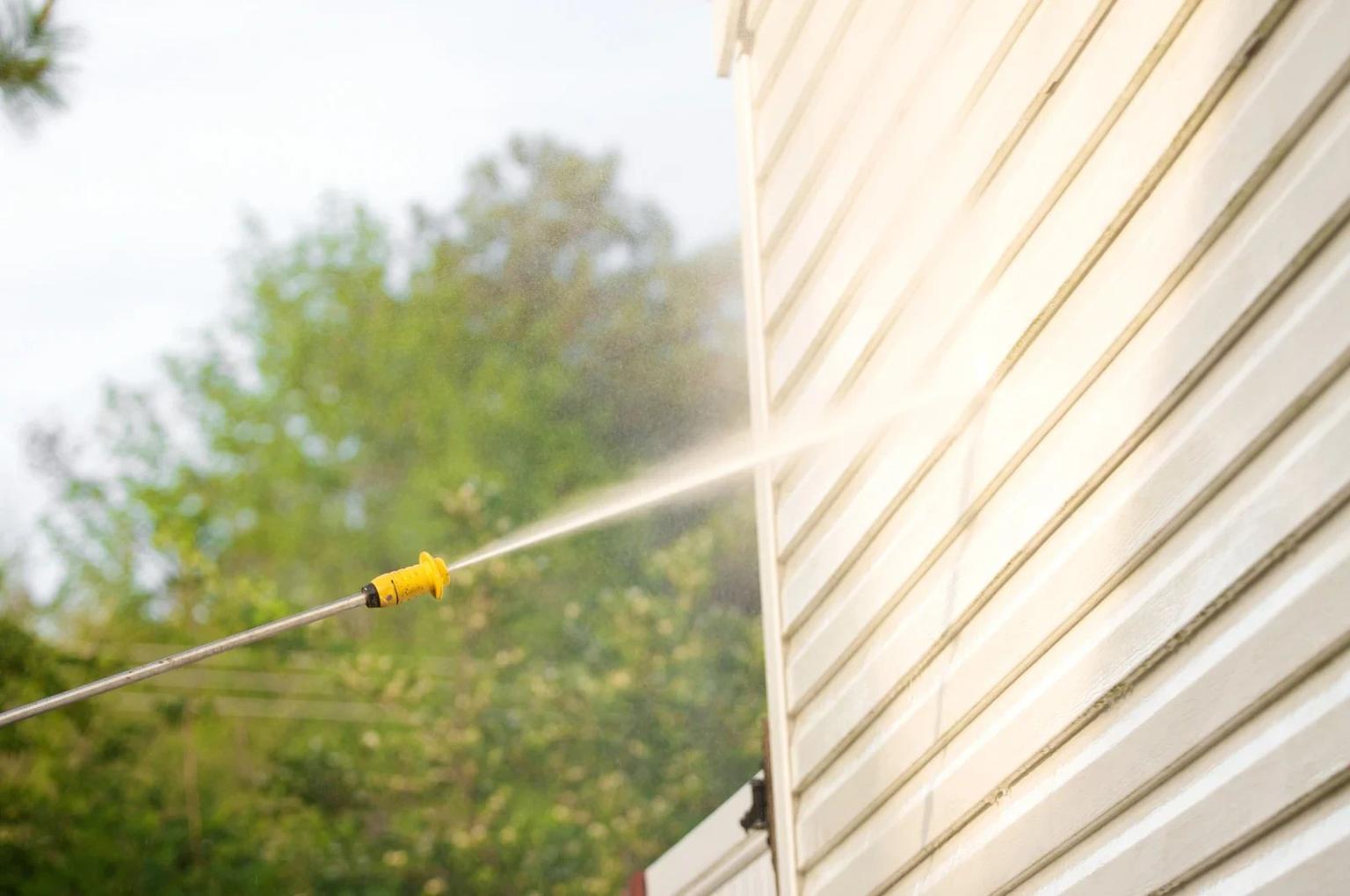
Yes - pressure washing can damage vinyl siding fast if you use too much force or spray water up into seams.
Your main risk is not just cracks or marks on the surface. It’s water getting behind the siding, where it can lead to mold, rot, and repair bills that can climb into the hundreds or even thousands of dollars. Most home pressure washers run at 1,300 to 3,100 PSI, while vinyl is often safest at much lower force.
Here’s the short answer:
- High PSI can crack, warp, or etch vinyl
- Narrow nozzles can leave stripe marks
- Upward spray can push water behind panels
- Older, sun-dried siding is easier to damage
- Soft washing is often the safer option
- Loose panels, gaps, and failed caulk mean stop
A few safe rules matter most:
- Use low pressure
- Use a 25-degree or 40-degree nozzle
- Keep the wand at least 12 to 18 inches away
- Spray straight on or downward
- Avoid spraying into laps, seams, vents, doors, and windows
| Risk area | What can happen | Safer move |
|---|---|---|
| Too much pressure | Cracks, warping, etched finish | Start low and test a small spot |
| Tight spray tip | Stripe marks and surface damage | Use a wide fan nozzle |
| Wand too close | Permanent marks | Keep distance from the wall |
| Upward spray angle | Water behind siding | Aim straight or downward |
| Old or loose siding | Panels can break or shift | Stop and call a pro |
If your siding is brittle, loose, moldy, or hard to reach, DIY cleaning may do more harm than good. The rest of the article breaks down where damage happens, what settings are safer, and when it makes sense to stop.
How to Clean Vinyl Siding | Ask This Old House
sbb-itb-634c8b2
How pressure washing damages vinyl siding
Vinyl siding can take a beating when the PSI is too high, the nozzle is too narrow, or the spray angle is off. In those cases, the surface may crack, warp, stain, or let water slip behind the panels. Most of the time, the damage shows up in three common ways.
Cracking, warping, and surface finish loss
Too much pressure doesn’t just wash vinyl. It can tear up the surface.
A strong spray can crack, warp, or etch the panel. This often shows up around panel joints, especially on older siding that has sat in the sun for years and become brittle. A 0-degree (red) or 15-degree (yellow) nozzle puts force into a tight stream, which can crack a panel or leave etched marks on the surface.
One of the most annoying outcomes is "zebra lines" or "wand stripes" - permanent etch marks left when the nozzle is held too close. Understanding the differences between house washing and pressure washing is key to avoiding these marks. On older vinyl, high pressure can also smear chalky oxidation into blotchy patches.
Loose panels and water getting behind the siding
This is where things can go from annoying to expensive.
If you spray upward into laps or seams, water can get pushed behind the siding and loosen panel joints or fasteners. Once that moisture gets into the wall cavity, it can soak the sheathing and insulation and lead to hidden mold, mildew, and wood rot.
After washing, a few red flags may show up:
- Gaps between laps
- Loose panels
- Damp walls
- A musty smell indoors
That’s why spray direction matters just as much as pressure.
Streaks, marks, and uneven cleaning results
Not every problem is structural. Some of it is cosmetic, but it can still leave the house looking worse than before.
Poor rinsing can leave soap streaks and mineral deposits, especially in places with hard water.
That’s why low pressure, a wide fan nozzle, and a downward spray angle matter. Next, the focus shifts to using low pressure, a wide spray pattern, and a controlled angle.
Safe settings for washing vinyl siding
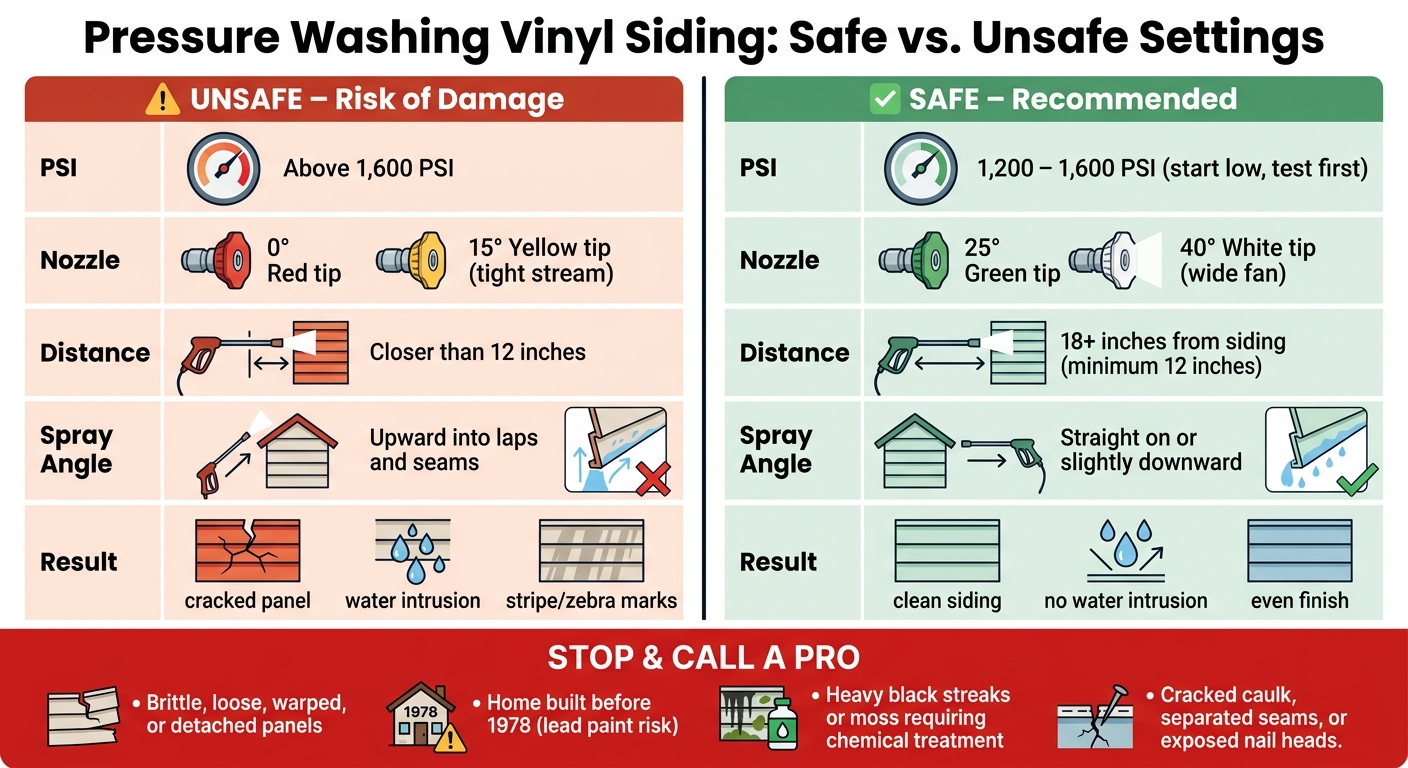
Pressure Washing Vinyl Siding: Safe vs. Unsafe Settings
Start with the lowest pressure that removes dirt without pushing water behind the panels. Get the setup wrong, and you can damage vinyl siding fast.
Use low pressure and test a small area first
For most homes with vinyl siding, 1,200 to 1,600 PSI is a solid working range. Start at the low end, test a hidden area first, and check how the siding reacts before you clean the rest.
Choose a wide-fan nozzle and keep your distance
The nozzle matters just as much as the PSI. A 25-degree (green) or 40-degree (white) tip spreads water over a broader area, which helps cut down the chance of damage.
Start with the wand more than 18 inches from the siding. Move closer only if you need a bit more cleaning power, and never get closer than 12 inches.
Spray straight or downward, never upward into seams
Your spray angle matters more than many people think. Hold the wand straight at the siding or aim it slightly downward so the water runs off instead of getting driven behind the panels.
Pay close attention around trim, vents, outlets, and window seals. Those spots are where water can slip in if your angle is off.
Once you’ve got the pressure, nozzle, distance, and angle dialed in, the next step is prep and a siding-safe cleaner.
How to clean vinyl siding without causing damage
Prep and cleaning method matter just as much as pressure and spray angle. Even if your washer settings are right, poor prep or sloppy rinsing can still lead to problems.
Inspect siding and protect the work area before you start
Before you begin, check for any openings where water could slip behind the siding. Look for cracked panels, loose seams, failed caulk, and gaps around windows, doors, vents, and outlets. If those spots are already vulnerable, don't aim water at them.
Close every window and door. Cover outdoor electrical outlets, light fixtures, and vents to help keep water out. Move furniture, rugs, and grills at least 6 feet away from the house. Then lightly wet any grass, plants, or shrubs within 10 feet of the wall so runoff is less harsh on them.
Apply a siding-safe cleaner and rinse in controlled passes
For vinyl siding, soft washing vs. pressure washing is a key distinction, and for vinyl, soft washing is the go-to method. It uses low pressure and a detergent-based cleaner instead of blasting the surface with force. Most soft wash systems run between 60 and 500 PSI.
Use a siding-safe cleaner or a diluted soft-wash solution to deal with algae and mildew. Apply it from the bottom up so you don't end up with streaks on dry siding, then let it sit for 10 to 15 minutes.
When it's time to rinse, work from the top down in steady, overlapping passes. That helps you avoid missed spots and patchy results. After that, rinse nearby plants and landscaping well.
If you run into damage, heavy buildup, or areas that are tough to reach, stop there. Damaged siding and high, awkward sections are better left to a professional.
When to call a professional for vinyl siding washing
When pressure washing starts pushing past safe limits, it’s time to stop and bring in a pro.
Signs that DIY washing carries too much risk
DIY washing is no longer a good idea when the siding is brittle, the home was built before 1978, or the walls are too high to clean safely from the ground.
Older siding can crack or warp under a standard pressure washer, even at moderate pressure. Homes built before 1978 are an even firmer stop. Pressure washing can release lead dust and paint chips, break EPA rules, and call for lead-safe containment methods. And on multi-story walls, wand kickback can throw you off balance on a ladder. Pros can clean higher sections from the ground with telescoping wands, which makes the job safer and easier to control.
Here are the clearest signs to stop before the damage gets worse:
- Loose, warped, or detached panels; soft trim; or exposed rot
- A chalky, powdery surface finish that can smear under pressure and leave wand marks
- Cracked caulk, separated seams, or exposed nail heads near windows and doors
- Heavy black streaks or moss that need chemical treatment, not pressure alone
Once water gets behind siding, the cleanup bill can climb fast.
Conclusion: Control pressure, angle, and water intrusion to clean siding safely
Pressure washing can damage vinyl siding, especially when the siding is aging, brittle, loose, or already showing signs of water intrusion. The safer path is simple: keep pressure low, keep the spray controlled, and stay away from damaged sections. Downspout Services checks siding condition before starting any house washing job in Rhode Island, since brittle or loose panels change how much pressure the surface can safely take. If the siding is brittle, loose, or showing water intrusion, stop and call a professional.
FAQs
Can you wash vinyl siding without a pressure washer?
Yes. A safe, effective option is soft washing. It uses low-pressure water - often about the same force as a standard garden hose - plus specialized detergents to remove dirt, algae, and mildew.
For routine cleaning, you can also use a soft-bristled or long-handled car-washing brush with mild detergent and a garden hose. That approach helps you avoid problems like cracked panels, water getting behind the siding, and damaged window seals.
How do I know if water got behind my siding?
Signs that water may have slipped behind your siding include cracked, warped, or loose vinyl panels and “zebra” streaks left by aggressive washing.
You may also notice moisture-related problems, such as:
- algae coming back faster than usual
- musty odors
- indoor dampness
- stains that keep returning
Once water gets trapped, it can soak the sheathing and lead to mold or rot. In winter, freeze-thaw cycles can make cracks worse.
If you think water got behind the siding, stop washing and have the area inspected.
When should I call a professional?
Call a professional if you’re not sure what shape your siding is in, your home has tall or hard-to-reach spots, or you don’t have the right soft-washing gear.
It’s also smart to bring in an expert if you’re worried about water getting behind the siding, cracked panels, or worn finishes. A pro cleaning job can help stop hidden problems like mold or rot and can also help protect the plants and landscaping around your home.