Seasonal Exterior Cleaning Plan for Connecticut Properties
A year‑round, season-by-season cleaning and inspection plan that stops small exterior issues from becoming costly repairs in Connecticut.
Connecticut weather can turn small exterior issues into expensive repairs in one season. Clean and check your property in spring, summer, fall, and winter, and you cut the risk of water damage, slip hazards, cracked concrete, roof leaks, and rot before repair costs climb.
Your main job is simple: inspect, clean, fix, seal, and document on a seasonal schedule. This article covers the parts that need the most attention in Connecticut, including siding, roofs, gutters, downspouts, decks, patios, walkways, pavers, foundations, and winter drainage. It also flags timing that matters, like cleaning gutters after the last heavy leaf drop but before the first freeze, and keeping downspouts draining at least 5 feet away from the house.
Here's the short version:
- Spring: Wash off winter salt and grime, check roofs and siding, clear gutters, and look for new cracks. This is the season to book roof washing and a full house washing before pollen and algae take hold.
- Summer: Clean decks, patios, windows, railings, and other high-use surfaces, and seal dry wood and pavers. Patio cleaning fits naturally here since surfaces are dry and see the most foot traffic.
- Fall: Remove leaves, seal cracks, clean gutters, clear downspouts, and prep surfaces before freeze-thaw damage starts. Gutter cleaning matters most in this window, and if the system is aging or undersized for the roofline, fall is also the time to look at gutter install or upgrade to gutter guards before winter debris piles up.
- Winter: Watch for ice dams, blocked vents, poor drainage, frozen pipes, and storm damage.
For homeowners and small commercial property owners, this plan is about more than curb appeal. Uneven walkways, ice, clogged drainage, and hidden leaks lead to repair bills, safety problems, and claim issues when upkeep gets missed. A simple photo log with dates helps track changes from season to season.
Connecticut Seasonal Exterior Cleaning Plan: Year-Round Property Maintenance Guide
Home Maintenance Tips for New Homeowners - Exterior Home Maintenance Checklist for Spring
sbb-itb-634c8b2
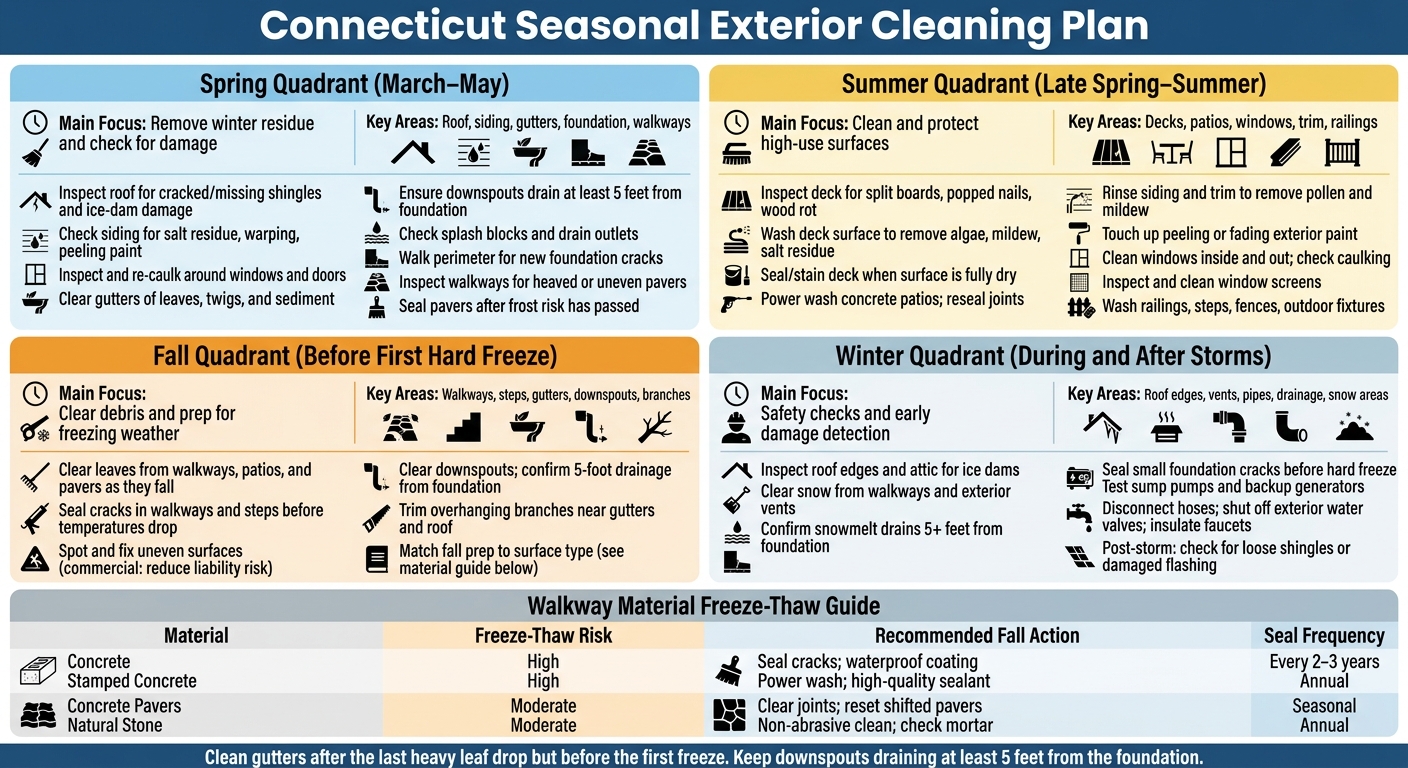
Quick Comparison
| Season | Main Focus | Key Areas | Best Time |
|---|---|---|---|
| Spring | Remove winter residue and check damage | Roof, siding, gutters, foundation, walkways | March–May |
| Summer | Clean and protect high-use surfaces | Decks, patios, windows, trim, railings | Late spring through summer |
| Fall | Clear debris and prep for freezing weather | Walkways, steps, gutters, downspouts, branches | Before first hard freeze |
| Winter | Safety checks and damage watch | Roof edges, vents, pipes, drainage, snow areas | During and after storms |
The sections below turn that yearly plan into a clear checklist you can follow through each season.
Spring Checklist: Remove Winter Residue and Check for Damage
Inspect the exterior in early spring, from March through May, before spring rain spreads winter wear. A simple way to handle it: work from top to bottom. Start with the roof and siding, then move to drainage, and finish with walkways and pavers.
Siding, Roof, and Trim Cleaning
Start with the roof. Look for cracked or missing shingles, damaged flashing around chimneys and skylights, and signs of ice-dam damage along the eaves. After that, check the siding. In Connecticut, winter often leaves behind salt residue, grime, peeling paint, and panels that are warped or cracked.
Before washing anything, inspect the caulking around windows and doors. That helps keep water out of the wall cavity. Then wash the siding early in spring to remove salt and grime before they sit there any longer.
Gutters, Downspouts, and Drainage Paths
Once the exterior is clean, shift to drainage. This step matters because runoff can turn small issues into bigger ones fast. Ice can weigh down gutters, loosen fasteners, and open small cracks at the seams. Clear out leftover leaves, twigs, and sediment, and make sure each downspout sends water at least 5 feet away from the foundation.
Also check splash blocks and drain outlets at the base of the downspouts. If those spots are blocked with winter debris, water can flow back toward the foundation. That adds pressure against basement walls and increases the chance of water damage.
Foundations, Walkways, and Pavers
Finish at ground level, where freeze-thaw movement tends to show up first. Walk the full perimeter and look for new cracks in the foundation walls or cracks that seem to be getting wider. Freeze-thaw cycles put heavy pressure on concrete, and shifting soil can turn a small crack into a larger problem in a single season.
"When temperatures drop, any water in the soil surrounding a foundation freezes and expands, exerting pressure against concrete walls. When temperatures rise, the frozen moisture melts and contracts, creating movement in the soil." - LeBlanc Basement Waterproofing
On walkways and patios, check for uneven pavers, flaking concrete, and sections that have shifted or heaved upward. These are common trip hazards, and on commercial properties they can also become a liability issue. Clean patios and seal pavers after the risk of frost has passed.
Summer Checklist: Clean Patios, Decks, Windows, and High-Use Surfaces
After spring repairs, it’s time to turn to the parts of your home that take the biggest beating in summer. Humidity helps mildew spread. UV rays wear down wood and paint. And all that foot traffic pushes dirt into patios, steps, and walkways. Summer is the right window to clean and protect these exterior surfaces before mildew, sun damage, and heavy use start to pile up.
Deck and Patio Cleaning and Surface Protection
Start with a close look at your deck. Check for split boards, popped nails, or signs of wood rot left behind by winter moisture. Then wash the surface to clear away dirt, algae, mildew, and salt residue.
Plan staining or sealing for late spring or early summer, when the surface is fully dry and the weather has leveled out. Sealant won’t bond well to wet or dirty wood, so the order matters: clean first, seal after.
Concrete patios and pavers need attention too. A good wash clears off slick algae buildup, which can turn a patio into a skating rink after rain. Resealing the joints also helps stop small cracks from getting worse during the next freeze-thaw cycle. If the joint sand shifted or washed out over winter, reset it before sealing.
Siding, Windows, Railings, and Outdoor Fixtures
Once the deck and patio are done, move on to siding, windows, and the details around your entry.
Rinse siding and trim to remove summer pollen and mildew. If you spot exterior paint that’s peeling or fading, touch it up to help shield the material underneath from UV exposure and moisture.
Clean windows inside and out, and check the caulking for gaps opened by heat and sun. Give screens a close look before you depend on them for day-to-day ventilation. Seal any openings so moisture and air stay where they belong.
Wash porch railings, steps, fences, and outdoor light fixtures too. These spots collect grime through the warmer months, and cleaning them helps keep the property looking cared for during busy summer use.
Fall Checklist: Clear Walkways, Manage Leaf Debris, and Prepare for Freeze-Thaw
Connecticut fall doesn't wait around. Clear debris, seal cracks, and get the work done before the first freeze. This is your last shot to protect exposed surfaces before freeze-thaw cycles start doing damage.
Walkways, Steps, and Hardscape Prep Before Winter
Leaves left on concrete, pavers, or stone do more than look messy. They trap moisture against the surface, which speeds up staining, algae growth, and freeze-thaw damage. That’s why it makes sense to clear them as they fall instead of saving everything for one big cleanup at the end of the season.
After you remove debris, check every walkway and step for cracks. Seal them before temperatures drop. If water gets into those openings and freezes, it will expand and make the damage worse. For commercial entrances with heavy foot traffic, fall is also a good time to spot uneven surfaces while they’re still easy to see. Fixing those trouble spots early can help cut liability risk before winter sets in.
Once the surfaces are clean and sealed, the next stop is the gutter system before the first freeze hits.
Late-Fall Gutter Cleaning and Perimeter Cleanup
The best time to clean gutters is after the last major leaf drop but before the first freeze. If gutters are packed with wet leaves, they can’t drain snowmelt the way they should. Water backs up onto the roof, then ice dams start to form. Some of that same water can also spill over the edge and collect near the foundation.
Downspouts need the same level of attention. Clear each one and make sure runoff moves away from the foundation. When soil around the base of a building gets too saturated, it creates hydrostatic pressure that can push moisture into basement walls. While you're there, trim overhanging branches. They keep dropping debris into gutters even after peak leaf season, and in winter storms they can turn into ice-heavy hazards.
"Neglecting downspout maintenance can lead to costly repairs, with some property owners experiencing up to 30% higher repair costs due to water damage caused by blocked or damaged downspouts." - Commercial Downspout Service
Walkway Material Comparison for Fall Maintenance
Use this guide to match your fall prep to the surface underfoot.
| Material | Freeze-Thaw Vulnerability | Recommended Fall Action | Maintenance Frequency |
|---|---|---|---|
| Concrete | High - prone to cracking and spalling | Seal cracks; apply waterproof coating | Annual inspection; seal every 2–3 years |
| Stamped Concrete | High - surface scaling from salt and ice | Power wash; apply high-quality sealant | Annual sealing |
| Concrete Pavers | Moderate - can shift from frost heaves | Clear debris from joints; reset shifted pavers | Seasonal debris removal |
| Natural Stone | Moderate - moisture degrades porous stone | Clean with non-abrasive solution; check mortar joints | Annual cleaning |
Stamped concrete and natural stone often need pro cleaning and sealing before winter. Once the right upkeep is matched to the material, the next step is winter safety checks and a de-icing plan.
Winter Planning and Year-Round Maintenance Tracking
Winter in Connecticut changes the job. It’s not so much about cleaning anymore. It’s about watching for damage early.
Freeze-thaw cycles, snowmelt, and ice can crack surfaces, put pressure on foundations, and bring drainage issues to the surface. That’s why the same problem areas you flagged in fall - cracks, drainage, and flashing - should stay on your winter watch list.
Winter Safety Checks and De-Icing Cleanup
Salt and de-icer residue can stick around long after winter ends. Wash it off siding, decks, walkways, and driveways in spring or summer.
It also helps to keep a few other winter checks on your calendar:
- Inspect roof edges and attics for ice dams, which can damage shingles and cause water to back up under roofing materials.
- Clear snow buildup from walkways and around exterior vents to keep access points safe and vents unobstructed.
- Check that snowmelt still drains at least 5 feet from the foundation.
- Seal small foundation cracks before the first hard freeze.
- Test sump pumps and backup generators so they’re ready for heavy snowmelt or spring rain.
- Disconnect hoses, shut off exterior water valves, and insulate outdoor faucets to help prevent pipe bursts during deep freezes.
- After major storms, do a quick inspection for loose shingles or damaged flashing before the next freeze-thaw cycle.
Build a Repeatable Annual Service Plan
The easiest way to stay ahead of seasonal wear is to put these checks on a set calendar. That way, the right work gets done before the weather shifts.
| Season | Owner/Staff Tasks | Professional Tasks |
|---|---|---|
| Spring | Rinse walkways; check for new cracks | Soft wash vs pressure wash for siding; roof inspection; gutter clearing |
| Summer | Repair window screens | Deck/patio cleaning; exterior paint touch-ups |
| Fall | Remove leaves from walkways; winterize irrigation and faucets | Gutter cleaning; seal window and door cracks |
| Winter | Clear snow from walkways and vents; check for frozen pipes | Post-storm inspections; drainage checks; sump pump testing |
A simple log or calendar can go a long way. It helps you spot repeat problem areas, track what was done, and notice patterns from one season to the next.
That paper trail matters for another reason too. If you ever need to file an insurance claim, regular upkeep and documentation can help support it, since damage tied to neglect can be denied.
Downspout Services handles house washing, gutter cleaning, paver sealing, and patio and deck cleaning for residential and commercial properties in Rhode Island and parts of Connecticut.
FAQs
When should I schedule each seasonal exterior cleaning task in Connecticut?
Schedule the work by season so nothing sneaks up on you.
- Spring: Starting in early April, take care of deep cleaning and inspections after winter.
- Summer: Clean patios and decks, seal driveway cracks, and keep an eye on irrigation during dry spells.
- Fall: From September to early November, clear gutters, seal windows and doors, disconnect hoses, and seal pavers if the weather cooperates.
- Winter: Watch for ice dams and storm damage.
Which exterior problems should I fix right away before winter?
Before winter hits, focus on the spots where water can sneak in, freeze, and then expand. That’s when small problems turn into bigger, more expensive ones.
- Clear gutters and downspouts so water drains the way it should.
- Seal cracks in concrete, brick, or masonry.
- Disconnect and drain garden hoses and irrigation lines.
- Fix loose boards, siding gaps, and worn window caulking to help keep out drafts and moisture.
What maintenance tasks can I handle myself, and when should I hire a pro?
Handle the low-risk DIY jobs yourself. That includes clearing debris, doing seasonal visual checks, looking at drainage after heavy rain, power-washing exterior surfaces in spring and summer, sweeping or rinsing pavers, refilling joint sand, and taking care of fall weatherproofing tasks like sealing drafts and disconnecting hoses.
Bring in a pro for anything high-risk or specialized. That includes work at heights or on the roof, soft-washing that needs the right chemicals, or cases where gutters still overflow even after you’ve cleared the debris.