Seasonal Exterior Maintenance Checklist
Practical year-round exterior checklist: spring roof and gutter repairs, summer cleaning and sealing, fall winterizing, and winter snow/ice care.
Maintaining your home's exterior is essential to prevent costly repairs and protect its value. Regular upkeep can save you money in the long run, with every $1 spent on preventive care potentially saving $4 to $8 on emergency repairs. This checklist breaks down maintenance tasks by season, helping you tackle specific weather-related challenges and keep your property in top shape year-round.
Key Points:
- Spring: Repair winter damage. Clean gutters, inspect roofs, and wash siding to remove grime.
- Summer: Focus on cleaning and sealing outdoor surfaces like decks, patios, and pavers.
- Fall: Prepare for winter by clearing gutters, sealing cracks, and winterizing irrigation systems.
- Winter: Stay vigilant by clearing snow, preventing ice dams, and monitoring drainage.
By organizing tasks into manageable steps and scheduling professional services when needed, you can protect your home from seasonal wear and tear while saving money and effort.
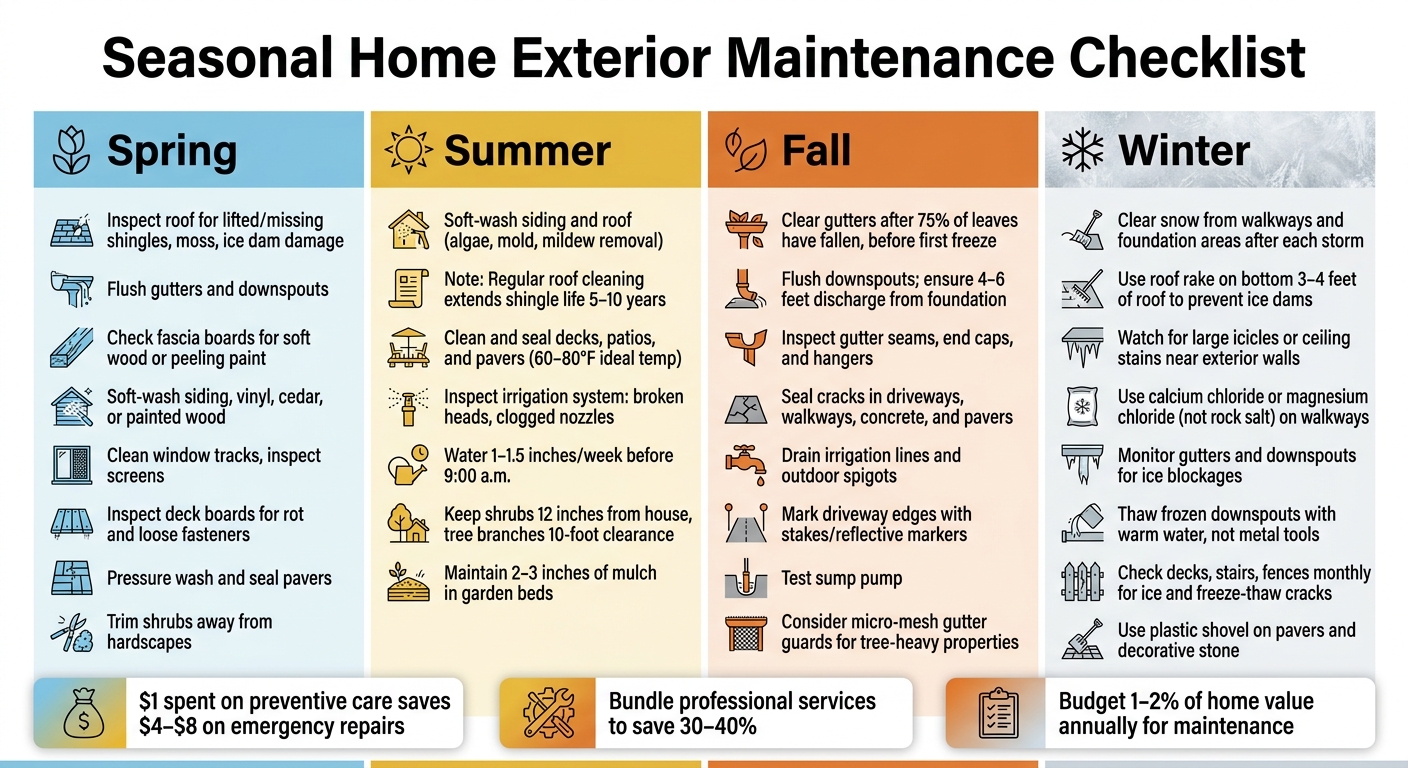
Seasonal Home Exterior Maintenance Checklist: Year-Round Guide
Home Maintenance Checklist: Seasonal Tips for Every Homeowner
sbb-itb-634c8b2
How to Use This Checklist
This seasonal roadmap helps you stay on top of home maintenance by breaking tasks into manageable chunks. Spring focuses on repairing winter damage, summer is for protecting surfaces, fall preps your home for freezing temperatures, and winter prioritizes safety. Spreading these tasks throughout the year keeps things from becoming overwhelming.
Start by organizing tasks by area. Divide them into categories like Roof & Gutters, Siding & Windows, Decks & Patios, and Landscaping & Drainage. Tackle one area at a time, and after each inspection, make sure to record dates, notes, and even photos. Keeping a simple log - whether digital or on paper - can be invaluable for insurance claims or when selling your home.
It’s also important to separate routine tasks from annual inspections. Routine tasks, like clearing debris, checking drainage after heavy rain, and visual inspections, should happen every season. Annual inspections, on the other hand, go deeper. These might include a detailed roof assessment, professional gutter flushing, or a structural check of your deck. Routine tasks help catch small issues early, while annual inspections ensure your home’s systems stay in good shape over time.
For tasks involving heights, structural elements, or specialized tools - like soft-washing a roof with the right chemical solutions and low pressure - hire a professional. This avoids potential damage or voiding warranties. Similarly, if gutters overflow even after clearing debris, it could signal issues like an improper pitch or a clogged underground downspout. These problems also call for professional expertise.
"The cheapest maintenance is the task you do before damage starts. A 20-minute inspection can save you thousands in water intrusion, rot, pest entry, or premature replacement." - Nick Slocum
Here’s a smart tip: bundle professional services whenever possible. Combining tasks like gutter cleaning, window washing, and house washing into one visit can save you 30% to 40% compared to booking each service separately. If you live in Rhode Island or parts of Connecticut, Downspout Services offers convenient bundled options, covering everything from roof washing and gutter cleaning to deck cleaning and paver sealing - all in one appointment.
Spring Exterior Maintenance Checklist
Spring is the perfect time to assess any damage your property might have endured over the winter. Freezing temperatures, ice, and heavy snow can leave behind problems that, if ignored, may lead to costly repairs. Aim to start your inspection in early April to catch and address issues before they escalate.
Roof, Gutters, and Downspouts
Winter can be harsh on your roof and gutters, so begin with a thorough visual inspection. Pay special attention to shaded areas where moisture tends to linger, as these spots are more prone to damage. Look for lifted or missing shingles, moss growth, or signs of ice dams - these can allow moisture to seep into your attic and walls. Next, check your gutters for sagging sections, loose brackets, or separated joints, all of which are common after heavy snow and ice. Don’t forget to examine the fascia boards below the gutters - soft wood or peeling paint could mean water has been backing up. Finally, flush your downspouts to ensure water flows freely, especially with the heavy spring rains around the corner.
"One of the biggest risks of ignoring gutter cleaning in Rhode Island is ice dam formation. When clogged gutters trap melting snow, the water has nowhere to go. It refreezes at the roofline, lifting shingles and forcing moisture into your attic and walls." - Mr. Gutter of Rhode Island
If you’re in a coastal area like Narragansett or Newport, a spring inspection is even more critical. The salty winter air can speed up corrosion on hardware and fixtures. Companies like Downspout Services offer gutter cleaning, roof washing, and gutter guard installations to keep your home protected.
Once your roof and gutters are squared away, it’s time to turn your attention to the siding, windows, and doors.
Siding, Windows, and Doors
Winter’s road salt, sand, and grime can cling to your siding and window tracks, potentially causing lasting damage if not addressed. For vinyl, cedar, or painted wood siding, a soft wash with low-pressure cleaning is ideal. This method removes buildup without forcing water behind the panels or damaging the paint.
While cleaning, take the opportunity to inspect for any cracks in the siding or peeling paint caused by the winter weather. When cleaning windows, don’t stop at the glass - vacuum the tracks and inspect screens for tears, as damaged screens can let insects into your home.
"Most homes should be professionally washed every 1–2 years to remove dirt, algae, and mildew before it causes long-term staining." - Atlantic Home Services
For exterior cleaning, Downspout Services uses soft-wash techniques tailored to each surface type to ensure your home is clean and well-maintained.
Once the siding and windows are clean and inspected, shift your focus to decks, patios, and other hardscaped areas.
Decks, Patios, and Hardscapes
Winter’s freeze-thaw cycle can take a toll on wood decks, often leading to peeling finishes, cracked boards, or loosened fasteners. Walk your deck and press on any discolored or soft areas to catch early signs of rot.
For patios, driveways, and walkways, look for salt residue, sand buildup, or biological growth like moss and algae, particularly in shaded or damp areas. These growths can make surfaces slippery and unsafe. Pressure washing is a great way to remove stubborn residues, and spring is also the perfect time to seal pavers. Sealing helps protect against corrosive elements and keeps your hardscapes looking sharp. Trim back shrubs near these areas to promote airflow and reduce moisture buildup.
Downspout Services offers deck cleaning and paver sealing services for both residential and commercial properties in Rhode Island and parts of Connecticut, ensuring your outdoor spaces are safe and ready for the season.
Summer Exterior Maintenance Checklist
Building on spring repairs, summer maintenance helps protect your home from the effects of heat and dry conditions. The warm, dry weather during this season is perfect for tackling cleaning and sealing tasks. Aim to complete major exterior projects in early summer when temperatures range between 60–80°F.
Exterior Cleaning and Washing
Summer heat can bake grime, pollen, and other organic buildup onto surfaces, making stains tougher to remove. That's why summer is the perfect time for a thorough exterior cleaning.
For siding and roofs, soft washing vs. pressure washing is an important comparison to understand, as soft washing is a great option for delicate surfaces. This method uses low-pressure water combined with specialized detergents to remove algae, mold, and mildew without damaging the underlying materials. The summer heat activates these detergents more effectively, and surfaces dry faster - advantages you don’t get in cooler months. On roofs, this method is especially beneficial since high-pressure washing can strip away shingle granules, reducing their lifespan. In fact, regular roof cleaning can extend the life of your shingles by 5 to 10 years.
"Summer cleaning is not so much about fixing visible damage as about preventing it from occurring." - Randy Lemmon, Gardening Expert
If you're looking for professional help, Downspout Services provides house washing, roof cleaning, window washing, and gutter maintenance for homes and businesses in Rhode Island and parts of Connecticut.
Once the exterior is clean, shift your attention to outdoor living spaces.
Decks, Patios, and Pavers
The warm, dry conditions of summer are ideal for cleaning and sealing decks, patios, and pavers. Proper drying before applying a sealant is crucial - sealing over wet or dirty surfaces can cause the finish to fail prematurely.
"If you skip [power washing], nothing you apply afterward will last the way it should." - Bruno Painting
Pay special attention to shaded areas on your deck or patio. These spots often trap moisture, making them a breeding ground for algae, which can turn slippery and hazardous during rain or when irrigation systems are in use. Use soft washing for wood and composite decks to avoid cracking or lifting the wood grain. For concrete and paver patios, higher-pressure washing is effective for removing deep-set stains.
With your hardscapes refreshed, it's time to focus on the landscaping around your property.
Landscaping and Irrigation
A well-maintained yard not only enhances curb appeal but also helps protect your home. Start by inspecting your irrigation system. Look for broken sprinkler heads, misaligned sprayers, and clogged nozzles, which can waste water or create overly wet areas that damage plants. Water deeply but infrequently - about 1 to 1.5 inches per week, preferably before 9:00 a.m. - to minimize evaporation and reduce the risk of fungal growth.
Trim back vegetation near your home. Shrubs should be kept at least 12 inches away from the house to block pests, and tree branches should have a 10-foot clearance to avoid storm damage. Also, ensure that the soil around your foundation slopes away from the house to prevent moisture from seeping into your basement. In garden beds, maintain 2–3 inches of mulch to retain moisture and suppress weeds, but keep it an inch away from plant stems to prevent rot.
Fall Exterior Maintenance Checklist
As summer fades, fall offers the last opportunity to prep your home for winter's challenges. By addressing key maintenance tasks now, you can avoid costly repairs when freezing temperatures turn minor problems into major headaches. Building on spring and summer upkeep, fall focuses on getting your home winter-ready.
Roof, Gutters, and Downspouts
Timing is everything when it comes to cleaning gutters. Aim to clear them after about 75% of leaves have fallen but before the first hard freeze. Once temperatures drop, frozen, leaf-filled gutters become nearly impossible to clean and can even pull away from the roof due to their weight.
"Fall: The most critical time. You must clear leaves after they have finished falling but before the first hard freeze. Frozen, leaf-filled gutters are nearly impossible to clean and are heavy enough to damage your roofline." - Darwin Mizhirumbay, Co-owner, LGM Roofing
Start by manually removing debris, beginning at the downspouts and working outward. Follow up with a garden hose to flush out fine silt and check for standing water, which could indicate alignment issues. Gutters should slope about 1/4 inch for every 10 feet to ensure proper drainage. While you're at it, inspect seams, end caps, and hangers for leaks or looseness - fall's extra leaf weight puts added stress on these components.
Don’t forget the downspouts. If water backs up during flushing, use a plumber’s snake or bottom-up pressure to clear any blockages. Ensure downspouts discharge water at least 4 to 6 feet away from your foundation to avoid water pooling near your home, which is a common cause of basement flooding. In fact, research shows that 68% of fascia rot cases are linked to neglected gutters or improper slopes over the past two years.
For homes surrounded by trees like oak, maple, or pine, comparing gutter guards vs. regular cleaning can help you decide if micro-mesh guards are right for preventing clogs from pine needles and shingle grit. If you're not up for the task, Downspout Services offers professional cleaning and guard installation in Rhode Island and Connecticut.
Once your gutters and roof are secure, turn your attention to outdoor surfaces like decks and patios.
Decks, Patios, and Hardscapes
Fall is the perfect time to seal outdoor surfaces before snow and ice can wreak havoc. Water that seeps into cracks in concrete or brick pavers will expand as it freezes, leading to crumbling edges or uneven surfaces over time. A quick walkthrough can help you identify early warning signs like hairline cracks, loose boards, soft spots around posts, or rusted fasteners.
"When water enters small cracks in concrete or brick pavers, it expands as it freezes. This expansion forces the cracks to widen, eventually leading to crumbling edges and uneven slabs." - Donofrio & Associates
Before sealing, thoroughly clean surfaces to avoid trapping moisture, which could compromise the sealant’s effectiveness. Hiring professionals for deck cleaning and sealing typically costs between $250 and $800, while DIY materials range from $40 to $80.
With your outdoor surfaces ready for winter, it’s time to tackle the final steps in preparing your property for cold weather.
Winterization Steps
Protect your outdoor systems by draining garden hoses and irrigation lines before the first freeze. Water left in pipes can expand and cause cracks. Shut off the internal valve for each outdoor spigot and let the lines drain completely.
Mark the edges of your driveway and fragile landscaping features, like low garden borders or decorative stones, with stakes or reflective markers before snow arrives. This will help prevent accidental damage from snowplows or shovels. Lastly, test your sump pump to ensure it’s ready to handle winter snowmelt.
| System | Fall Action | Why It Matters |
|---|---|---|
| Irrigation Lines | Drain/blow out | Prevents pipe bursts from freezing water |
| Outdoor Spigots | Shut off internal valve and drain | Protects exterior plumbing from ice damage |
| Sump Pump | Test and clean | Ensures readiness for winter snowmelt |
| Downspouts | Flush and extend at least 4–6 feet from foundation | Directs meltwater away from the foundation |
| Driveways/Walkways | Seal cracks | Prevents damage from freeze-thaw cycles |
"A weekend spent clearing gutters, sealing driveways, and trimming branches now is far cheaper than dealing with roof leaks, frozen pipes, or emergency repairs in January." - Connecticut Winter Preparation Guide
Winter Exterior Maintenance Checklist
Winter often involves staying vigilant and addressing issues as they arise, since most of the heavy prep work is done during earlier seasons. The focus now is on keeping your home safe, spotting potential problems early, and avoiding further damage by using the right tools.
Snow, Ice, and Slip Prevention
After each snowstorm, clear snow from walkways, driveways, and entry points as soon as possible. When shoveling, direct the snow away from your home's foundation and siding to prevent moisture from being trapped during freeze-thaw cycles.
Use a roof rake to clear the bottom 3–4 feet of your roof while standing safely on the ground. This helps reduce the risk of ice dams, which form when attic heat melts snow, causing water to refreeze along the eaves and potentially seep under shingles. Watch for warning signs like large icicles on the roofline or interior ceiling stains near exterior walls.
For walkways and steps, avoid using rock salt near gutters. Instead, opt for calcium chloride or magnesium chloride, which are effective at melting ice without corroding metal.
Also, keep an eye on your gutters to ensure they’re draining properly and not contributing to ice buildup.
Gutters, Downspouts, and Drainage
Rather than frequent cleanings, focus on monitoring your gutters during winter. Check them regularly to ensure downspouts aren’t blocked by ice or compacted snow. A frozen or clogged downspout can cause water to overflow and pool near your foundation.
"A single clogged downspout can overflow more than 300 gallons of water against a home's foundation in just one hour during a moderate rainstorm." - Hanley Construction
If a downspout freezes, avoid using metal tools to chip away at the ice. Instead, pour warm water to gently thaw the blockage or use calcium chloride to break up the ice. On warmer, dry days, run a garden hose through the gutter to check for hidden blockages or pooling water.
Exterior Structures and Surfaces
Check decks, stairs, and fences monthly throughout the winter. Look for ice buildup and cracks caused by freeze-thaw cycles, as these can worsen quickly in regions like New England.
When removing snow from decks or patios, use a plastic shovel to avoid damaging pavers or decorative stone. Avoid piling snow in one spot, as concentrated snowmelt can oversaturate the soil beneath hardscapes, leading to shifting pavers when temperatures rise.
"Taking care of your home's exterior during winter isn't just about preventing damage. It's about ensuring your family stays warm, comfortable, and safe while avoiding costly repairs down the road." - Hi-Tech Window & Siding Installations
If you notice issues like soft deck boards under ice or loose fence posts, address them as soon as possible. For larger concerns, consider scheduling a professional inspection when the weather improves. Services like Downspout Services offer exterior cleaning and maintenance for homes in Rhode Island and Connecticut.
Annual Planning and Recordkeeping
A maintenance log is the backbone of effective seasonal checklists. Without proper tracking, it's easy to overlook tasks or repeat them unnecessarily. Keeping records ensures your spring, summer, fall, and winter maintenance tasks are well-coordinated, creating a proactive approach to your home's care. This system works hand-in-hand with your seasonal checklists, ensuring no detail slips through the cracks.
Your log should include dates, service details, costs, and even before-and-after photos. These records aren't just helpful for staying organized - they can be crucial for warranty claims, insurance needs, and planning future maintenance.
"A good maintenance log is the exterior equivalent of keeping receipts and service records for a car." - Exterior.top
On the financial side, aim to budget 1% of your home's purchase price annually for maintenance. If you own an older home or live in a region with harsher weather - like New England - consider increasing this to 1.5% to 2%. Keep in mind that reactive repairs can cost 3–5 times more than preventive care.
FAQs
What exterior tasks should I do every season?
To keep your property in great shape throughout the year, here are some seasonal maintenance tips:
- Spring: Take time to inspect your roof for any damage, clear out gutters and downspouts, ensure proper drainage around your property, and give exterior surfaces a thorough cleaning.
- Summer: Use a pressure washer to clean hardscapes, seal any cracks in driveways or walkways, check the condition of your siding, and freshen up paint where needed.
- Fall: Clear out gutters, disconnect outdoor hoses to prevent freezing, inspect your chimney for safety, and seal windows and doors to keep drafts out.
- Winter: Keep an eye out for ice dams, check for storm-related damage, and address any ventilation issues to avoid larger problems.
Downspout Services is here to help with professional cleaning and maintenance solutions for all these seasonal tasks.
When should I DIY vs hire a pro for exterior work?
When deciding whether to tackle a task yourself or call in a pro, think about safety, complexity, and the cost of potential mistakes.
- DIY is great for straightforward, low-risk tasks that don’t require special tools or involve dangerous situations, like basic cleaning or small repairs.
- Hire a professional for anything high-risk, such as roof work, or jobs requiring specialized skills. Mistakes in these cases could lead to property damage, safety hazards, or even voided warranties.
Professionals not only handle the work safely and efficiently but can also save you time and help prevent costly repairs down the road.
How often should I wash and seal my exterior surfaces?
Professional cleaning is best done seasonally to protect surfaces and avoid long-term wear. A thorough spring cleaning helps eliminate the grime and residue left behind by winter, while fall maintenance ensures surfaces are ready to withstand freezing conditions. For concrete, sealing is generally required every 3 to 5 years and should always be preceded by a detailed cleaning. Downspout Services offers expert cleaning and sealing services in Rhode Island and Connecticut, helping to safeguard your property throughout the year.