Gutter Installation vs Roof Replacement: What Comes First
Replace the roof first to avoid gutter damage, ensure a proper drip edge, and align shingles for effective drainage.

Roof replacement should typically come first. Here's why: Installing gutters before replacing your roof can lead to alignment issues, drainage problems, and potential damage to the gutters during the roof replacement process. Roof work often involves heavy materials and debris, which can harm newly installed gutters. Additionally, replacing the roof first allows proper installation of critical components like the drip edge and ensures the shingles align correctly with the gutters for effective water management.
Key Takeaways:
- Roof replacement impacts gutters: Heavy construction can damage new gutters, and proper alignment with the roofline is crucial for drainage.
- Shingle overhang matters: Gutters installed before roof work may not align with new shingles, leading to water overflow issues.
- Combine projects when possible: If both systems are aging, replacing them together can save time and labor costs.
- Inspect gutter condition: If gutters are in good shape, they can often be removed and reinstalled after roof work. However, signs of wear like cracks, sagging, or rust may indicate the need for replacement.
If you're planning both projects, consult a professional to evaluate your roof and gutters. This ensures the timeline and approach are tailored to your home's needs.
Why Roof Replacement Usually Comes First
How Roof Replacement Affects Existing Gutters
Replacing a roof is a tough job, and the process can put your gutters at risk. During the roof tear-off, heavy debris, tools, and accidental impacts can dent, scratch, or even loosen gutters.
Another issue is that gutters can block access to key roof components, like the drip edge. The drip edge is a metal strip designed to direct water away from the fascia, protecting your home from water damage. If gutters are mounted too high or sit flush against the fascia, they can make it difficult for roofers to access or properly install this crucial piece. In some cases, gutters need to be removed entirely to prevent interference.
Roof replacement also provides an opportunity to inspect the fascia boards for hidden rot or damage. Fascia boards need to be strong enough to support the weight of gutters. If rot is discovered after new gutters are installed, you'll face the extra expense of removing the gutters, repairing the fascia, and reinstalling the system - essentially doubling your labor costs.
By tackling the roof first, you not only protect the gutters but also ensure proper drainage and structural integrity moving forward.
Shingle Overhang and Proper Water Drainage
Once the roof is replaced, getting the shingle overhang right is key to managing water flow effectively.
Shingle overhang placement matters. Shingles need to extend just enough to direct water into the center of the gutter trough. If gutters are already installed, they might not align with the new shingle overhang, causing water to spill behind the gutters or over the edge.
New roofing materials can also change how water flows off your roof. Different types of shingles or adjustments to the roofline can alter the speed and volume of runoff. Gutters installed before these changes are finalized may struggle to handle the new drainage patterns, leading to overflows during heavy rain.
sbb-itb-634c8b2
When to Replace Gutters at the Same Time
Signs Your Gutters Need Replacement
Your gutters might be past their prime if you notice cracks, holes, rust, or seams that are pulling apart. These issues can cause water to leak onto your fascia or foundation, leading to further damage. Sagging or warped gutters that pull away from the fascia are also red flags, often caused by improper slopes or hidden rot behind the brackets. Additionally, water stains, peeling paint, or mildew on the fascia are clear indicators that your gutters aren't doing their job.
Age matters, too. Aluminum gutters typically last around 20 years, while vinyl gutters have a lifespan of 10 to 20 years. If your gutters are nearing or have exceeded these benchmarks, it’s a good idea to replace them during a roof replacement project.
| Gutter Condition | Impact on Your Roof Project |
|---|---|
| Cracks, rust, or holes | Water may seep into the fascia or foundation; replacement is advised |
| Sagging or detaching | Hinders proper drainage and risks damage to the new drip edge |
| Water stains on fascia | Suggests improper slope or hidden rot; should be addressed during roof work |
| 20+ years old | Likely to fail soon after a new roof is installed |
Spotting these issues early allows you to combine gutter replacement with roof work, saving time and reducing costs.
Benefits of Upgrading Gutters During Roof Work
When your gutters show signs of wear, replacing them alongside your roof can simplify the process and improve results. Bundling both projects often comes with financial perks - many contractors offer discounts of about 10% when you replace gutters during roof work. Plus, you’ll only need one crew to handle both tasks. For a home that requires roughly 200 linear feet of gutters, the added cost usually falls between $1,200 and $2,500, translating to about $5 to $12 per linear foot.
"Replacing both systems at once provides full warranty coverage and ensures your entire water management system starts fresh."
This is also the perfect time to upgrade to seamless aluminum or larger K-style gutters. These options align better with new roof features, improving water drainage and protecting your home. Proper installation ensures gutters work seamlessly with the shingle overhang and drip edge, preventing water from spilling behind the gutters. This added protection safeguards your foundation and landscaping from potential erosion.
When Existing Gutters Can Be Kept
Removing and Reinstalling Gutters
If your gutters are in good shape, they can often be removed and reinstalled during a roof replacement. This works as long as there’s no visible damage like dents, sagging, or corrosion.
"In most cases, if your gutters are in good shape and not interfering with the roof edges or flashing, roofers will work around them."
- Happy Roofing
That said, gutters must be removed if they’re installed too high or flush against the fascia. This placement can interfere with proper shingle installation or block access to the metal drip edge, which may need replacement or adjustment. In these cases, contractors will take down the gutters, complete the roof work, and then realign and seal them to prevent leaks.
Before deciding to keep your gutters, check for signs of trouble, like water stains or overflow on the fascia boards. These could point to hidden rot or improper slope issues that should be addressed during the roofing project.
Cost Comparison: Keeping vs. Replacing Gutters
Once you’ve inspected your gutters, weigh their condition against the costs of replacement. Financially, keeping your gutters is the less expensive option upfront. It only involves labor costs for removal and reinstallation. On the other hand, replacing gutters adds an extra $1,200 to $2,500 to your roofing project - or roughly $5 to $12 per linear foot.
| Factor | Keep Existing Gutters | Replace with Roof |
|---|---|---|
| Upfront Cost | Lower (labor for detach/reset) | $1,200–$2,500 additional cost |
| Long-term Risk | Possible leaks, rot, or misalignment | Full warranty and integrated drainage |
| Lifespan | Limited to remaining life of old material | New 20+ year lifespan (aluminum) |
While reinstallation saves money initially, older gutters may lead to issues like leaks or alignment problems over time. If your aluminum gutters are nearing the end of their typical 20-year lifespan, replacing them during the roof project may be more cost-effective. Since the crew and equipment are already on-site, this can save you time and effort in the long run.
Roofer Explains Why You Should Replace Gutters With Your Roof
Cost and Timeline Planning
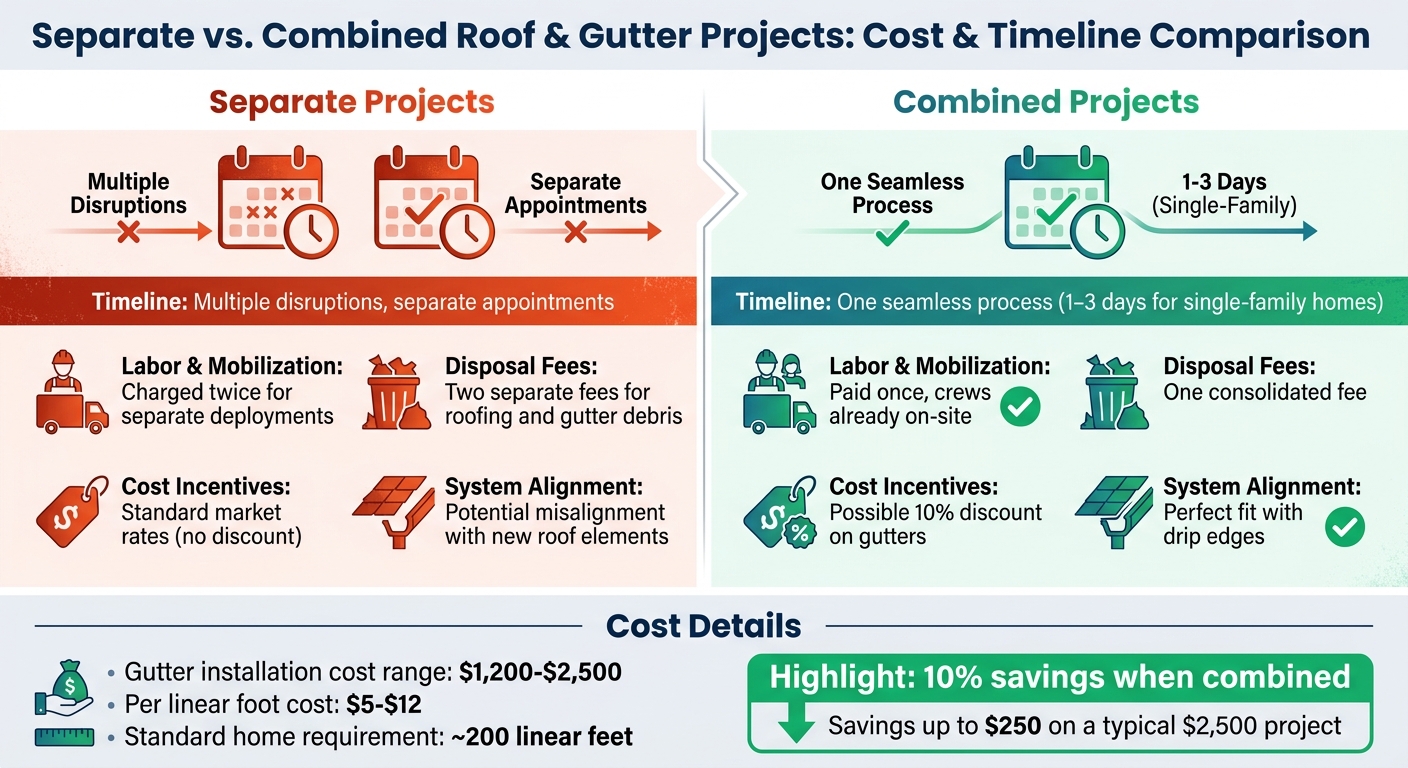
Roof and Gutter Replacement: Cost and Timeline Comparison Guide
Expected Project Timeline
When tackling a roof replacement, it’s not just about the materials or installation - planning your timeline and budget is equally important.
For single-family homes, roof replacements typically take about 1–3 days. However, if you handle roof and gutter projects separately, you’ll face multiple disruptions. Each project requires different crews, separate equipment setups, and additional cleanups, which can stretch out the process and add inconvenience.
On the other hand, combining these projects into one streamlined effort creates a single, coordinated timeline. Here’s how it works: roofers first remove the old roof, install new shingles and drip edges, and then immediately follow up with gutter installation. This ensures the gutters align perfectly with the new roofline, eliminating any drainage issues in between. Plus, this approach saves time and simplifies the process.
Cost Breakdown: Separate vs. Combined Projects
Bundling roof and gutter replacement can lead to noticeable savings. Why? Contractors only need to mobilize their crews and equipment once, and you’ll pay for a single disposal fee instead of separate charges for roofing and gutter debris. Some contractors even sweeten the deal with discounts - many offer around 10% off gutter installation when combined with a roof replacement.
Here’s a quick comparison of separate versus combined projects:
| Factor | Separate Projects | Combined Projects |
|---|---|---|
| Labor & Mobilization | Charged twice for separate deployments | Paid once, as crews are already on-site |
| Disposal Fees | Two separate fees for roofing and gutter debris | One consolidated fee |
| Scheduling | Multiple disruptions and appointments | One seamless process |
| Cost Incentives | Standard market rates | Possible 10% discount on gutters |
| System Alignment | Potential misalignment with new roof elements | Perfect fit with drip edges |
For a home needing about 200 linear feet of gutters, expect gutter installation costs to range from $1,200 to $2,500 ($5 to $12 per linear foot). Completing these projects separately means paying full market rates for each and higher labor costs due to duplicate mobilization.
Making the Right Choice for Your Property
Main Points to Remember
Here’s a quick recap of the key points to help you make an informed decision about your project.
Start by assessing the condition and remaining lifespan of both your roof and gutters. If both are nearing the end of their usability, replacing them at the same time can save on labor costs and streamline the process.
Pay close attention to granule loss on shingles, as it’s a clear sign of roof wear. Also, watch for gutter overflow during rainfall - this could point to structural problems that need immediate attention.
Typically, experts recommend replacing the roof first. This avoids potential damage to new gutters from the weight and movement of heavy shingles during installation. However, if your gutters are so damaged that they risk causing issues like basement flooding or foundation cracks, their replacement should take priority - even if your roof is still in decent shape.
With these factors in mind, getting a professional evaluation is crucial to determine the best approach for your property.
Getting Professional Help
To ensure your roof and gutters work together effectively, it’s important to get advice from professionals who understand both systems.
Schedule an inspection to check whether your gutters interfere with roof edges or flashing before starting any work. A thorough evaluation will help you decide whether your gutters can be temporarily removed and reinstalled or if a full replacement is necessary during roof work.
"Each situation is unique, so it's crucial to consult a professional for a personalized assessment." - Joseph Elshazly, President, Rapid Restoration Group
If you’re considering upgrades, Downspout Services can guide you on whether to keep your current gutters or switch to seamless aluminum systems, which require less maintenance in the long run. To save on costs, ask for a combined estimate - some contractors offer discounts of up to 10% on gutter installation when bundled with roof replacement.
FAQs
Do my gutters have to be removed for a new roof?
When replacing a roof, gutters don’t always have to be removed. If they’re in good shape and won’t get in the way of the work, they can remain as they are. That said, there might be instances where removing them is necessary, especially if they obstruct the roofing process. It’s best to discuss this with your roofing contractor to figure out the right approach for your specific situation.
How do I know if my gutters are still worth keeping?
To figure out if your gutters are still doing their job, take a close look at their condition. If they’re working as they should - no water spilling over and no signs of damage to your home - they’re probably good to keep. On the other hand, if they’re damaged, constantly clogged, or causing bigger problems like foundation issues, it might be time to replace them. Routine inspections can go a long way in making sure your gutters are keeping your property safe.
Can weather or season change which job should come first?
Severe weather, like storms or heavy rain, can shift priorities when it comes to home repairs. For example, roof repairs or replacements may become urgent to prevent further damage. On the other hand, during milder seasons, tasks like gutter installation or maintenance can often be planned more flexibly. It's smart to factor in seasonal conditions to avoid unnecessary challenges and ensure each job is completed at the right time.
Related Blog Posts
Heading 1
Heading 2
Heading 3
Heading 4
Heading 5
Heading 6
Lorem ipsum dolor sit amet, consectetur adipiscing elit, sed do eiusmod tempor incididunt ut labore et dolore magna aliqua. Ut enim ad minim veniam, quis nostrud exercitation ullamco laboris nisi ut aliquip ex ea commodo consequat. Duis aute irure dolor in reprehenderit in voluptate velit esse cillum dolore eu fugiat nulla pariatur.
Block quote
Ordered list
- Item 1
- Item 2
- Item 3
Unordered list
- Item A
- Item B
- Item C
Bold text
Emphasis
Superscript
Subscript