Signs You Need New Gutters (Not Just a Cleaning)
Spot cracks, sagging, rust, persistent leaks, or foundation damage—when cleaning won’t fix it, your gutters likely need full replacement.
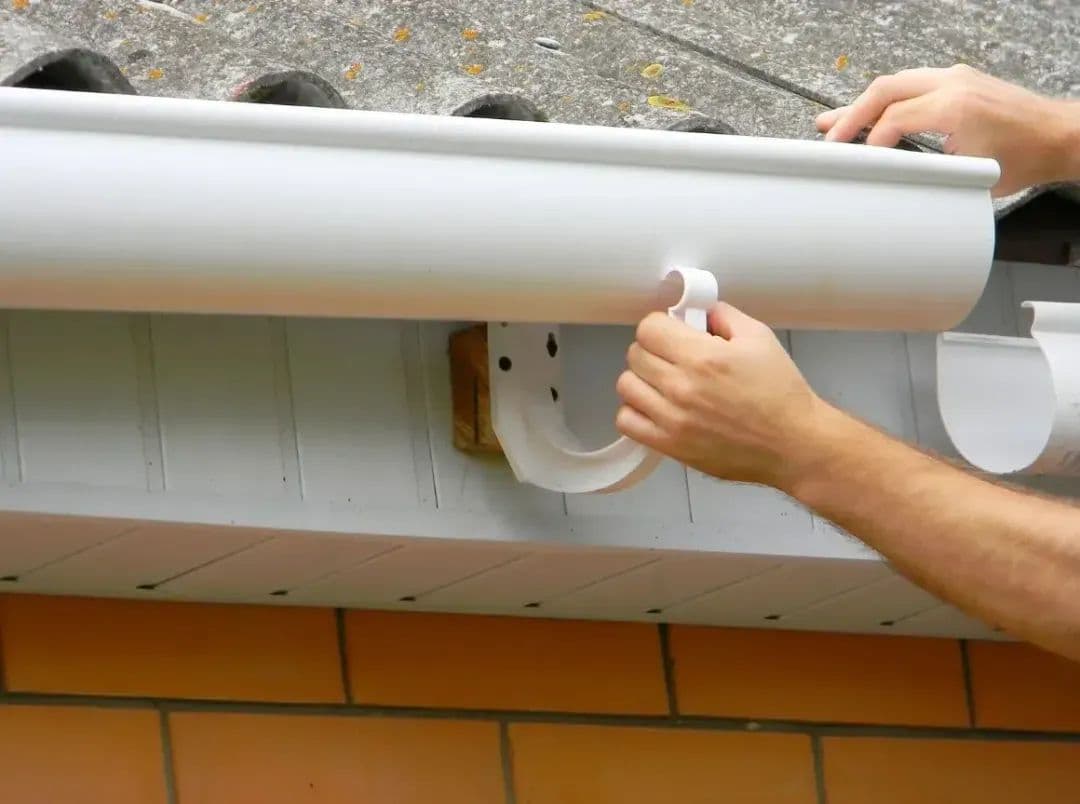
If your gutters are cracked, sagging, rusty, or leaking despite regular cleaning, it’s time for a replacement. Gutters protect your home from water damage, but when they fail, you risk costly foundation repairs, rotting wood, and mold growth. Here’s how to tell if cleaning won’t fix the problem:
- Cracks or splits: Small cracks grow over time, leading to leaks and structural damage.
- Sagging or detached sections: Weak brackets or heavy debris can pull gutters away from your home.
- Rust or peeling paint: Indicates water pooling and material breakdown.
- Persistent leaks: If cleaning and sealing don’t stop leaks, the material may be worn out.
- Water damage near your foundation or walls: Look for soil erosion, mildew, or water stains.
Why cleaning might not be enough: Issues like improper pitch, undersized gutters, or structural sagging often require a full replacement. Investing in new gutters - especially seamless systems - can save you from ongoing maintenance and expensive repairs.
Quick Tip: If repair costs exceed 30% of replacement costs or your gutters are nearing the end of their lifespan (15–50 years depending on material), replacing them is often the smarter choice.
Do You Really Need New Gutters? How to Know (And What It Should Cost)
sbb-itb-634c8b2
Signs You Need New Gutters
Your gutters might seem fine from a quick glance, but certain signs can reveal when they're no longer doing their job. Catching these issues early can save you thousands in potential repairs. Let’s break down the key warning signs that indicate it’s time for a gutter replacement.
1. Cracks or Splits in the Gutter Material
What starts as a small crack can quickly snowball into a bigger issue. Over time, freeze-thaw cycles expand these cracks, leading to leaks that harm your fascia boards, shingles, and even your foundation.
"While small cracks in your gutters may not seem like a big issue, if not repaired quickly, they will become more prominent and cause further damage to your gutters." - Ebonee Williams, Contributing Writer, Angi
To spot cracks, inspect your gutters on a sunny day for visible splits, and then check during a rainstorm to see if water leaks through. If you notice multiple cracks or splits, especially around seams, it’s likely time to replace the system. While a temporary sealant might help with one or two small cracks, widespread damage signals the end of your gutters’ life.
2. Sagging or Detached Sections
If your gutters are sagging or pulling away from the house, it’s a clear sign of structural failure. This usually happens because brackets weaken over time or because debris and standing water make the gutters too heavy for the hangers to support. If you’re finding fasteners on the ground, it’s another sign that the system is failing .
When attachment points fail repeatedly, the only reliable solution is replacing the gutters with a system that offers proper support.
3. Rust or Peeling Paint
Rust spots or peeling paint are big red flags. These issues indicate that water is pooling in your gutters, breaking down their protective coating . While you might patch a small rust spot here or there, large-scale corrosion or holes mean the material is too far gone to repair.
For instance, galvanized steel gutters typically last only 15 to 20 years before rust becomes a significant issue. If you’re noticing rust across multiple areas or bubbling paint, it’s time to think about a full replacement.
4. Leaks That Won't Stop After Cleaning
Clearing out debris should solve most drainage issues, but if your gutters still leak after cleaning, you’re likely dealing with material fatigue or failing sealant. Leaks at seams often stem from years of expansion and contraction due to temperature changes .
Observe your gutters during a rainstorm to spot these leaks. If re-sealing hasn’t worked, persistent leaks are a clear sign that the system has reached the end of its functional life.
5. Water Damage Near Your Foundation or Walls
When gutters fail, water doesn’t get directed away from your home properly, leading to noticeable damage. Look for soil erosion around your foundation, mildew in crawl spaces, or water stains running down your siding.
Inside, check your attic for water stains, mold, or rotting wood under the eaves. Overflowing or leaking gutters often back water up under roof shingles, leaving evidence in these hidden areas. If you see bubbling on your siding beneath the gutters, it’s a sign of ongoing leaks that need immediate attention.
| Gutter Material | Average Lifespan | Key Characteristics |
|---|---|---|
| Aluminum | 25 years | Rust-resistant, most common |
| Galvanized Steel | 15-20 years | Prone to rust once protective coating wears off |
| Copper | 50 years | Durable, rust-resistant, premium cost |
| Zinc | 50 years | Long-lasting, high-end |
Why Overflowing Gutters May Mean You Need Replacement
You’ve cleaned your gutters, removed all the debris, yet water still pours over the edges every time it rains. Sound familiar? This isn’t just an annoying issue - it’s a sign of deeper problems that simple cleaning can’t resolve. When gutters overflow despite being clear, it often points to flaws in the system’s design or condition.
One common cause is improper pitch. Gutters need a slight slope - about 1/4 inch for every 10 feet - to direct water toward the downspouts. If they’re level or slanted the wrong way, water will pool instead of draining. To check, look for standing water in your gutters hours after a rainstorm. If you spot it, improper pitch could be to blame. Another potential issue? The size of your gutters.
Undersized gutters are a frequent problem, especially in older homes. Many were built with 4-inch gutters, which struggle to handle the heavier rainfall we often see today. Think about this: just one inch of rain generates roughly 1,246 gallons of water on the roof of an average home. If your roof has a large surface area or a steep pitch, even 5-inch gutters might not cut it.
Then there’s structural sagging, which creates low spots where water collects and spills over. If sagging gutters are simply reattached to rotted fascia boards, the fix won’t last. The wood needs to be replaced along with the gutters to solve the problem for good.
These issues - improper pitch, undersized gutters, and sagging - are clear indicators that cleaning alone won’t restore your system’s functionality. Replacing your gutters can provide a permanent solution. A new system ensures the proper pitch, sizing that matches your roof’s needs, and seamless construction to reduce the weak points where sectional gutters often fail. Plus, if repair costs are creeping up to 30% of what a replacement would cost, investing in a new system is often the smarter, long-term choice.
The Benefits of Professional Gutter Replacement
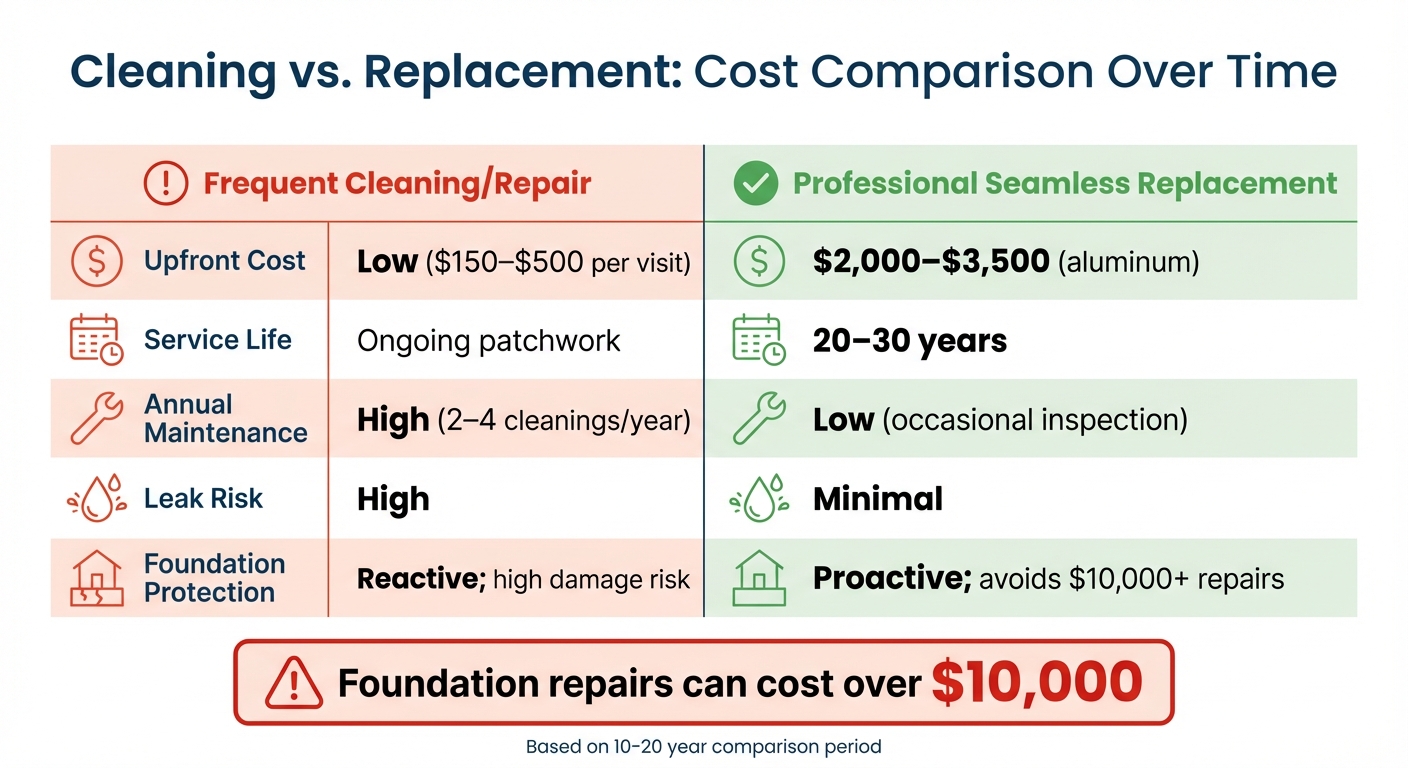
Gutter Replacement vs Cleaning Costs: 10-Year Comparison
Once you’ve spotted the signs of gutter failure, the logical next step is to find a solution that lasts. When repairs no longer cut it, replacing your gutters professionally can address immediate issues while offering long-term advantages. This approach not only solves current problems but also saves you from constant maintenance and repair costs.
Seamless gutters are a standout option. Unlike traditional sectional systems, which have joints every 10 to 20 feet, seamless gutters are custom-built on-site using specialized equipment. These joints are common failure points where sealants tend to break down over time. With seamless gutters, you get fewer leaks, reduced upkeep, and better durability.
Their lifespan is another big plus. While sectional gutters typically last around 20 years, seamless systems can hold up for as long as 30 years with proper care. Professional installation ensures the right pitch and placement, which is critical for efficient drainage. This precision helps prevent standing water and overflow - issues often caused by poorly installed systems.
Although the initial cost is higher - aluminum seamless systems generally cost between $2,000 and $3,500 for an average home - the alternative can be far more expensive. Regular gutter cleanings (2 to 4 times a year) and frequent repairs add up quickly. And don’t forget the potential for foundation damage, which can cost over $10,000 to fix. Investing in a new gutter system is a smart way to protect your home’s structure while cutting down on ongoing maintenance headaches. This upfront investment pays off in the long run, as shown below.
1. Cleaning vs. Replacement: Cost Comparison Over Time
Over a 10- to 20-year span, the costs of repeated cleanings and repairs can easily surpass the price of a seamless gutter replacement. Each repair visit can cost between $150 and $500, and if you’re scheduling multiple visits per year, the expenses add up fast.
| Factor | Frequent Cleaning/Repair | Professional Seamless Replacement |
|---|---|---|
| Upfront Cost | Low ($150–$500 per visit) | $2,000–$3,500 (aluminum) |
| Service Life | Ongoing patchwork | 20–30 years |
| Annual Maintenance | High (2–4 cleanings/year) | Low (occasional inspection) |
| Leak Risk | High | Minimal |
| Foundation Protection | Reactive; high damage risk | Proactive; avoids $10,000+ repairs |
Seamless gutters offer a better return on investment. Instead of sinking money into a failing system, you’re paying for something that will protect your home for decades.
2. How to Choose a Gutter Service Provider
Choosing the right professional is just as important as the system itself. Proper installation requires precise slope calculations, secure mounting to healthy fascia boards, and the ability to fabricate seamless gutters on-site. DIY installations or hiring someone inexperienced can leave you with the same drainage problems you’re trying to fix.
When picking a provider, look for separate warranties that cover both materials (at least 20 years) and workmanship (at least 5 years). Ask about their experience with your local weather conditions - installers in areas like Rhode Island and Connecticut need to account for heavy snow and ice. A good contractor will evaluate your roof’s pitch, surface area, and drainage needs to recommend the right system, whether it’s standard 5-inch gutters or larger 6-inch ones. This attention to detail ensures not just a functional gutter system but also protection for your home as a whole.
Downspout Services is a trusted name for gutter assessments, replacements, and installations in Rhode Island and Connecticut. Their team doesn’t just focus on your gutters - they also check your fascia, soffits, and foundation to ensure your entire water management system works seamlessly. This tailored approach means your home gets a solution designed specifically for its needs, rather than a generic fix that might fail in a few years.
Conclusion: Protect Your Home with the Right Gutters
Choosing to replace your gutters isn’t just about aesthetics - it’s about protecting your home from serious damage. Persistent leaks, cracks, rust, or sagging gutters are clear indicators that cleaning won’t cut it anymore. Ignoring these signs can lead to costly issues like foundation cracks, basement flooding, or rotting fascia boards.
Investing in new gutters, which typically costs around $1,900, can help you avoid foundation repairs that might set you back $5,000 or more. Plus, with a lifespan ranging from 15 to 50 years depending on the material - whether aluminum, steel, or copper - a replacement is a smart long-term decision. Upgrading to properly sized gutters also eliminates overflow problems, especially if you’ve been dealing with undersized systems.
If you notice peeling paint or rust spots, don’t wait until the metal fails. Early action can save you from emergency repairs and additional expenses.
Downspout Services provides professional gutter assessments and replacements across Rhode Island and Connecticut. Their team ensures your entire water management system - including fascia, soffits, and foundation - is working together to protect your home. For peace of mind and long-lasting protection, consider scheduling a replacement with Downspout Services today.
FAQs
Can I repair my gutters instead of replacing them?
In some situations, minor gutter damage - like small cracks or leaks - can be fixed without too much trouble. But if you're dealing with bigger problems like rust, sagging, ongoing leaks, or large cracks, it's usually a sign that replacement is the way to go. Take a close look at your gutters to figure out whether a quick repair will do or if replacing them entirely is the smarter choice for the long haul.
How do I know if my gutters are the wrong size?
Your gutters might not be the right size if you’re seeing cracking, sagging, or water overflowing during heavy rain. These problems often mean the gutters can’t handle the volume of water coming off your roof. Switching to properly sized gutters can help protect your home from potential damage.
Should I choose seamless gutters for a replacement?
Absolutely. Seamless gutters are an excellent option when it comes to replacing old or damaged gutters. Here's why:
- Durability: With proper care, seamless gutters can last over 20 years. Their design minimizes weak points, making them less prone to wear and tear over time.
- Leak Prevention: Since they have fewer joints compared to traditional gutters, the risk of leaks is significantly reduced. This helps protect your home from potential water damage.
- Low Maintenance: These gutters require minimal upkeep, saving you time and effort in the long run.
One thing to keep in mind: seamless gutters need to be professionally installed. This ensures they function correctly and maintain their longevity. While it may add to the upfront cost, expert installation is worth it for the long-term benefits.