LED vs Incandescent Christmas Lights: Which Is Better?
LED lights use 80-90% less energy, stay cool, and last far longer; incandescent offer a warmer look and lower upfront cost.
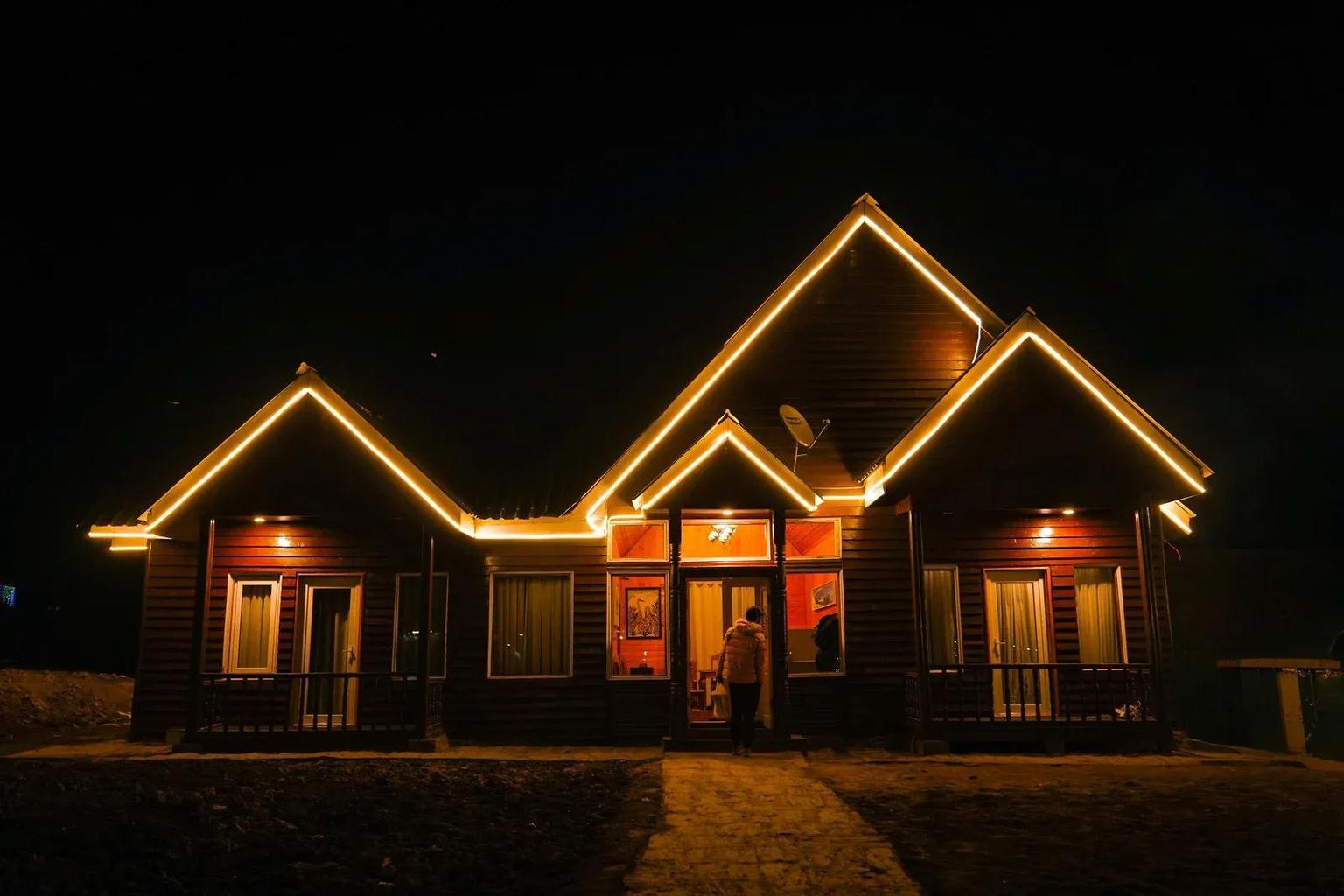
For most homes and businesses, LED Christmas lights are the better choice. They use 80% to 90% less electricity, last far longer, stay cool, and usually cost less over time even though the upfront price is higher.
If you want the short answer, here it is:
- Choose LED lights if you want lower power use, fewer bulb changes, and less heat
- Choose incandescent lights if you care most about the old-style warm look and lower shelf price
- LEDs usually last 30,000 to 50,000+ hours
- Incandescent bulbs usually last about 1,000 to 2,000+ hours
- Incandescent bulbs run hot, while LEDs stay cool to the touch
- LED strings put less load on circuits, so you can connect more strands
That means your choice comes down to cost, lifespan, safety, look, and upkeep. Downspout Services stocks LED strands as the default option for holiday light installation across Rhode Island, since the lower heat output and reduced circuit load make larger displays easier to plan safely.
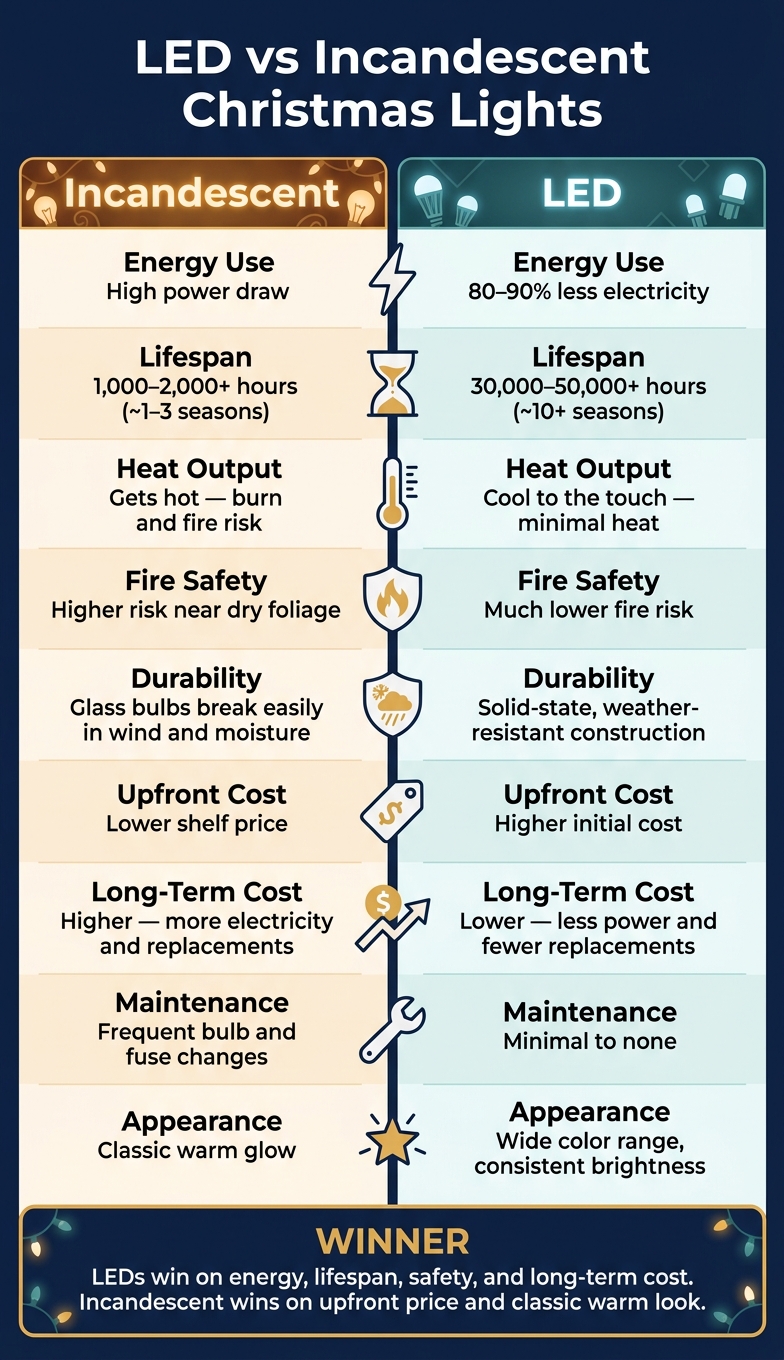
LED vs Incandescent Christmas Lights: Full Comparison
LED vs Incandescent Christmas Lights
sbb-itb-634c8b2
Quick Comparison
| Feature | LED Christmas Lights | Incandescent Christmas Lights |
|---|---|---|
| Power use | 80%–90% lower | High |
| Lifespan | 30,000–50,000+ hours | 1,000–2,000+ hours |
| Heat | Cool to the touch | Runs hot |
| Safety | Lower burn and fire risk | Higher heat risk |
| Durability | Better in bad weather and handling | Glass bulbs break more often |
| Upfront price | Higher | Lower |
| Long-term cost | Lower | Higher |
| Maintenance | Low | High |
| Look | Even light, many color options | Old-style warm glow |
If you are comparing the two for your home, the main thing to know is simple: LEDs win on power use, bulb life, and safety, while incandescent lights mostly win on the familiar glow and lower day-one cost.
Energy Use and Seasonal Operating Cost
Energy use is the clearest cost gap between the two. Holiday lighting can push up your electric bill, and that jump gets easier to spot when you have long rooflines, wrapped trees, or a big yard display.
The biggest difference is simple: incandescent strings use much more power than LEDs. LED holiday lights use 80–90% less electricity than traditional incandescent strings.
Wattage and Power Draw
LED strands use so little power that you can connect more strings end-to-end before you run into breaker limits. Incandescent strings reach those limits much sooner, which becomes a bigger issue on larger displays.
Side-by-Side Cost Table
The table below sums up the general cost gap.
| Factor | LED Lights | Incandescent Lights |
|---|---|---|
| Energy consumption | 80–90% less electricity | Higher power draw |
| Circuit load | Low; allows more connected strands | High; limits connected strands |
| Seasonal electric bill | Lower | Higher |
Lower power draw is only one part of the savings. Lifespan also shapes long-term cost.
Lifespan, Durability, and Maintenance
Energy use is only part of the story. How long a light set lasts and how often it breaks have a big effect on what you spend over time.
A cheap set isn't much of a deal if it dies after two holiday seasons.
How Many Seasons Each Type Lasts
The gap here is pretty big. Incandescent bulbs usually last 1,000 to 2,000+ hours, while LED bulbs are rated for 30,000 to 50,000+ hours.
In plain English, incandescent strings often need to be replaced every one to three seasons. A good LED set can often keep going for 10+ seasons of holiday use.
There’s also a difference in how they fail. LEDs tend to dim or stop working little by little over time. Incandescent bulbs burn out more often, which means more spot fixes and more frustration.
Durability and Replacement Table
Incandescent lights also have a hard time with rough handling and bad weather. The glass bulbs can crack during setup, snap off in strong winds, or end up with socket damage after moisture gets in. LEDs use solid-state construction and are often made for outdoor weather resistance, so they hold up better on rooflines, wrapped trees, and in winter weather.
| Feature | Incandescent Lights | LED Lights |
|---|---|---|
| Lifespan | 1,000–2,000+ hours | 30,000–50,000+ hours |
| Breakage/Weather Resistance | Low; glass bulbs break easily in wind and moisture | High; solid-state, weather-resistant construction |
| Replacement Frequency | Often every 1–3 seasons | Rare; can last 10+ seasons |
| Maintenance Needs | Frequent bulb and fuse changes | Minimal to none |
"Incandescent lights break very easily and burn out frequently." - BrightlightsKC
That lines up with what many homeowners and installers see in practice. With LEDs, mid-season repair calls are rare. With incandescents, they happen a lot more often. That helps explain why many professional holiday lighting installers have moved away from incandescent strings, and why some stopped servicing them altogether as of 2021.
Next, compare heat output, safety, and appearance.
Heat, Safety, Appearance, and Overall Value
Heat Output and Safety for Indoor and Outdoor Use
Incandescent bulbs get hot. LEDs stay cool. That one difference matters a lot when your lights are on for hours every night during the holiday season.
Hot bulbs can increase burn risk, especially in homes with kids or pets. They can also add to fire risk around dry branches, garlands, and other flammable decor. According to the National Fire Protection Association, approximately 25% of Christmas tree fires are caused by a heat source placed too close to a dry tree.
| Safety Factor | Incandescent Lights | LED Lights |
|---|---|---|
| Heat Output | Gets hot enough to burn skin or dry foliage | Minimal; cool to the touch |
| Fire Risk | Higher near dry foliage or combustibles | Much lower around dry trees and garlands |
| Safe for Kids | Use caution; bulbs get hot | Lower burn risk; cool to the touch |
For outdoor decorating, check the packaging before you hang anything. Not every string is rated for outdoor use, no matter which bulb type you choose.
A simple safety check can save you a headache later. Before hanging any set, plug it in on a nonflammable surface for 10 to 15 minutes. If you notice any melting, smoking, or unusual heat, don't use it.
Lower heat takes a lot of stress off the table. After that, the main tradeoffs come down to how the lights look and what they cost over time.
Color, Brightness, and Initial Price vs Total Cost
Safety is one big split between these two options. The other is appearance.
Incandescent lights still have that classic warm glow many people grew up with. For some homes, that look is the whole point. LEDs, though, have come a long way. Current LED strings come in many colors and styles, and they give you even brightness from bulb to bulb. They also hold their color and brightness better over time.
Price tells a two-part story. At the store, incandescent sets usually cost less. So if you're only looking at the sticker, they look like the cheaper pick. But over time, LEDs often cost less to own because they use less electricity and need less upkeep.
| Value Factor | Incandescent Lights | LED Lights |
|---|---|---|
| Upfront Cost | Lower | Higher |
| Appearance | Classic warm glow | Wide color range; consistent brightness |
| Long-Term Value | Lower; higher electricity and replacement costs | Higher; lower operating and replacement costs |
| Maintenance | High; frequent burnouts and bulb swaps | Low; bulbs rarely need replacement |
If you want the lowest buy-in, incandescent lights still have an edge. If you care more about lower power bills, fewer burnouts, and less hassle each season, LEDs usually come out ahead.
Final Verdict and Professional Installation Option
Bottom line: LEDs win on cost, lifespan, and safety. For most U.S. homes and businesses, LEDs are the better long-term choice.
Once you've picked LEDs, the next call is simple: install them yourself or hire the job out. If you'd rather skip ladder work and avoid wiring mistakes, hiring a pro makes a lot of sense. Downspout Services handles load calculations and GFCI setup as part of every holiday light installation job in Rhode Island. Pros handle load calculations and use GFCI-protected outlets, which lowers DIY electrical risk.
FAQs
Are LED Christmas lights worth the higher upfront cost?
Yes. LED Christmas lights are often worth the higher upfront cost. They use 80–90% less electricity, give off far less heat, and last much longer than incandescent bulbs.
That adds up to lower holiday power costs, fewer burned-out bulbs to swap, and better safety since LEDs stay cooler while they’re on.
Do LED Christmas lights look as warm as incandescent lights?
Yes - LED Christmas lights can look as warm as incandescent lights if you pick the right color temperature.
Warm-spectrum LEDs in the 2700–3000 K range give off the soft, cozy glow many people link with classic incandescent Christmas lights. So if you want that old-school holiday feel, LEDs can absolutely get you there.
They also use far less electricity and give off far less heat than incandescent bulbs.
How many light strands can I safely connect together?
Connect no more than 3 strands of incandescent lights together. Also check the manufacturer’s stated maximum for your specific string lights, and follow that limit.
Plug the lights into UL-listed, outdoor-rated outlets protected by GFCI.