Will Standard Gutter Guards Hold Up to Coventry’s Pine Needles?
Most standard gutter guards fail with pine needles; micro-mesh and proper upkeep are the practical solution.
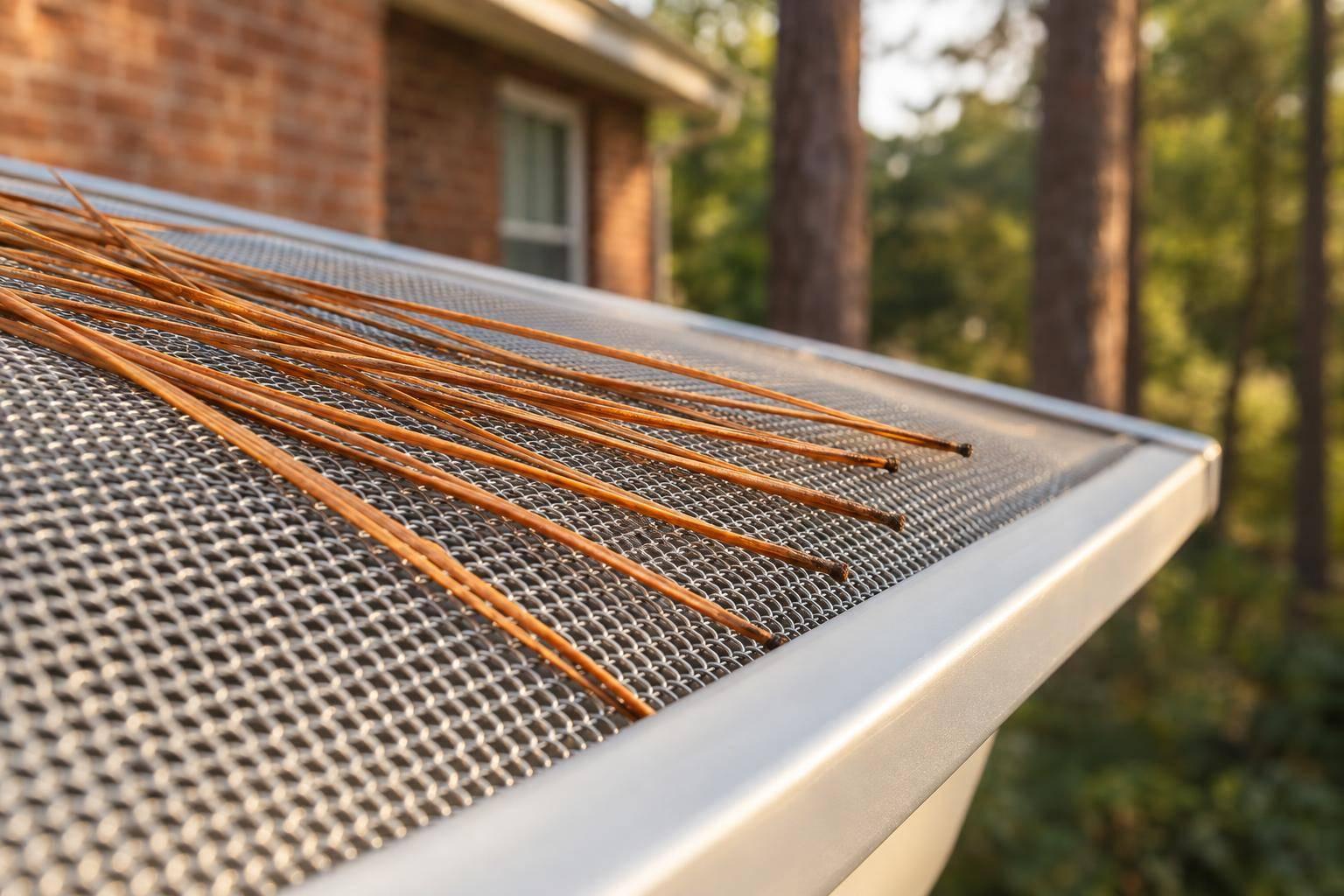
Most standard gutter guards struggle with Coventry’s pine needles; micro-mesh is generally the better choice. For a pine-covered property, check mesh opening size and choose guards that allow access for cleaning - not just leaf protection.
The 6 guard types handle fine debris differently:
- Coarse screens: Let thin needles pass through.
- Perforated covers: Performance depends on hole size and installation.
- Foam inserts: Trap needles and organic buildup.
- Brush guards: Hold debris between their bristles.
- Reverse-curve guards: Can admit fine debris through the entry slot.
- Micro-mesh: Blocks fine debris best, but still needs surface cleaning.
No guard makes gutters maintenance-free. Fix gutter slope, sagging, and outlet clogs before gutter installation, then check for debris mats and overflow after storms and heavy needle drop. The right choice depends on tree cover, drainage, and access for upkeep - not guard type alone.
Why Pine Needles Get Past Gutter Guards
Overhanging branches, roof valleys, gutter slope, and downspout layout all affect how fast pine needles build up into a clog.
How Fine Debris Restricts Water Flow
Wet needles mix with dirt, roof granules, seeds, and twigs to form mats above or beneath gutter guards. These mats can block outlets even when the gutter looks only partly full.
Signs Your Guards Are Not Working
Look for needles inside the gutter, repeated outlet clogs, visible debris mats, and overflow during normal rain. Where the water spills can help you find the blockage. Water sheeting over a debris-covered guard points to a surface clog. Overflow paired with weak downspout flow suggests a restriction inside the gutter, outlet, or elbows.
Check for loose or sagging guards, and inspect the gutter slope, hangers, and roof valleys where debris collects.
Poor drainage can push water behind the gutter and against the fascia, or leave pools near the foundation. In freezing weather, trapped water can turn to ice and put added stress on gutter supports. Guard type also affects how these drainage problems develop.
sbb-itb-634c8b2
How 6 Gutter Guard Types Handle Fine Debris

6 Gutter Guard Types Compared for Pine Needles
Gutter guards handle pine needles differently. Design matters more than leaf-blocking claims, especially when fine debris is the main problem.
| Guard type | Design | Fine-debris performance | Maintenance |
|---|---|---|---|
| Coarse screens | Large mesh openings | Block leaves, but let needles and small seeds pass through. | Remove the guard and clean the gutter trough as needed. |
| Perforated covers | Holes in a solid cover | Results depend on hole size, spacing, and installation. | Clear the holes; remove the cover to clean the trough as needed. |
| Foam inserts | Porous insert inside the gutter | Catch some debris, but trap needles and organic matter. | Replace within a few seasons as buildup increases. |
| Brush guards | Bristles inside the gutter | Hold debris and can clog inside. | Inspect frequently and clear trapped debris. |
| Reverse-curve guards | Curved surface uses surface tension to carry water into the gutter | Fine debris can enter through the side slot. | Check the entry opening and downspouts for clogs. |
| Micro-mesh guards | Fine filtering mesh | Best at blocking pine needles and small seeds. | Rinse periodically. |
For Coventry properties with heavy pine cover, mesh opening size deserves a close look. Installation and nearby tree cover also affect performance. Ask for the opening size and how the system handles fine debris - not just leaves.
Choose a system that allows both surface cleaning and access to the gutter below. For other selection factors, see our New England gutter guard buying guide. After choosing a guard type, plan to check it after needle drop and storms.
Plan for Fine-Debris Protection and Maintenance
Once you choose a guard type, installation quality and regular upkeep determine how well it handles pine needles.
Check Trees and Gutter Condition Before Installation
Before installation, map overhanging pine branches and roof valleys. Check valleys for pine needles packed together with dirt, seeds, and roof granules.
Fix drainage problems before fitting guards. Clean the gutter trough, correct its pitch and any sagging, tighten loose hangers, and repair seams and corners. Guards won't fix a misaligned gutter.
Pay special attention to roof valleys: they channel water and debris into short gutter runs. Standing water points to slope problems, while weak discharge points to issues with outlets or elbows.
Inspect Guards After Needle Drop and Storms
Pine needles keep falling after guards go on, so regular checks still matter.
Inspect from the ground after storms and heavy needle drop, as well as in spring and fall. Look for debris mats, overflowing corners, water running behind the gutter, and weak downspout flow during rain. Let tree cover and wind exposure - not just the calendar - guide how often you check.
Call for service when flow slows rather than climbing onto the roof. Ask the service provider to check both the guard surface and downspout elbows.
For upkeep, see our gutter guards vs. regular cleaning guide.
Conclusion: Match Guards to Your Property’s Debris
Choose gutter guards based on the debris that collects along your roofline. Coarse-screen guards may be enough for large leaves. If pine needles and seed pods keep showing up, micro-mesh is the better fit.
Whichever type you choose, you’ll still need clean gutters, secure installation, open downspouts, and post-storm inspections.
Need help choosing guards for your property’s debris? Visit our gutter guard service page. For local service details, see our Coventry page.
FAQs
What mesh size blocks pine needles best?
Choose micro-mesh gutter guards with openings around 50 microns. Some specifications list a range of 50–150 microns. These fine stainless steel screens are designed to keep narrow pine needles out while letting water flow through.
Standard screens have larger openings, so needles can slip through or get stuck. That means more frequent removal by hand.
Can micro-mesh gutter guards handle heavy rain?
Yes, micro-mesh gutter guards are designed to handle heavy rain, with a capacity of up to 22 inches per hour. Their fine stainless steel screens use surface tension to guide water into the gutter while keeping debris out.
By helping prevent clogs from pine needles and shingle grit, these guards help maintain the gutter system’s drainage capacity during heavy downpours.
Can I retrofit my gutters with micro-mesh guards?
Yes - if your existing gutters are structurally sound. Before installation, a professional must check for sagging, cracks, loose fasteners, and insecure fascia boards to confirm the system can support the guards’ added weight. Damaged gutters may need repairs or replacement first.
Micro-mesh guards often slide under roof shingles, so professional installation is recommended to get the fit right and avoid potential roof warranty issues.