Gutter Guards vs Regular Cleaning: What's Better?
Gutter guards often save time and money long-term, but regular cleaning can be cheaper upfront—choose based on debris, budget, and safety needs.
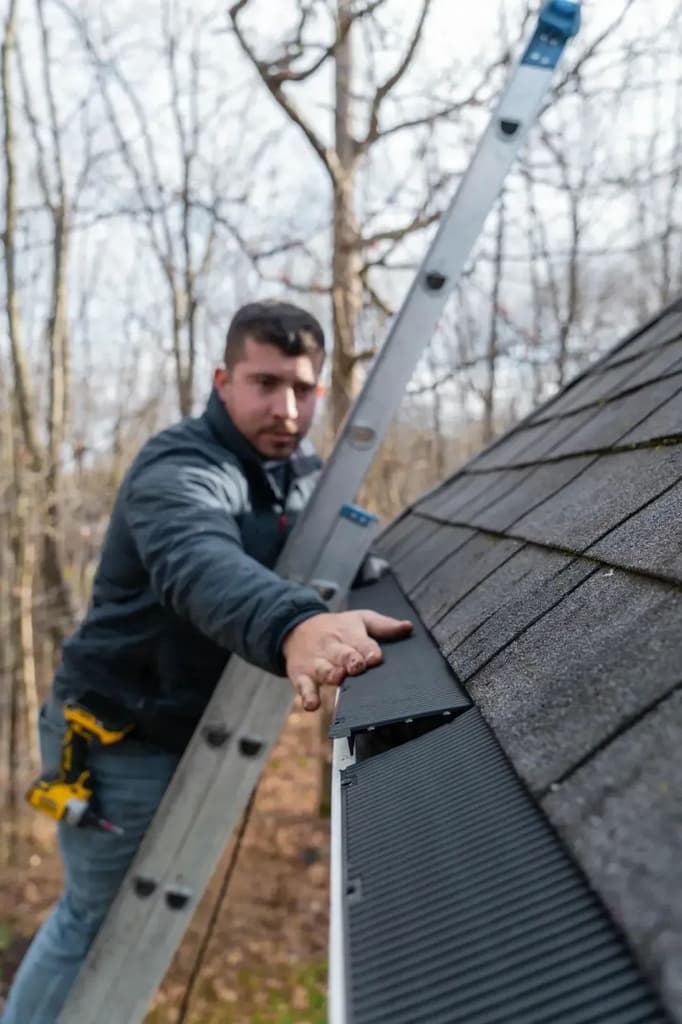
Your gutters are essential for protecting your home from water damage, but how you maintain them matters. Should you install gutter guards or stick to regular cleanings? Here's the short answer:
- Gutter Guards: Higher upfront cost ($500–$5,000) but reduce cleaning frequency and long-term expenses. Best for homes with heavy debris or safety concerns.
- Regular Cleaning: Lower initial cost ($100–$300 per cleaning) but requires 2–4 sessions annually. Ideal for homes with minimal debris or lower budgets.
Key Points:
- Costs: Gutter guards pay off in 4–6 years compared to frequent cleanings.
- Maintenance: Gutter guards still need occasional checks; regular cleaning is more labor-intensive.
- Safety: Guards reduce ladder use, lowering injury risks.
- Durability: High-quality guards last 10–30 years; cleaning requires ongoing effort.
Quick Comparison:
| Feature | Gutter Guards | Regular Cleaning |
|---|---|---|
| Upfront Cost | $500–$5,000 | $0 |
| Annual Cost | $0–$50 (spot checks) | $250–$1,200 (2–4 cleanings) |
| Lifespan | 10–30 years | Continuous upkeep |
| Debris Protection | Blocks most debris | Fully clears debris |
| Safety | Reduces ladder use | Requires ladder access |
| Best For | Heavy debris, long-term savings | Minimal debris, lower budgets |
Both options have pros and cons. Your choice should depend on your home’s environment, budget, and maintenance preferences.

Gutter Guards vs Regular Cleaning: 10-Year Cost Comparison and Key Differences
Do Gutter Guards Really Work or Waste Your Money?
sbb-itb-634c8b2
How Regular Gutter Cleaning Works
Regular gutter cleaning is all about keeping water flowing smoothly by removing debris that can clog the system. It starts with clearing out large debris, either by hand or with a scoop, followed by flushing the gutters to ensure downspouts remain clear. Professionals often take it a step further by inspecting for sagging or leaks, removing all debris, and flushing downspouts. Some even use telescoping cameras to check hard-to-reach spots.
The process typically begins at the downspout and works outward to avoid pushing debris into the system. Safety is a top priority, as dry debris can pose fire risks when exposed to stray embers.
Tools and Methods for Cleaning
The right tools and techniques make all the difference in effective gutter cleaning. Basic tools include manual options like gutter scoops (under $10) and garden trowels for clearing compacted debris. Extension ladders, which cost $150 to $350, often paired with stabilizers ($30 to $100), provide safe access while protecting the gutters.
Water-based tools are also popular. Telescoping wands, priced between $30 and $70, attach to garden hoses to flush out loose debris, while pressure washers on low settings can tackle stubborn grime. Leaf blowers with gutter attachments are great for clearing dry debris, and gutter vacuums handle both wet and dry material with ease. For tough downspout clogs, handheld drain augers ($25–$60) can do the trick when water pressure isn't enough.
Professionals sometimes use advanced tools like gutter robots, which are equipped with remote-controlled propellers to push debris out as they move through the channel. Safety gear is non-negotiable - heavy-duty gloves, safety glasses, and N95 masks help protect against hazards like mold, bird waste, and sharp objects. On average, professional gutter cleaning costs around $160 for 200 feet of gutters.
How Often to Clean Your Gutters
Timing is just as important as the tools you use. For most homes, cleaning twice a year is sufficient - once in late spring (May–June) to clear pollen, seed pods, and winter debris, and again in late fall (October–November) after the leaves have fallen. However, the frequency can vary depending on the environment.
Homes with minimal tree coverage may only need one cleaning per year to address shingle grit and dust. In contrast, properties surrounded by deciduous trees often benefit from three cleanings annually - spring, late summer, and late fall.
"If your home sits under tall trees that produce a significant amount of leaves, you'll need to clear your gutters much more often than a home situated on an unobstructed piece of land." - Michael DiMartino, SVP of Installations, Power Home Remodeling
For homes near pine or evergreen trees, three to four cleanings a year are usually necessary, as needles drop consistently throughout the year. In the Northeast, 92% of homeowners cite leaf debris as their primary challenge, while 45% of Southern homeowners report issues with pine needles. In heavily wooded areas, cleaning might be required four to six times annually to maintain proper water flow. Similarly, regions prone to storms or with high pollen counts may also benefit from more frequent maintenance.
Types of Gutter Guards and How They Work
Gutter guards are designed to keep debris out of your gutters while letting water flow through. Each type achieves this in its own way, and the choice you make will determine how well your system handles specific debris and how much upkeep is required over time.
The key to choosing the right gutter guard is understanding how each type works and matching it to your home’s unique conditions. For instance, a property surrounded by oak trees has different needs than one with pine trees or minimal vegetation. Below, we break down the most common types of gutter guards and their installation options.
Common Gutter Guard Types
Micro-mesh guards feature ultra-fine stainless steel screens with openings as small as 50 microns. These openings are tiny enough to block even fine debris like pine needles, shingle grit, and pollen while allowing water to pass through. Using surface tension, these guards can handle heavy rainfall - up to 22 inches per hour - and typically last 20 to 30 years. They block 99% of debris and cost about $15 to $30 per linear foot when professionally installed.
Reverse curve guards rely on a solid cover with a curved edge, or "nose", that uses surface tension to guide water into a narrow slot while large debris slides off. Made of aluminum or PVC, these guards are effective against leaves and larger debris, lasting 15 to 25 years. However, during heavy downpours, water may bypass the gutter entirely. Professional installation costs range from $15 to $25 per linear foot.
Screen guards are perforated sheets made of metal or plastic, with hole sizes between 1/8 inch and 1/4 inch. While they block leaves and twigs, smaller debris like seeds or pine needles can still get through. These budget-friendly options cost $4 to $8 per linear foot installed and last 5 to 15 years. However, they require annual cleaning to maintain effectiveness.
Brush guards resemble large pipe cleaners and sit inside the gutter channel. Their bristles, made of polypropylene or steel, catch larger debris while water flows underneath. These are an inexpensive DIY option, costing around $3 to $6 per linear foot. However, they tend to trap small debris within the bristles and need replacement every 3 to 5 years, making them a temporary solution.
Foam guards are made of porous polyurethane and fit directly inside the gutter. Water filters through the foam while debris collects on top, often blown away by the wind. These are the cheapest option, costing $2 to $4 per linear foot, but they’re also the least durable. Foam tends to retain moisture, leading to mold growth, and may need replacement every 2 to 5 years. Seeds can even sprout in the foam, creating additional issues.
"Micro-mesh gutter guards are the best overall choice for most homeowners. They block 99%+ of debris (including pine needles), handle heavy rainfall, and last 20-25 years."
– GutterFX
These features tie directly to long-term costs and maintenance, which we’ve discussed previously. Next, let’s examine how materials and installation methods impact performance and durability.
Installation and Material Options
The material of a gutter guard plays a significant role in its durability and performance. Stainless steel, commonly used in micro-mesh guards, is rust-proof, UV-resistant, and built to last. Aluminum offers a balance of strength and affordability, often used in frames, screens, and reverse curve systems. It resists rust and lasts 10 to 20 years, though it may dent under heavy impact.
Plastic and uPVC are cost-effective but prone to brittleness over time, especially in harsh weather or prolonged UV exposure. Polyurethane foam, while inexpensive, has the shortest lifespan, breaking down quickly from UV rays and fostering mold in humid conditions.
Installation methods vary widely. Micro-mesh and reverse curve systems often require professional installation, especially when they need to slide under roof shingles - a process that could void some roof warranties if done incorrectly. Screen guards are more DIY-friendly, snapping onto the gutter lip or sliding under shingles. Foam and brush guards are the easiest to install, simply fitting into the gutter without special tools.
"A general rule of thumb is the harder a gutter guard is to install, the more likely it is to maximize protection from debris and minimize ongoing maintenance."
– EcoWatch
When choosing a guard, consider your environment. Homes surrounded by pine trees will benefit most from micro-mesh guards with openings smaller than 50 microns, as standard screens and brush guards often let needles slip through. In humid climates, foam and brush guards should be avoided due to their tendency to retain moisture and encourage mold growth. Additionally, in wildfire-prone areas, these guards can pose fire risks due to trapped dry debris.
Cost Comparison: Upfront vs Ongoing Expenses
When weighing the costs of gutter guards against regular cleaning, the choice often comes down to whether you prefer an upfront investment or recurring expenses. Gutter guards involve a higher initial cost but can cut down or even eliminate ongoing cleaning fees. On the other hand, regular cleaning spreads the cost over time, with payments adding up year after year.
To get a full picture of the financial impact, it’s important to consider more than just the initial price tag. Key factors include installation costs, how often maintenance is needed, labor fees, and the lifespan of the materials.
Initial Investment and Yearly Costs
For a 200-linear-foot gutter system, professional installation costs vary widely depending on the type of guard:
- Screen guards: $450 to $1,200
- Reverse curve guards: $900 to $2,000
- Premium micro-mesh guards: $1,200 to $3,500
Some major brands take it even higher, with installations averaging between $4,334 and $5,168.
If you’re considering a DIY approach, you’ll save on labor costs but take on risks like improper installation. Materials alone for 200 linear feet cost approximately:
- $400 for foam inserts
- $500 for screens
- $600 for brush guards
- $1,034 for reverse-curve systems
- $1,568 for micro-mesh guards
However, mistakes during installation can void warranties and lead to issues like leaks or sagging, which might cost $1,500 or more to fix.
For regular cleaning, costs are ongoing. Professional cleaning ranges from $125 to $300 per visit, depending on factors like home height and gutter length. Most homes require cleaning twice a year - spring and fall - adding up to $250 to $600 annually. If your home is surrounded by trees, you might need four cleanings a year, with costs climbing to $500 to $1,200 annually.
Additional charges can apply for multi-story homes or steep roofs. These include specialized safety equipment, extended ladders, or difficult access, which can add $200 to $500. Cleaning fees for two-story homes typically range from $150 to $250 per visit, while three-story homes or those with steep roofs can expect $200 to $500 per visit.
For premium gutter guards, the break-even point is often reached within 2 to 6 years, depending on how many professional cleanings they replace. For example, if you’re paying $800 annually for four cleanings at $200 each, a $2,400 micro-mesh system could pay for itself in about three years.
10-Year Cost Analysis
Looking at a 10-year span offers more clarity:
| Option | Upfront Cost | Annual Maintenance | 10-Year Total Cost |
|---|---|---|---|
| Professional Cleaning (2x/year) | $0 | $300 ($150/visit) | $3,000 |
| Professional Cleaning (4x/year) | $0 | $800 ($200/visit) | $8,000 |
| Premium Gutter Guards (Pro) | $2,400 – $4,500 | $0 – $50 (spot checks) | $2,400 – $5,000 |
| DIY Screen Guards | $500 | $200 (annual brush-off) | $2,500 |
Over a 25-year lifespan, premium micro-mesh guards could save homeowners between $15,000 and $20,000 in cleaning costs. Plus, many professionally installed guards come with warranties lasting 10 to 25 years, covering defects and clogs.
It’s worth noting that both options have hidden costs. Installing guards might require removing old ones, which can cost $200 to $800, or repairing damaged fascia boards discovered during installation. Regular cleaning comes with its own risks, including potential gutter damage from ladders and the safety hazards of ladder-related falls, a leading cause of home injuries. These considerations are essential when planning for long-term gutter maintenance.
Pros and Cons of Regular Gutter Cleaning
Manual gutter cleaning comes with its own set of advantages and challenges. Knowing both sides can help you determine whether this traditional method suits your home maintenance routine.
Benefits of Regular Cleaning
One major perk of manual gutter cleaning is the ability to completely clear out debris. Whether you do it yourself or hire a professional, physically removing leaves, twigs, and other buildup ensures that water flows smoothly through your gutters. Plus, you can instantly verify the results.
Another benefit is the chance to closely inspect your gutters. While cleaning, you can spot small issues like rust, cracks, or loose brackets before they become bigger, more expensive problems. It’s a hands-on way to stay ahead of potential damage.
Cost is another factor in favor of manual cleaning. For DIYers, the initial investment is minimal - basic tools like a ladder, gloves, and a scoop typically cost between $100 and $300. If you hire professionals, you’ll pay per session, avoiding the need for a large upfront expense.
Drawbacks of Regular Cleaning
That said, there are some notable downsides. The biggest concern is safety. Climbing ladders, especially for homes with two or three stories, poses a serious risk.
Manual cleaning is also time-consuming and physically demanding. A single session can take 2 to 4 hours and needs to be done at least twice a year - or up to four times if your property has many trees. Over time, the costs can add up. Hiring professionals twice a year could amount to $4,000 over a decade. Even with regular maintenance, gutters can still clog during heavy storms or peak leaf-dropping seasons, potentially causing overflows and property damage.
| Aspect | Advantages | Disadvantages |
|---|---|---|
| Debris Removal | Fully clears buildup | Needs repeating 2–4 times a year |
| Inspection | Allows close-up checks | Involves frequent ladder use |
| Upfront Cost | Low (basic tools only) | - |
| Long-Term Cost | - | $4,000–$8,000 over 10 years |
| Safety | - | Risk of injury from ladder use |
| Labor | - | Time-consuming and physically demanding |
| Protection | Immediate results after cleaning | Susceptible to clogs between cleanings |
These pros and cons highlight how manual cleaning impacts both short-term results and the overall health of your gutter system.
Pros and Cons of Gutter Guards
Gutter guards offer an alternative to regular gutter cleaning, aiming to simplify maintenance. However, they come with their own set of trade-offs. Weighing the benefits and drawbacks can help you determine if they’re the right fit for your home.
Benefits of Gutter Guards
One clear advantage is the reduction in how often you need to clean your gutters. Instead of climbing up a ladder twice a year, you can rely on occasional inspections to keep things in check. This saves both time and effort.
By cutting down on ladder use, gutter guards also reduce the risk of falls, which is especially important for older homeowners or those with multi-story homes. Additionally, they help extend the life of your gutters by preventing debris buildup, minimizing physical damage from frequent cleaning, and protecting against corrosion. They also address water overflow issues, which can lead to basement flooding, foundation problems, or fascia rot.
Other benefits include discouraging pests from nesting in your gutters, reducing the chances of ice dams forming in winter, and shedding flammable debris in areas prone to wildfires.
"Gutter guards turn regular maintenance into simply regular monitoring." - Mitchell Grant, Contributing Writer, Angi
Drawbacks of Gutter Guards
While they cut down on routine cleaning, gutter guards aren’t maintenance-free. Fine particles like pine needles, shingle grit, and seeds can still slip through, leading to clogs over time. Clearing these clogs often requires removing the guards, which can make the process more time-consuming.
Certain types of gutter guards, such as reverse-curve or hooded designs, can struggle during heavy rains. Water may overshoot the gutter entirely, causing overflow and potential foundation damage. Improper installation can lead to other issues, such as roof shingle or fascia damage, and in some cases, it may void your roof warranty.
The cost is another factor to consider. Professional installation typically ranges from $1,000 to $2,000, with an average cost of around $1,125. Gutter guards also add weight to fascia boards, which can become problematic when combined with wet debris or ice accumulation.
| Aspect | Advantages | Disadvantages |
|---|---|---|
| Maintenance Frequency | Requires fewer inspections over time | Occasional cleaning and debris removal still needed |
| Safety | Reduces the need for ladder climbs | - |
| Upfront Cost | - | $1,000–$2,000 for professional installation |
| Long-Term Cost | Potential savings of around $4,000 over 10 years* | - |
| Debris Protection | Blocks most large debris | Fine particles can still accumulate |
| Cleaning Difficulty | - | Guards may need removal to access clogs |
| Performance | Protects gutters and prevents overflow | Some types may fail during heavy rain |
| Structural Impact | - | Adds extra weight to fascia boards |
*Note: Savings depend on individual maintenance needs and service costs.
These pros and cons underline the importance of choosing the right type of gutter guard and ensuring proper installation for the best long-term results.
Maintenance Requirements and Long-Term Performance
Knowing how much upkeep each option requires can help you manage your time and budget effectively. While traditional gutter systems need regular cleaning, gutter guards shift the focus to occasional maintenance. These differences also connect to the cost and safety benefits mentioned earlier.
Maintenance Schedule and Work Required
If you don't use gutter guards, expect to clean your gutters 2–4 times a year, especially if your home is surrounded by trees or located in a storm-heavy area. This involves climbing a ladder to remove debris and flush out the system.
Gutter guards, on the other hand, reduce this workload. Most systems require just 1–2 inspections annually. However, they’re not entirely maintenance-free. Fine debris can collect on the guards’ surface, meaning you might need to brush or rinse them occasionally. Some types of guards, like foam and brush inserts, demand more frequent attention - up to 3–4 cleanings per year. In contrast, micro-mesh and reverse-curve systems usually only need a light cleaning on the surface.
"No gutter guard system is completely maintenance-free, but some are lower maintenance than others." - LeafFilter
Interestingly, 43% of gutter guard users report they no longer clean their gutters. That said, occasional monitoring and flushing of fine sediment are still necessary to maintain performance. This reduced upkeep can enhance the long-term effectiveness of your gutter system.
Protection Against Property Damage
Both traditional cleaning and gutter guards play a role in protecting your home from water damage. Proper maintenance ensures your gutters work as intended, preventing costly issues like foundation cracks, basement flooding, and rotting fascia. To put this into perspective, just one inch of rain on an average roof generates over 900 gallons of runoff. If your gutters fail, that water can seep into your foundation, and repairs often start at $5,000, climbing to over $20,000 for severe structural damage.
Regular cleaning also allows you to spot potential problems early, such as loose brackets, rust, or cracks. Meanwhile, gutter guards act as a barrier against large debris. However, they can sometimes conceal internal problems like sludge buildup or corrosion.
It’s worth noting that neither option can fully prevent ice dams, which are usually caused by poor attic insulation. In some cases, gutter guards may even worsen ice dams by trapping snow and blocking meltwater from draining properly. On the upside, gutter guards significantly reduce the risk of ladder-related injuries, which account for over 164,000 emergency room visits annually in the U.S..
For homes in areas with heavy debris, the best approach may be combining high-quality gutter guards with an annual professional inspection and flush. This method balances ongoing protection with a thorough evaluation of your system.
Choosing Downspout Services for Your Gutter Needs

When it comes to maintaining your gutters, understanding the best methods for your specific situation can make all the difference. Downspout Services tailors its offerings to handle the unique weather challenges of Rhode Island and parts of Connecticut. Whether you’re considering gutter guards or prefer regular cleanings, having a local provider who knows the area’s weather patterns - like heavy spring rains or dense fall foliage - can be a game-changer.
"Our team in Rhode Island provides direct, personalized service via phone, email, and messages. The way it should be." - Downspout Services
This local expertise ensures you’re working with professionals who understand the seasonal challenges New England homeowners face, from ice dams in the winter to debris left behind by storms. Here’s how Downspout Services can help protect your home with their specialized installations and cleaning services.
Professional Gutter Guard Installation
If you’ve decided that gutter guards are the right solution for your home, proper installation is crucial to avoid problems like roof or fascia damage. Downspout Services offers expertise in installing micro-mesh gutter guards, which feature 50-micron holes designed to block even the smallest debris while maintaining smooth water flow.
Costs for gutter guard installations range from $500 to $5,000, depending on your home’s size and the materials selected. While the initial investment may seem steep, professionally installed systems often include warranties and can last 10 to 20 years. Over time, they can pay for themselves, typically within 4 to 5 years, by reducing the need for frequent cleanings.
Whether you’re installing guards or sticking with regular cleanings, Downspout Services ensures your gutter system is in top shape.
Expert Gutter Cleaning Services
For those who prefer traditional maintenance or need upkeep for their gutter guards, Downspout Services provides thorough cleaning and inspections. Their team is trained to spot problems like leaks, rust, loose brackets, or roof damage - issues that might go unnoticed during a DIY cleaning.
Professional cleanings are recommended twice a year: once in the spring to clear out winter debris before the rainy season and again in the fall to remove leaves ahead of snow and ice. These sessions typically cost between $100 and $300 each.
Conclusion
Deciding between gutter guards and regular cleaning comes down to your budget, property conditions, and long-term goals. If your home is surrounded by trees, you're planning to stay in the property for years, or you're concerned about ladder safety, gutter guards might be the more practical option. On the other hand, if debris buildup is minimal, upfront costs are a concern, or you're fine with periodic maintenance, regular cleaning could be the way to go.
It's important to remember that no solution is entirely maintenance-free. Gutter guards still require occasional cleaning and inspections to ensure they’re working as intended. Regular cleaning, while more hands-on, allows you to spot early signs of damage - like rust, cracks, or loose brackets - before they escalate into expensive repairs.
"Gutter guards have a higher upfront cost, but after about 4-5 years, they typically pay for themselves compared to professional cleanings." - Gorilla Exterior
To protect your home from risks like foundation damage or basement flooding - which can lead to repair costs exceeding $5,000 - Downspout Services offers expert gutter guard installation and cleaning services tailored to handle local weather conditions.
Ultimately, the best choice is the one that aligns with your property needs and lifestyle, ensuring reliable protection and peace of mind year-round.
FAQs
Which gutter guard type works best for pine needles?
Micromesh gutter guards are highly effective at keeping pine needles out. With ultra-fine holes - usually about 50 microns - they block even the tiniest debris while still allowing water to pass through smoothly.
Will gutter guards affect my roof warranty?
Gutter guards can impact your roof warranty, but this usually happens when they're installed incorrectly or cause damage during the process. For instance, improper installation might harm your shingles or disrupt the roof’s sealing, which could lead to the manufacturer voiding the warranty. To steer clear of these problems, it's best to have gutter guards installed by experienced professionals who strictly follow the manufacturer’s instructions.
Can I install gutter guards myself or hire a pro?
You have two options for gutter guard installation: doing it yourself or hiring a professional. If you're confident in your skills and comfortable working at heights, DIY installation can be a good choice, especially for simpler guard types like foam or screen guards. Just make sure to follow proper safety precautions.
On the other hand, hiring a professional brings peace of mind. Pros ensure a precise fit, expert installation, and minimize risks. While professional installation typically costs between $1,000 and $2,000, it’s a great option for a stress-free experience.
Related Blog Posts
Heading 1
Heading 2
Heading 3
Heading 4
Heading 5
Heading 6
Lorem ipsum dolor sit amet, consectetur adipiscing elit, sed do eiusmod tempor incididunt ut labore et dolore magna aliqua. Ut enim ad minim veniam, quis nostrud exercitation ullamco laboris nisi ut aliquip ex ea commodo consequat. Duis aute irure dolor in reprehenderit in voluptate velit esse cillum dolore eu fugiat nulla pariatur.
Block quote
Ordered list
- Item 1
- Item 2
- Item 3
Unordered list
- Item A
- Item B
- Item C
Bold text
Emphasis
Superscript
Subscript