Do You Need a Permit to Install New Gutters in Rhode Island?
Explains when Rhode Island gutter repairs, replacements, or new installations require local permits and extra approvals.

Yes - sometimes. In Rhode Island, gutter permits depend on what work you’re doing, where the property is, and how your local building office classifies the job.
If you’re trying to get a fast answer, here it is:
- Small repairs are often done without a permit
- Like-for-like replacement may be allowed without one, if drainage stays the same
- New gutters, moved downspouts, or changed discharge points are more likely to need review
- Historic districts, coastal areas, flood zones, and public right-of-way issues can add more approvals
- Rhode Island has 39 municipalities, and each one enforces the state code at the local level
- As of 03/01/2026, new permit applications follow the 2025 Rhode Island Statewide Building Codes
A missed permit can lead to stop-work orders, after-the-fact filings, rework, and fines that may reach $1,000 per day.
Quick Comparison
| Project type | Permit risk | What you should do |
|---|---|---|
| Minor gutter repair | Low | Ask the local building office if the repair counts as ordinary repair |
| Like-for-like gutter replacement | Low to medium | Confirm that no drainage layout changes are involved |
| New gutter installation | Medium to high | Check with the building department before work starts |
| Moving downspouts | High | Get local approval in writing |
| Connecting to underground drainage | High | Ask about permit and drainage review |
| Work in a historic or coastal area | High | Check for added local or coastal approvals |
Before work starts, your safest move is simple: contact your city or town, explain the exact scope, and get the answer in writing.
sbb-itb-634c8b2
When Gutter Work May Require a Permit
Some gutter jobs go beyond a simple repair and into work the city or town may want to review. The big issue is usually pretty simple: does the project change the gutter layout or where the water drains? If it does, permit review becomes much more likely.
Like-for-Like Replacement vs. New Installation or Drainage Changes
The clearest line is this: if the new gutters go in the same spots as the old ones and water still exits at the same points, the job is less likely to need review. A like-for-like replacement is often treated as ordinary repair. Once you start changing the system, though, you're no longer just swapping parts. You're altering how the drainage setup works.
Installing gutters where there were none before usually requires permit review. The same goes for moving a downspout to a new location or changing where it discharges, especially if the downspout ties into underground piping. And if the work calls for structural changes or new support framing, permit review is generally required.
Here’s a quick look at how local officials often view these projects:
| Type of Work | Typical Local View | Main Risk if You Skip Approval |
|---|---|---|
| Like-for-Like Replacement | Often treated as ordinary repair if no layout or drainage changes occur. | Minimal, if nothing else changes. |
| New Gutter Installation | Considered an addition or alteration to the structure. | Stop-work order and required rework. |
| Relocating Downspouts | Classified as moving a downspout or drainage line. | Drainage problems and possible code enforcement. |
| Underground Drainage Connection | Requires permit review for altered piping. | Fines and possible insurance questions if water damage occurs. |
Some properties can face extra review even when the gutter work looks simple on the surface.
Historic Districts, Coastal Properties, and Right-of-Way Issues
In places like Newport or Providence, exterior changes can trigger another layer of approval. That can include something as specific as switching gutter materials from wood to aluminum, which may require a Certificate of Appropriateness from the local Historic District Commission.
"Properties in historic districts may require additional approvals from historic preservation commissions. These requirements ensure renovations maintain historical character while meeting modern building codes." - David Antonucci, Rockhouse Construction
Coastal homes can bring a separate review track. The CRMC may need to weigh in on drainage plans near protected waters. Homes in FEMA-designated flood zones may also need extra documentation or engineering review. On top of that, Rhode Island coastal areas have stricter wind-load standards, ranging from 110 to 140 mph, which can affect how gutters and brackets must be fastened.
Even if a home isn't in a coastal or historic area, runoff direction can still become an issue. If the project sends water toward a public sidewalk, street, or a neighboring lot, that can lead to icing hazards or erosion. At that point, local officials may treat it as a public safety matter rather than an ordinary repair exemption.
How to Check Permit Rules in Your City or Town
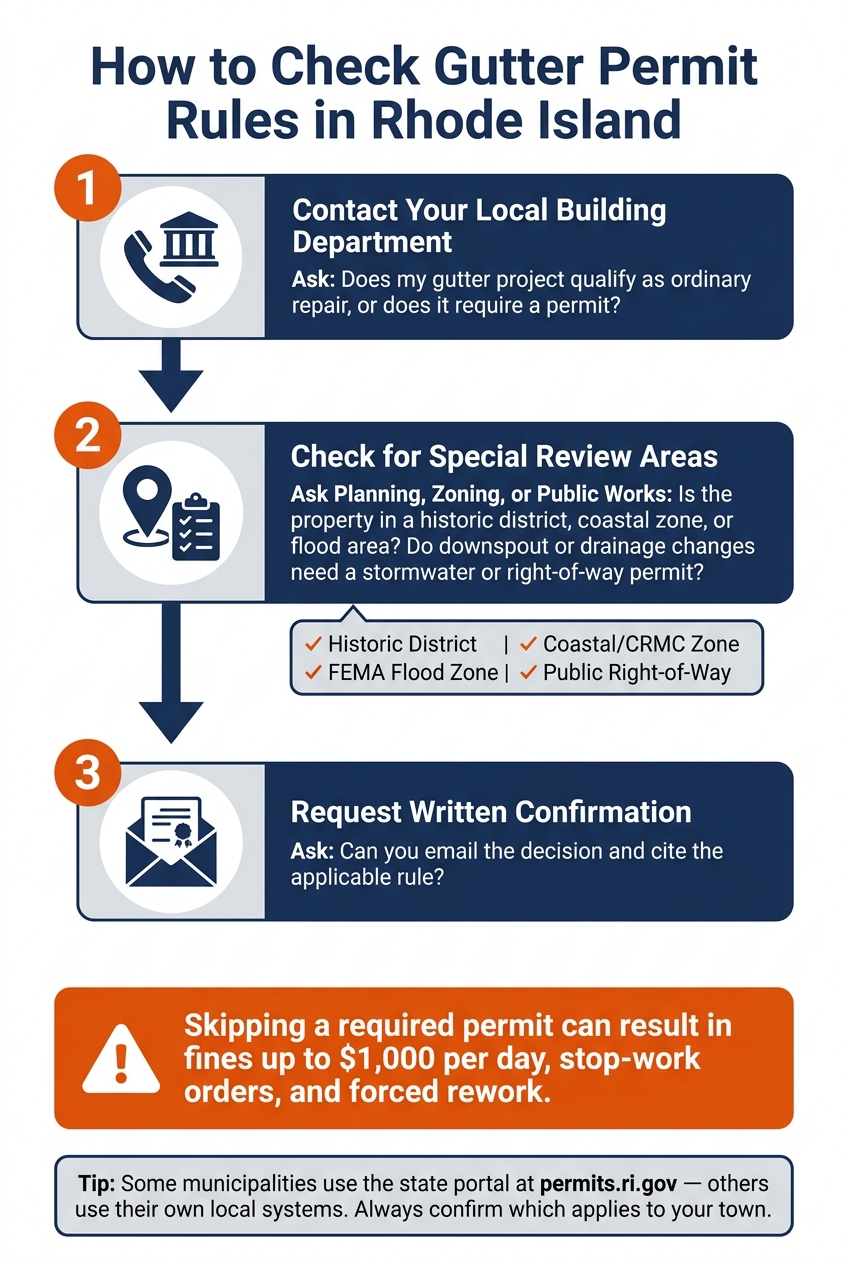
Do You Need a Gutter Permit in Rhode Island? A Step-by-Step Guide
In Rhode Island, permit decisions are made at the local level. So before any work starts, contact your city or town and get the answer in writing.
Which Local Offices to Contact and What to Ask
Start with your local Building Department. The building official is usually the first person who can tell you whether gutter work counts as ordinary repair or if it needs a permit. That call matters more than it might seem. Replacing gutters, moving downspouts, or changing where water drains can shift a project from simple repair into regulated work. And if your home sits in a special review area, you may need extra approval from the right local body.
Gutter projects can land in a gray area between ordinary repair and drainage work. So it helps to follow a simple local check before you begin.
| Step | Who Handles It | What to Ask |
|---|---|---|
| 1. Initial Inquiry | Local Building Department / Building Official | Does my gutter replacement or installation qualify as an ordinary repair, or does it require a permit? |
| 2. Special Review Area and Drainage Check | Planning, Zoning, or Public Works Department | Does this property need any special review area approval, and do new downspout locations or drainage changes require a stormwater or right-of-way permit? |
| 3. Written Confirmation | Building Department Staff | Can you email the decision and cite the rule? |
You can also see whether your town uses the state permit portal at permits.ri.gov, although some municipalities still use their own local systems.
What to Document Before Work Begins
Before ordering materials or starting the job, write down the date, name, title, and answer from every office you contact, and save any email or other written reply.
That written reply matters. Permit violations can lead to fines of up to $1,000 per day.
What Can Go Wrong If You Skip a Required Permit
If your local building department says the work needs a permit, skipping it can end up costing more than the permit itself. In Rhode Island, building officials have a few ways to enforce the code, and none of them are cheap or convenient.
Stop-Work Orders, Retroactive Permits, and Added Costs
Once work begins without approval, local officials can stop the job and send it back through the permit process.
If a building official finds gutter work in progress without a required permit, they can issue a stop-work order right away. That can bring the project to a standstill until the issue is fixed. It can also hold up other exterior work tied to the same job.
In many cases, fixing the problem means applying for an after-the-fact permit, which may come with extra admin fees. And if the finished work doesn't meet the 2021 IRC with Rhode Island amendments, you may have to tear it out and install it again at your own cost.
And here's the tough part: finishing the project doesn't make the risk disappear.
Drainage Problems, Insurance Questions, and Resale Issues
Unpermitted drainage changes can cause problems that show up later. If the drainage creates a safety hazard, code officials can issue an emergency notice. If the city or town has to step in and fix the issue, it may recover those costs through a lien or special assessment against the property.
Insurance and resale can get messy too. If you file a claim for water damage tied to an unpermitted drainage system, your insurer may deny the claim. And unpermitted exterior work can show up during an inspection or title search, which can delay closing or force you to get an after-the-fact permit.
Conclusion: How to Move Forward With a Gutter Project in Rhode Island
In Rhode Island, gutter permits are handled at the local level. Before work begins, check with your building department to confirm whether your project qualifies as ordinary repair or permit-required work. Get that classification in writing before you order materials or schedule the job.
When you're ready to move forward, Downspout Services handles gutter installation across Rhode Island and can walk you through the permitting picture for your town before anything gets scheduled.
Key Points to Remember Before Scheduling Gutter Work
Before a contractor starts, keep these points in mind:
- Local rules vary. Rhode Island's 39 municipalities each handle permits through their own local offices.
- Scope determines permit need. Get the local classification in writing before work begins.
- Special district, coastal, or right-of-way rules can add extra approvals. Historic districts, coastal flood zones, and right-of-way issues may trigger added review beyond a standard building permit.
- Get the answer in writing. A written no-permit determination from your local building official can help protect you during resale and insurance reviews. That written answer settles the permit question, but it does not waive code requirements.
Even when a permit isn't required, the work still has to meet Rhode Island code and local ordinances.
For Rhode Island gutter projects, the safest move is the same every time: ask your local building department before the first bracket goes up.
FAQs
Who makes the final permit decision in my town?
In Rhode Island, the final call on whether your gutter project needs a permit comes from your municipality’s building official.
The state sets the building code, but each of the 39 cities and towns has its own building department. That local office enforces the code, reviews applications, and issues permits.
For a clear answer, contact your local building department directly.
Will a contractor handle the permit check for me?
It depends on the agreement you have with your contractor. Licensed contractors can often pull permits in their own name and handle the paperwork, but that doesn't happen automatically.
Because gutter permit rules vary across Rhode Island cities and towns, confirm who will handle this before work starts. It's also smart to check the permit status with your local building department yourself.
What documents should I save before gutter work starts?
Before gutter work starts, make sure your building permit application is complete and ready to submit.
Depending on your city or town in Rhode Island, and on how much work you're doing, you may also need:
- project plans or drawings
- proof of your contractor’s Rhode Island registration
- zoning approval or site plans
Rules can change from one Rhode Island municipality to another, so it’s smart to check with your local building official first.