Does Pressure Washing Remove Oil Stains from Your Driveway?
When pressure washing removes driveway oil stains, when to use degreasers or hot water, and what results to realistically expect.
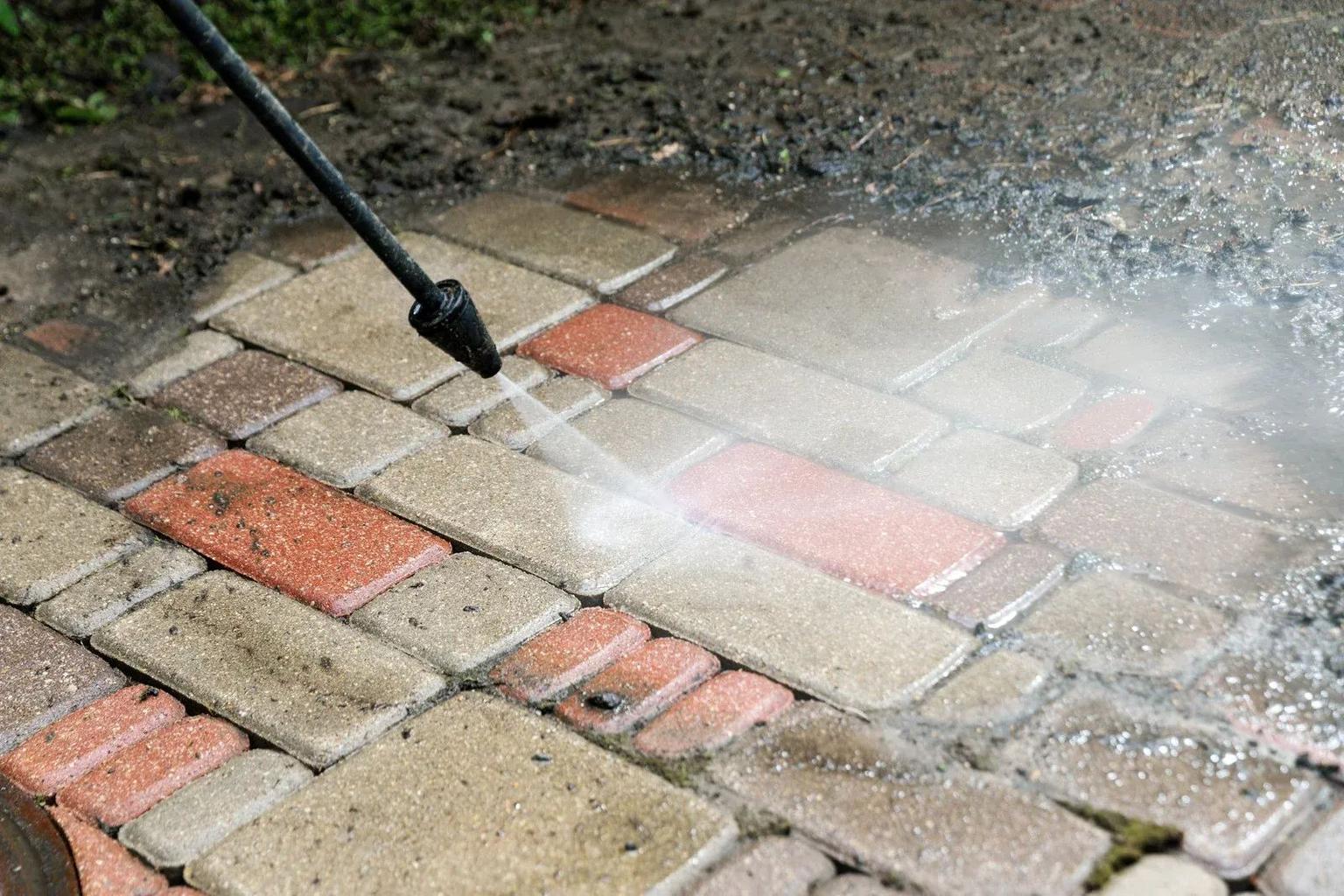
Yes - pressure washing can remove some oil stains, but old stains on concrete often do not come all the way out.
If oil is still near the top of the surface, pressure washing may clean most of it. If it has soaked into porous concrete, you will often need a degreaser, scrubbing, and sometimes hot water. Even after pro cleaning, some stains may leave a light shadow.
Here’s the short answer:
- New spills are easier to clean than older ones.
- Concrete stains more because oil sinks into it.
- Sealed driveways are easier to clean because oil stays closer to the top.
- Small drips are easier to treat than stains from repeat leaks.
- Pressure alone may help, but it often does not fully remove deep oil stains.
- Hot water and degreaser usually work better on set-in stains.
- Too much pressure can damage concrete or strip sealers.
- Full driveway cleaning often looks better than cleaning one small spot.
Oil stain removal is mostly about timing, surface type, and depth of the stain. In many cases, the goal is not a like-new finish. The goal is to make the stain much less visible and keep the driveway looking even.
| Factor | What to expect |
|---|---|
| Stain age | Newer stains come off more easily |
| Surface | Concrete holds oil deeper than sealed surfaces |
| Spill size | Larger or repeat leaks are harder to clean |
| Cleaning method | Degreaser + scrubbing + hot water often beats pressure alone |
| Final result | Lightening is common; full removal is not always possible |
About 80% to 90% of the result often comes down to how long the oil sat before cleanup and whether the surface was sealed. The rest depends on using the right cleaner and pressure level for the driveway.
The rest of the article explains what pressure washing can do, when it needs help, and what kind of finish you should expect after cleaning.
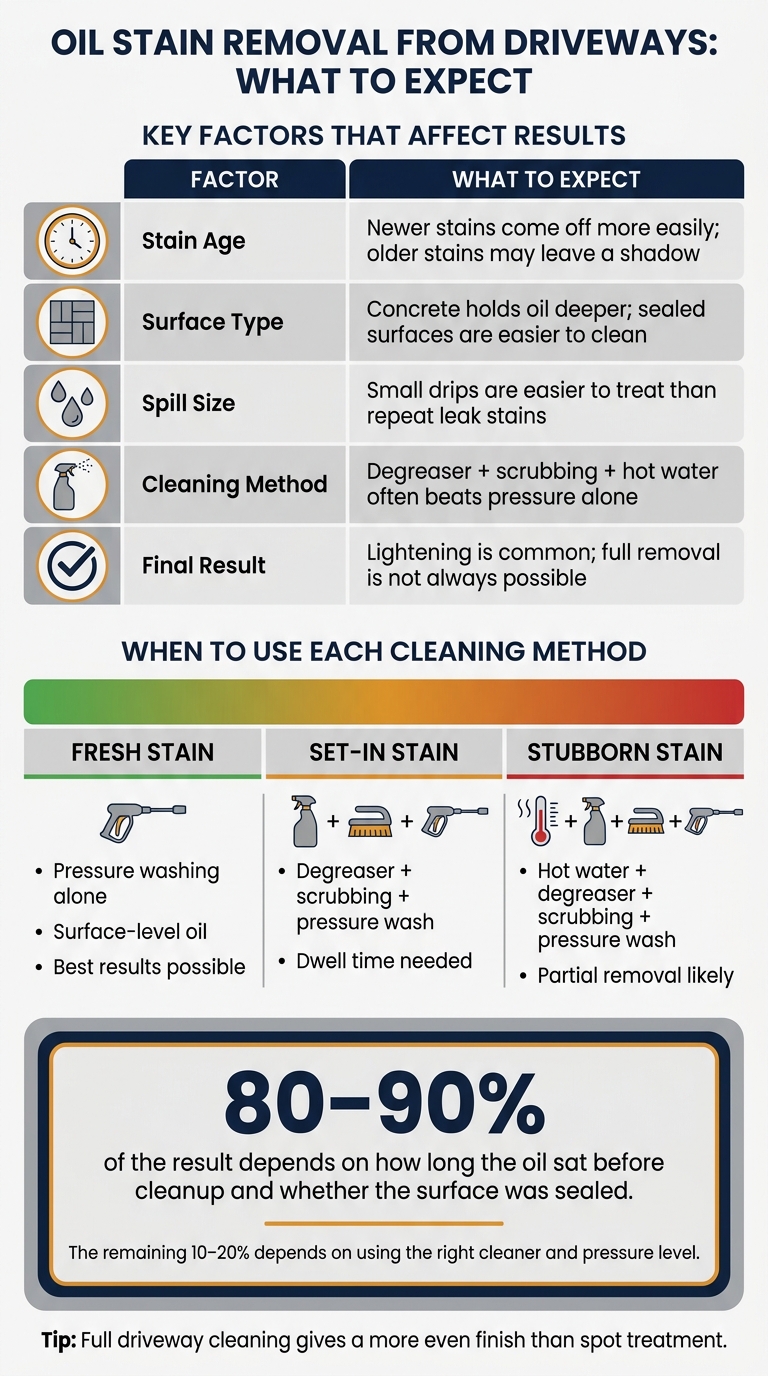
Oil Stain Removal from Driveways: What to Expect
Pressure Washing Bad Oil Stain with Awesome Degreaser

sbb-itb-634c8b2
Why Oil Stain Removal Results Vary
Oil stain removal isn't one-size-fits-all. The result usually comes down to three things: how old the stain is, what surface it's on, and how much oil you're dealing with.
Stain Age: Fresh Spills Are Easier to Remove Than Old Ones
Fresh oil stays closer to the surface, which makes it easier to clean before it has time to soak into the concrete. Put simply: the sooner you treat an oil stain, the better the odds of getting a cleaner result.
Once the oil sinks deeper below the surface, pressure washing by itself starts to do less. That's why an old stain can stick around even after a strong wash.
Driveway Material: Concrete and Sealed Surfaces React Differently
Concrete is porous, so oil can soak in and leave a deeper stain. Asphalt is porous too, but its dark color often hides stains better. That doesn't mean the oil isn't there. It just means it's less obvious.
Sealed surfaces are usually easier to maintain because the sealer helps block liquid from soaking in. Think of it like a rain jacket for your driveway: the oil has a harder time getting below the surface.
Stain Severity: A Small Drip Is Not the Same as a Long-Term Leak
A small drip is usually much easier to lift than a stain caused by repeated leaks. More oil exposure means more buildup, and that makes the stain harder to remove.
When that happens, pressure washing may help, but degreaser or hot water often finishes the job.
When Pressure Washing Alone Works and When It Needs Help
Fresh stains and older stains don't behave the same way. A fresh surface stain may come off with pressure washing alone. An older stain usually needs extra help from a degreaser or hot water.
That’s the key difference. Sometimes pressure is enough. Other times, the oil has settled in, and you need chemistry or heat to loosen it up first.
Pressure Washing Alone for Fresh, Surface-Level Oil
Fresh oil often lifts with pressure alone, especially if you get to it before it sinks into the concrete. In that early stage, the stain is still sitting near the surface, so washing can remove much of it.
Let it sit longer, though, and the job changes. Once the oil soaks in, pressure washing by itself usually isn’t enough.
Degreasers and Scrubbing for Embedded Oil
Set-in stains need more than force. Start with a concrete-safe degreaser, give it time to dwell, and then scrub the area before washing.
That pretreatment helps break up oil that’s settled into the surface. If the stain still hangs on after that, hot water can help push the cleaning further.
Hot Water Treatment for Stubborn Driveway Stains
Hot water helps loosen oil that has bonded to the surface. That makes pressure washing work better, especially on stubborn driveway stains that don’t respond well to cold water alone.
At that point, the issue usually isn’t whether the stain is there. It’s how much of it you can lift with the right mix of heat, pressure, and prep.
What Property Owners Should Expect After Professional Cleaning
Once the stain has been treated, the next thing most property owners want to know is simple: How much better will it look? Professional cleaning can make a big difference, but it’s smart to have clear expectations from the start. In most cases, the aim is to improve how the driveway looks, not to make it look brand new.
Improvement Is Common, but Complete Removal Is Not Guaranteed
A lot of oil stains will lighten in a noticeable way after professional treatment. That said, stains that have soaked in for a long time can still leave behind a faint shadow. If that shadow sticks around, resurfacing may be the best way to get the finish looking even again.
Spot Treatment vs. Full Driveway Cleaning for a More Even Finish
Cleaning just the stained area can create a patchy look. The treated section may end up standing out from the rest of the driveway, even if the stain itself fades.
That’s because the final look isn’t only about the stain. It also depends on how clean, dark, or weathered the surrounding concrete is. A full driveway cleaning - or at least cleaning a larger connected section - usually gives a more even finish.
Why Using the Right Pressure Level Matters
The end result also depends on how the surface is cleaned. More pressure isn’t always better. In fact, too much pressure can etch concrete or strip protective coatings.
Different driveway surfaces need different cleaners too. In many cases, lower pressure combined with the right cleaner does a better job of removing oil while helping protect the surface. The pressure level and cleaner should match the driveway material to help avoid damage.
Conclusion: How to Restore a Driveway After Oil Stains
Oil stains can look very different, but the basic rule is simple: fresh spills on the surface usually respond best to pressure washing, while older stains often need a degreaser, some dwell time, and scrubbing.
The driveway material matters too. Concrete, asphalt, and sealed surfaces don't react the same way, so the best method depends on the driveway itself just as much as the stain. Downspout Services adjusts pressure and dwell time by surface type when handling patio and driveway cleaning across Rhode Island, since concrete tolerates higher PSI than sealed or decorative surfaces.
Once oil has soaked in, the goal often changes. At that point, it's less about perfect removal and more about making the stain far less visible. If some discoloration sticks around, resurfacing can help bring back a more even-looking finish on an intact slab.
After cleaning, sealing helps block future oil stains and moisture. Paver sealing adds a protective layer that makes future spills easier to wipe away before they set into the surface.
For stubborn marks, a targeted assessment can save time and help you avoid overcleaning. If you want a driveway assessment, a professional can match the cleaning method to the surface and the severity of the stain.
FAQs
How soon should I clean an oil spill on my driveway?
Clean it as soon as you can. New oil or grease is much easier to remove before it sinks into the driveway or any sealer already on the surface.
If the spill is still fresh, use a degreaser or an absorbent material like kitty litter. Then wash the area with mild soap. If you wait too long, the stain can set in and may damage the driveway surface.
Can old oil stains be fully removed from concrete?
Usually, no.
Oil sinks into porous concrete, so pressure washing by itself often can't pull out old or deep-set stains. Water pressure may clean the surface, but the oil below it can still stick around.
In most cases, you'll need a concrete-safe degreaser before pressure washing. Even then, older or severe stains may not come out all the way. If the stain has been there for a long time, concrete resurfacing may be the best way to improve the driveway's appearance.
Should I seal my driveway after oil stain cleaning?
Yes. Sealing your driveway after cleaning an oil stain helps protect it from oil, UV rays, and freeze-thaw damage.
Just make sure the surface is fully clean and dry for 24 to 48 hours first. If you seal over damp spots or leftover oil, the sealer may not stick well. That can lead to hazing, peeling, or a cloudy finish.