5 Questions to Ask a Coventry Christmas Light Installer
Confirm insurance, roof and electrical protection, warranties, and takedown/storage terms before hiring a Coventry Christmas light installer.
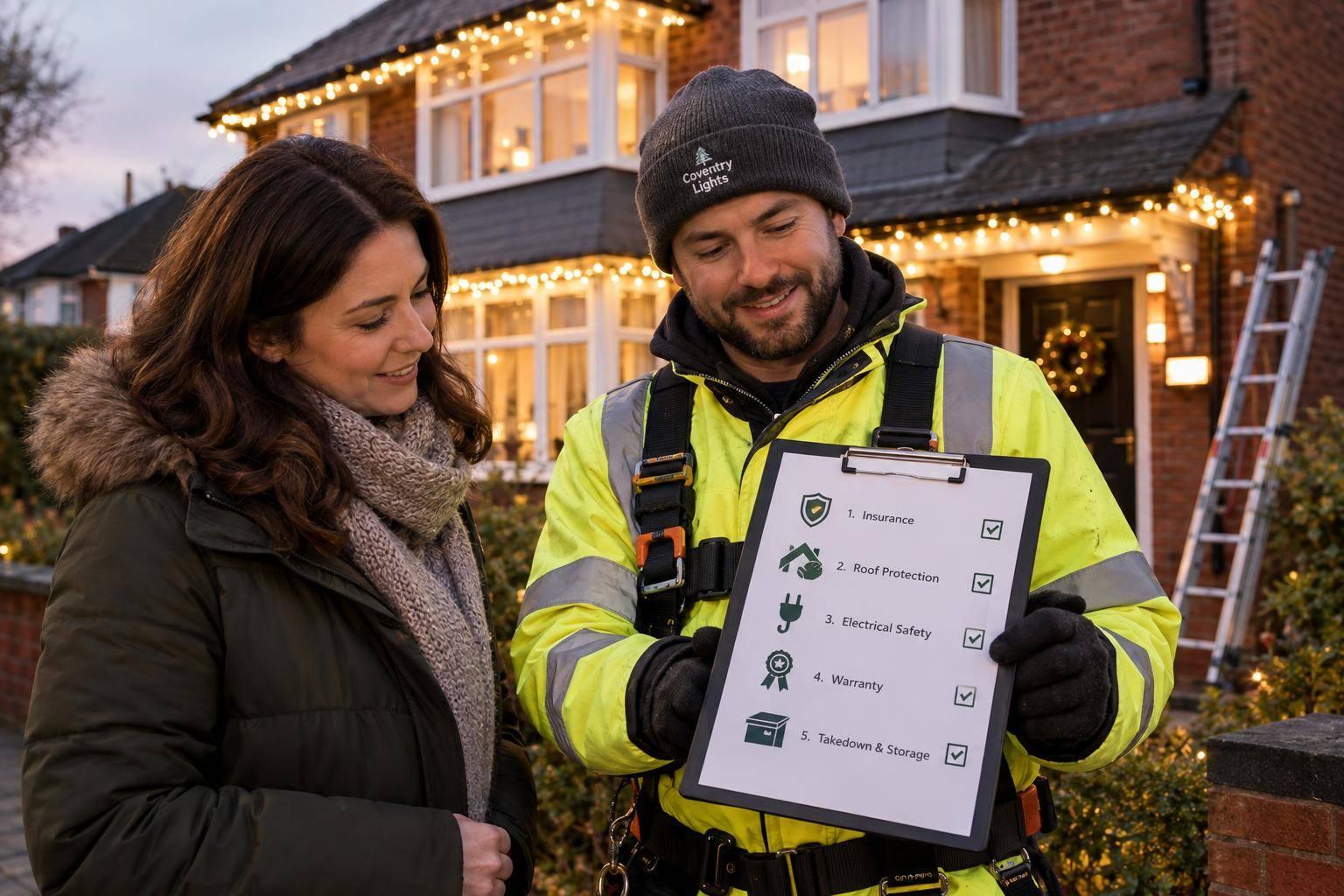
Before hiring a professional Christmas light installer in Coventry, get written answers to these 5 questions - not just a price. Ask for a current insurance certificate and a quote that spells out:
- Insurance: Who covers injuries and property damage during installation, repairs, and removal?
- Exterior protection: Which attachment methods will protect your roof, gutters, and siding?
- Electrical safety: Will your display use outdoor-rated equipment, tested GFCI protection, and safe cord routes?
- Warranty and repairs: What’s covered, what costs extra, and how soon will service arrive?
- Takedown and storage: Is removal included, when will it happen, and who owns and stores the lights?
<u>Get dates, charges, and repair terms in writing</u> before signing. Compare the whole seasonal cost, not just the installation fee.
What Insurance Covers Your Holiday Light Installation Work?
Ask for a current certificate of insurance (COI) showing the business name, carrier, policy number, effective dates, and coverage limits. Check that the business name matches your contract. Then contact the carrier using independently verified contact details to confirm the policy is active. Ask which risks it covers, too.
General liability and workers’ comp cover different risks. General liability covers third-party injuries and property damage; workers’ comp covers employee injuries. Confirm who is covered during installation, service visits, and takedown. If the installer uses subcontractors, ask for proof of their coverage.
Next, ask how the coverage applies to damage to your roof or gutters. (Note that neglected gutters can lead to denied insurance claims for water damage.) Get the process for reporting and repairing roof, gutter, siding, or trim damage in writing. That should include the claims contact, reporting deadline, required photos, and who handles repairs. Take dated photos of your exterior before installation, and report suspected damage promptly.
A COI documents coverage - not a promise that every claim will be paid. Ask an insurance professional to explain unclear exclusions, limits, or deductibles. Specifically, check roof access, electrical work, damage to areas being worked on, and coverage after the job ends. Before signing, clarify whether you could be responsible for any deductible.
sbb-itb-634c8b2
How Will You Protect My Roof, Gutters, and Exterior?
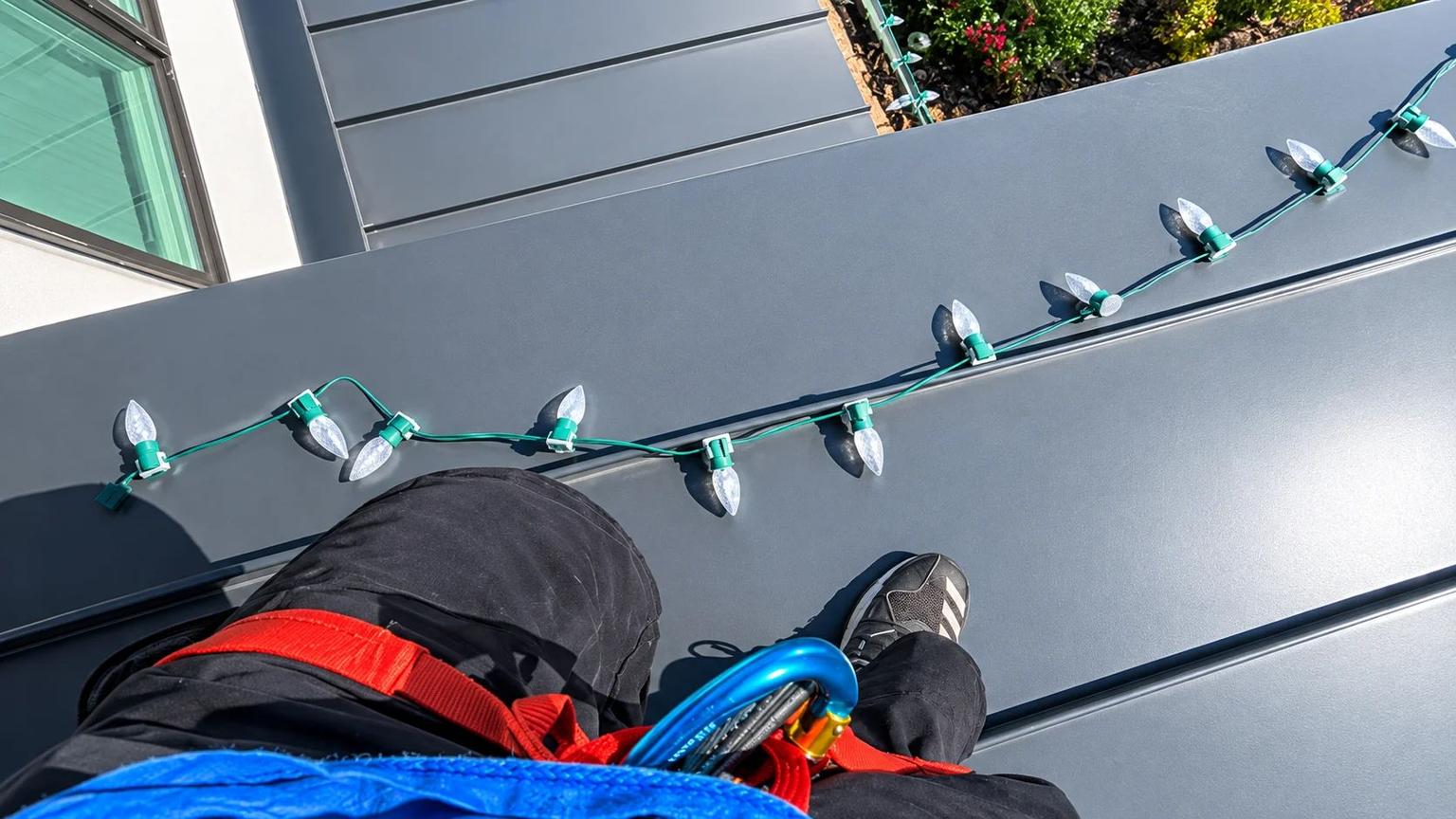
Once insurance is confirmed, ask how the crew will protect your roofline and exterior surfaces. Find out which clips and attachment methods they use on your roof, gutters, and siding - and how they prevent holes or other damage during installation and takedown. Do they use non-penetrating clips, such as gutter grips or shingle tabs? Will older gutters or fragile trim need a different attachment method?
Ask where the crew will place ladders and lifts during installation and takedown to avoid damaging surfaces. Check whether they use ladder stand-offs to keep pressure off gutters and ground protection to prevent ruts, cracked walkways, and plant damage on wet or frozen ground.
Request a written protection checklist that covers attachment methods for each surface, photos and measurements taken before work begins, surface-by-surface protection notes, and who pays for repairs if damage occurs.
Before installation, ask whether the gutters need clearing so clips can attach securely, especially on wooded lots with heavy leaf buildup.
How Will You Keep the Lighting Setup Electrically Safe?
Once exterior protection is covered, check the electrical plan. Ask to see outdoor-use labels on light strings, extension cords, timers, splitters, and connectors. Confirm that a recognized lab, such as UL or ETL, has tested the equipment. Damaged parts should be replaced, not reused.
Request the planned load in watts or amps, which circuits will supply power, and the manufacturer’s limits on connected strands. Ask how the installer will spread the load across circuits and who will check capacity if there’s any doubt.
Confirm that the display will have working ground-fault circuit interrupter (GFCI) protection, tested before use. Ask how the installer will keep connections away from gutters, standing water, and snowmelt. Outdoor-rated covers or enclosures should match the equipment.
Have the installer map cord routes around walkways, stairs, doors, and driveways before work begins. Make sure the crew won’t pinch cords in doors or windows or leave cord crossings unprotected.
Before the crew leaves, ask for a walkthrough with every section lit, timers working, GFCI protection tested, and cords and connections inspected. Leave wet connections and GFCI troubleshooting to the installer or a qualified electrician. Never bypass a GFCI. Get written instructions for reporting unlit sections or repeated GFCI trips, including how to reach someone and how soon they’ll respond.
What Warranty and Seasonal Repairs Are Included?
Once insurance and property protection are covered, check what happens if something fails after installation. Ask for separate holiday light installation equipment and workmanship warranties. Equipment coverage may cover defective lights, bulbs, clips, timers, or cords. Workmanship coverage applies to installation errors, such as loose connections or insecure clips. Confirm who handles each claim, whether the remedy is repair, replacement, or refund, and exactly what the estimate includes.
Check whether troubleshooting, labor, travel, repeat visits, and after-hours service cost extra. Ask who supplies replacement parts, who pays shipping, and who approves substitutes when matching parts aren’t available.
Get exact start and end dates, rather than a vague seasonal window. Does coverage last until takedown? If you file a claim before the warranty expires, will the repair stay covered if it happens later? Keep any paid seasonal maintenance plan separate from the warranty.
Ask for written exclusions covering wind, ice, snow, heavy rain, power surges, falling branches, wildlife, vandalism, homeowner changes, and pre-existing outlet defects. Confirm whether weather-related inspections or reattachment come with extra charges.
Then put the service-request process in the estimate or contract. Include how to contact the company, which photos it requires, and when to expect a response. Set separate deadlines for acknowledging the request, visiting the property, and completing the repair. The terms should also explain how weather or access delays affect those timelines.
Does the Seasonal Price Include Takedown?
After reviewing the warranty, check whether the seasonal price includes removal. Don’t assume takedown is covered. Ask for an itemized holiday light installation quote in U.S. dollars, with separate charges for installation, maintenance, replacement materials, takedown, and storage. Have removal marked as included, optional, or excluded. Confirm whether that price covers labor, equipment, travel, and every installed light, clip, extension cord, timer, and decoration.
Get the takedown start and end dates in writing. Does removal begin after a set date, or must it happen within a certain number of days after the season? Ask how the installer handles weather delays and what remedy applies if they miss the promised window. In Coventry, snow, ice, freezing temperatures, high winds, and unsafe roof conditions can affect scheduling. Check whether rescheduling comes with a trip charge and how the installer will notify you.
Next, clarify who owns the lights, what condition they’ll be returned in, and who documents damage. For customer-owned lights, ask whether inspection, labeling, drying, and packing for return are included. Have the installer record missing bulbs, damaged wiring, broken clips, failed timers, and other defects before packing.
Check whether storage is included, costs extra, or isn’t offered. If the installer stores the lights, get the location, storage period, container requirements, retrieval fees, and responsibility for loss or damage in writing. Otherwise, agree on when and how the lights will be returned. Add the removal window, ownership details, and storage terms to the estimate.
Final Checklist: Get All 5 Answers in Writing
Before you approve the work, make sure your written agreement covers all five items:
- [ ] Insurance: Current COI, policy dates, and coverage for injuries or property damage.
- [ ] Exterior protection: Attachment methods and who’s responsible for exterior damage.
- [ ] Electrical safety: Outdoor-rated products, GFCI protection, circuit capacity, and protected connections.
- [ ] Warranty and service: Coverage period, exclusions, response times, and any service-call or replacement-material charges.
- [ ] Takedown and storage: Removal window, whether takedown is included, ownership, storage terms, and total cost.
Check that the estimate and warranty match. If any term is unclear, ask for a revised written quote before signing.
FAQs
Does my homeowners insurance cover holiday light installation damage?
Homeowners insurance generally covers sudden, accidental damage, such as damage from storms or falling debris - not damage caused by poor maintenance or neglect. If holiday lights are installed incorrectly, damage like nail punctures or moisture intrusion may be excluded because it could have been prevented.
To help protect your property, hire fully insured professionals who use clips or magnetic hooks instead of mounting methods that can damage your roof, gutters, and trim.
What if my home lacks outdoor GFCI outlets?
Before hanging Christmas lights, have a professional install or repair your outdoor Ground-Fault Circuit Interrupter (GFCI) outlets. GFCIs detect electrical imbalances and shut off power to help protect against electrical shock, especially in wet winter conditions.
Don’t skip this safety requirement or plug your display into outlets without GFCI protection. Doing so increases the risk of short circuits and electrical fires.
What happens to my lights if I cancel next season?
If you skip installation for a season, your lights and hardware typically stay in professional storage if your previous package included it. Displays often use custom-cut materials, so confirm the storage details with your installer to keep everything safe and organized until you resume service.
If you didn’t choose off-site storage, you’re responsible for keeping the materials safe until your next installation.