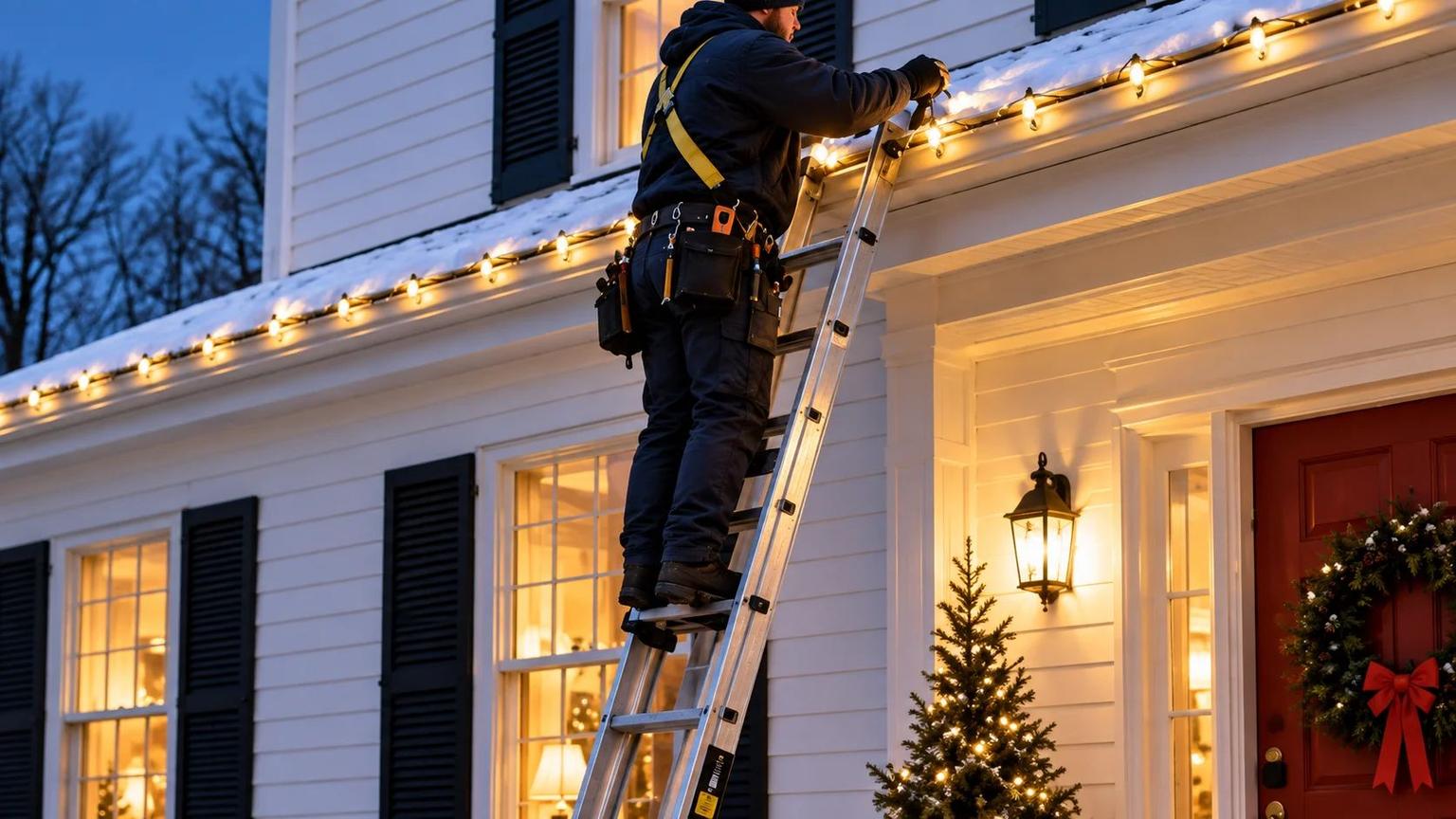
Why Late-Season Light Installs Get Risky in West Greenwich
Late-November frost, wind, and fading light can make ladder and roof work unsafe—let site conditions, not the calendar, decide.
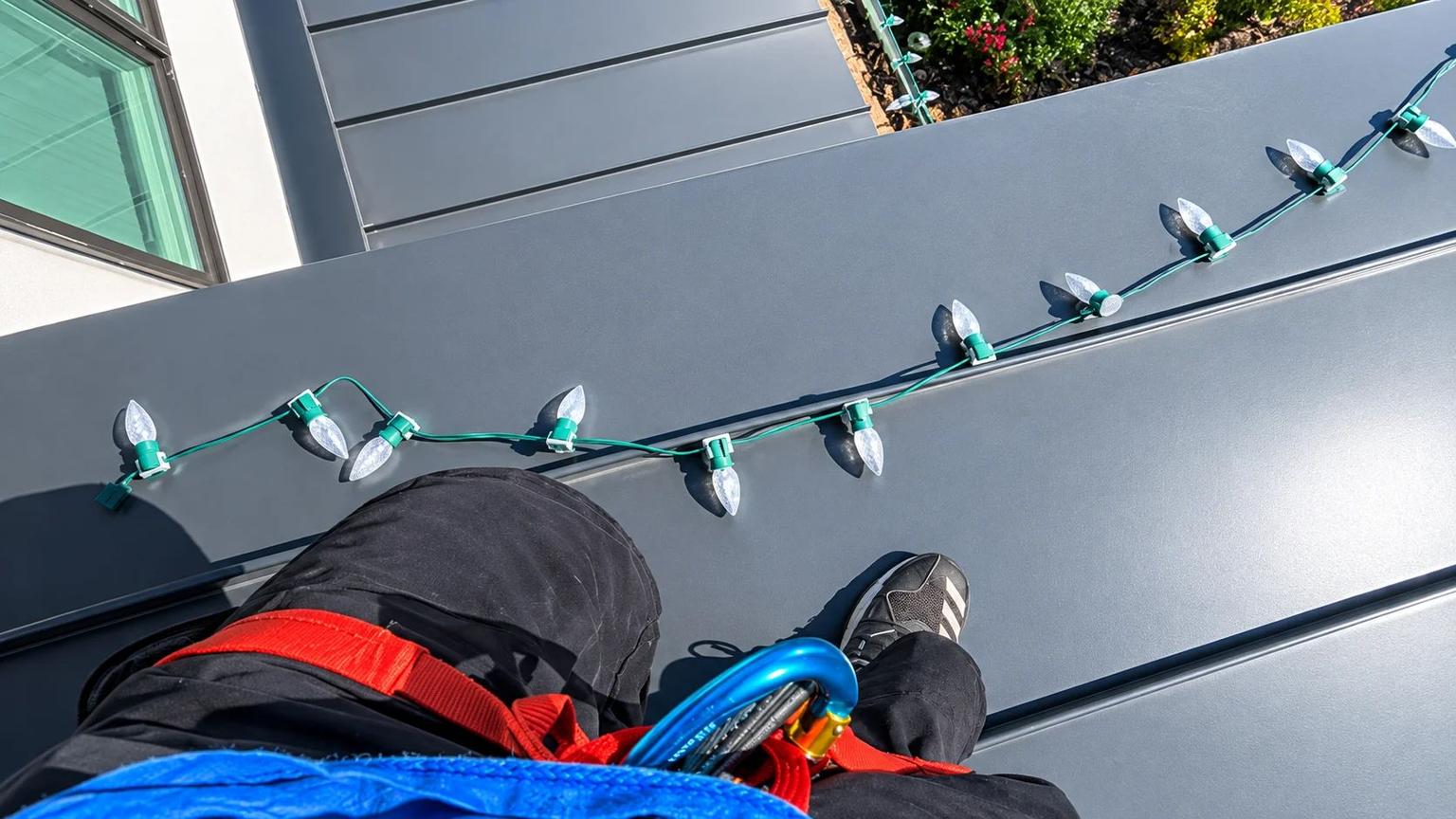
Postpone Christmas light installation in West Greenwich if surfaces are slick, gusts affect ladder control, or daylight is running out. Even above 32°F, shaded areas can hold frost.
Before you climb, check footing and ladder placement. On tree-covered West Greenwich lots, the guide to Christmas lights on a wooded lot covers roots, slopes, branches, and overhead lines. Test lights on the ground, plan outdoor-rated cords with GFCI-protected power, and keep walkways clear. Maintain three points of contact while climbing, and stop if conditions worsen.
Dry weather doesn’t make every roofline safe. For steep roofs, tall peaks, or hard-to-reach areas, book professional holiday light installation and confirm the weather-delay plan. Let site conditions, not your holiday deadline, decide when work starts.
How Late-November Weather Affects Light Installation
Late-November installation risk comes down to site conditions, not the calendar. In West Greenwich, check each surface separately. A dry driveway doesn’t mean the roof, steps, or shaded path is dry. Check how wind, frost, and fading light affect each part of the property.
Frost, Moisture, and Wind Make Footing Less Secure
Temperatures above 32°F don’t mean every frosted surface has thawed. Shaded grass, steps, and driveways can stay slick after sunny spots thaw. Uneven lawns add another concern: ladder feet can shift unevenly, especially on damp ground. Wet shingles also reduce traction on pitched roofs.
Stop if gusts affect your balance or control. The Consumer Product Safety Commission recommends securing outdoor lights to firm supports to reduce wind damage.
Cold and Fading Light Make Installation Harder
Cold fingers, bulky gloves, and stiff cords and light strings make small clips harder to fasten. Fading light can hide cracked clips, low branches, overhead utility lines, and cords across walking routes. Work in full daylight, not after dark.
Keep entrances and walkways clear, with cord routes away from doorways. The outdoor extension-cord safety guide covers those details. A deadline isn’t a reason to skip checks or leave strands loosely attached.
Compare Dry Daylight With Poor Weather Conditions
Use this side-by-side comparison to assess conditions before starting.
| Factor | Dry, calm, full daylight | Frosty, wet, windy, or fading light |
|---|---|---|
| Footing | Easier to assess firm, level ground | Grass, steps, and pavement may be slippery |
| Visibility | Clips, cords, and obstacles are easier to inspect | Shadows and glare can hide hazards |
| Ladder stability | Contact points are easier to check | Slick ground, soft soil, or gusts can undermine control |
| Roof traction | Dry shingles still require caution | Moisture or frost can reduce traction |
| Reason to postpone | Unsuitable terrain, equipment, or roof access | Unsafe surfaces, wind, or lighting |
Use the comparison to decide whether the work should stay on the ground. Dry daylight lowers risk; it doesn’t make every access point safe.
If conditions look suitable, run through a quick pre-climb check. Don’t climb if access is unstable.
sbb-itb-634c8b2
A Weather-Based Checklist for Installing Lights
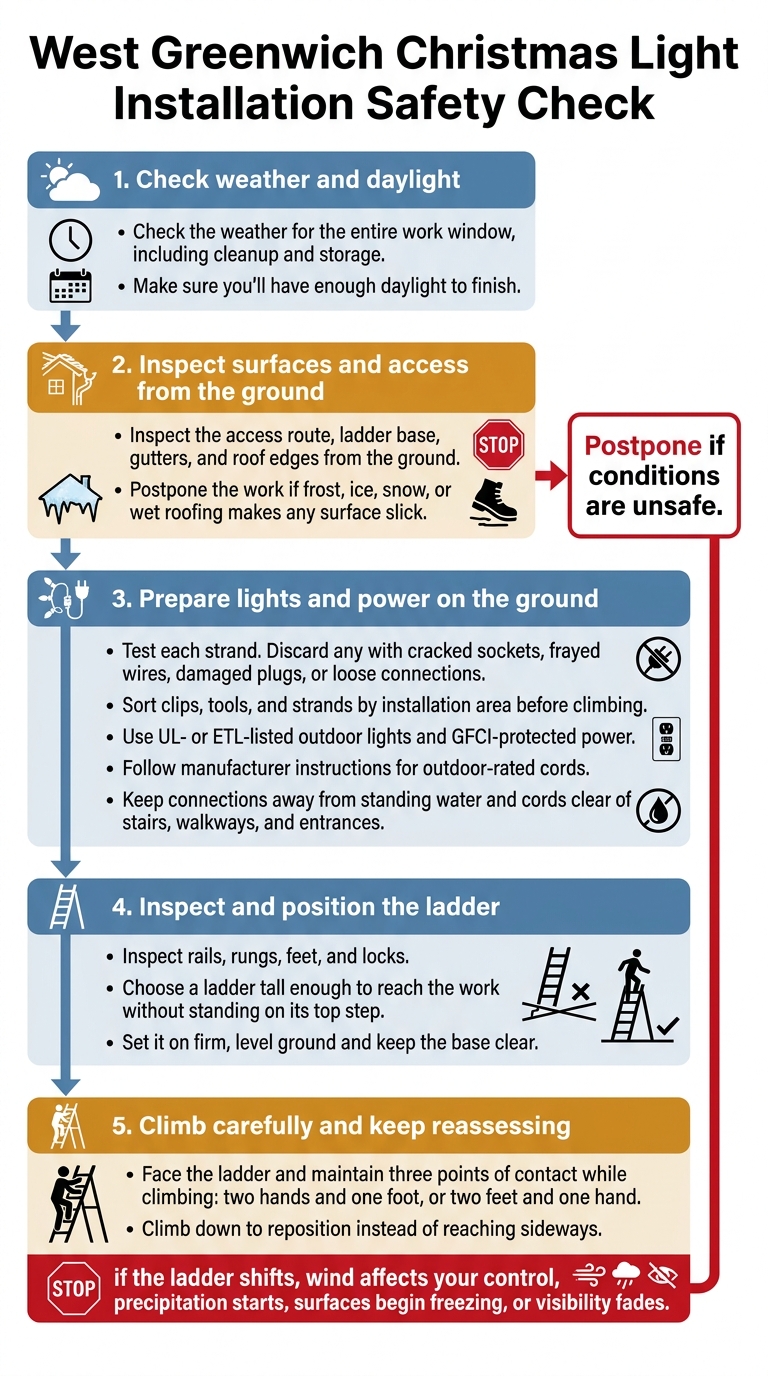
West Greenwich Christmas Light Installation Safety Check
Check Surfaces and Plan for Daylight
Before professional Christmas light installation in Rhode Island or attempting a DIY setup in West Greenwich in late November, check the weather for the entire work window, including cleanup and storage. Make sure you’ll have enough daylight to finish.
Before climbing, inspect the access route, ladder base, gutters, and roof edges from the ground. Postpone the work if frost, ice, snow, or wet roofing makes any surface slick.
Test Lights and Plan Cord Routes Before Climbing
Once conditions pass the weather check, get your materials ready on the ground. Test each strand and discard any with cracked sockets, frayed wires, damaged plugs, or loose connections. Sort clips, tools, and strands by installation area so they’re ready before you climb.
Use UL- or ETL-listed outdoor lights and GFCI-protected power. Follow manufacturer instructions for outdoor-rated cords, and plan their routes before installation. Keep connections away from standing water and cords clear of stairs, walkways, and entrances. See safe outdoor Christmas light extension cords for routing and power details.
Choose the Right Ladder and Know When to Stop
Bring out the ladder only after those checks and preparations are done. Inspect its rails, rungs, feet, and locks. Choose a ladder tall enough to reach the work without standing on its top step. Set it on firm, level ground, and keep the base clear.
Face the ladder and maintain three points of contact while climbing - two hands and one foot, or two feet and one hand. Climb down to reposition it instead of reaching sideways.
Stop if the ladder shifts, wind affects your control, precipitation starts, surfaces begin freezing, or visibility fades.
When to Consider Professional Christmas Light Hanging
Spot Rooflines and Access Problems That Need Assessment
If your roofline or schedule makes a safe DIY installation unlikely, get an assessment before moving ahead. Steep or complex rooflines, two- or three-story façades, dormers, and tall peaks all warrant a closer look. So does any area you can’t reach from firm, level ground.
Point out north-facing areas that hold frost and cord routes that cross resident, customer, or delivery entrances. These details help the installer judge how weather may limit access before committing to a design.
The guide to when to put up Christmas lights covers calendar timing. This assessment focuses on whether current conditions allow the work to proceed.
Plan an Installation Assessment Around the Weather
Ask how the installer will reach each roofline in current conditions and whether anyone needs to access the roof. Discuss which ladders, stabilizers, lifts, or fall-protection practices the job requires. Before any elevated work begins, have the installer check mounting points, outlet locations, cord lengths, and clearance for foot traffic.
Get clear answers about weather delays. Ask what triggers a postponement, who makes the call, how much notice you’ll receive, and whether you’ll get an alternate appointment window. Confirm that crews will also stop work if conditions worsen after they arrive.
For a West Greenwich Christmas light installation assessment, share your roof height, roofline complexity, access limits, frost-prone areas, outlet locations, and any entrances that must stay clear.
Conclusion: Let Conditions Decide Whether to Climb
In West Greenwich, late-November frost, moisture, and shorter daylight hours can make climbing less safe. Let the weather, not the calendar, decide whether to climb. For help with timing, see when to put up Christmas lights.
If footing, visibility, wind, or surface conditions are questionable, do not climb. Postpone the job, or keep the display at ground level until conditions improve. For steep roofs, tall peaks, or any area you cannot reach from firm, level ground, request a free estimate for holiday light installation. Ask what triggers a postponement, who makes the call, and how much notice you will get. Downspout Services offers holiday lighting, installed and removed for you, among its exterior services in West Greenwich.
FAQs
How can I spot lingering frost before installing lights?
Check rooflines, gutters, and mounting surfaces for a dull, white, or crystalline texture. West Greenwich’s freeze-thaw cycles can leave water frozen in gutters overnight. Frost and thin ice may be translucent or hidden in shade, so use a light to check for sheen before climbing.
If you see moisture or freezing on the roof, gutters, or ground around your ladder base, do not install lights. These conditions increase your risk of slipping.
What wind speed is too high for ladder work?
The documentation doesn’t specify a wind speed cutoff. Instead, it advises avoiding all ladder and roof work during high winds. Professionals check conditions and pause or reschedule installations when it’s unsafe to proceed.
Stop work immediately if you can’t find a stable, wind-free spot for your ladder or aren’t sure of your footing. If the weather makes climbing or roof access hazardous, ask a professional to assess the conditions.
Can I use ground-level lights while awaiting safer weather?
Yes. Ground-level displays are a lower-risk option when ice, wind, or wet surfaces make roof and ladder work hazardous.
Keep cords and connections off the ground and away from standing water, meltwater, and wet leaves. Use waterproof covers and route cords above wet areas. Use only UL-rated outdoor lights and extension cords, plug your display into a GFCI-protected outlet, and test the system before use.