Should You Put Christmas Lights on a Timer?
Timers schedule holiday lights, save energy, and keep vacant homes looking occupied—compare mechanical, digital, and smart options plus safety tips.
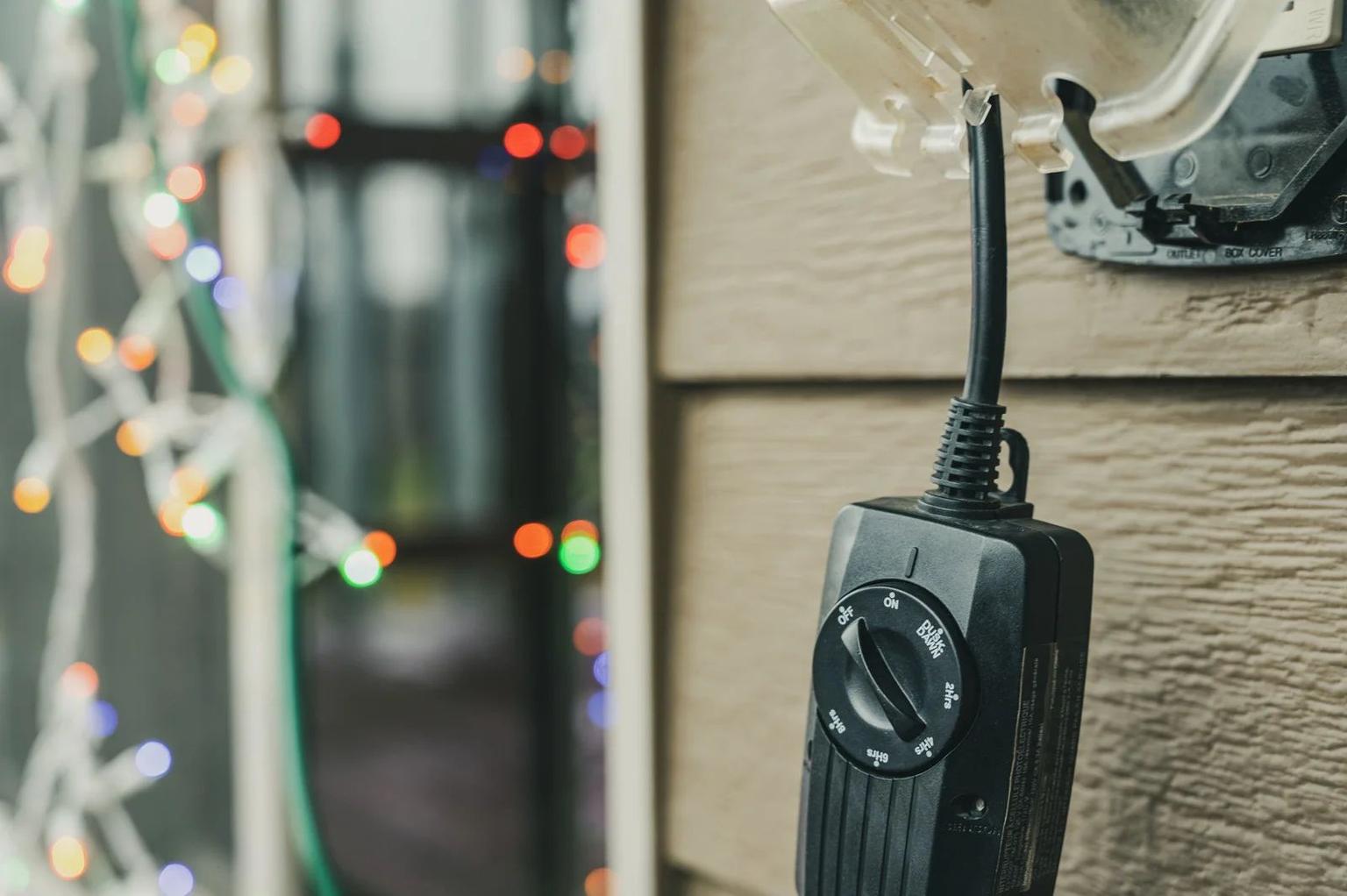
Yes - for most homes, a timer is the easiest way to keep Christmas lights on schedule, cut wasted runtime, and make an empty house look occupied.
If your lights are turned on by hand, they're easy to forget. A timer fixes that by switching them on and off at set times. That matters even more during Rhode Island winters, when it gets dark early, storms can knock out power, and second homes may sit empty for days.
Here's the short answer:
- Mechanical timers are best for simple daily schedules and often come back on after an outage without reprogramming.
- Digital timers give you more exact control, but many lose settings after power loss unless they have battery backup.
- Smart timers help when you want phone control, but they depend on a strong Wi-Fi signal at the outlet.
- Outdoor safety still matters: use outdoor-rated gear, check load limits, and make sure the outlet has GFCI protection.
- A standard 15-amp, 120V circuit can handle up to 1,800 watts, which is usually enough for an LED display.
For larger or more complex displays, a professional holiday light installation already accounts for circuit load and timer setup, so you're not left guessing at wattage limits after the fact.
How to Use Timers for Christmas Lights: Pin Dial vs. Dusk-to-Dawn
sbb-itb-634c8b2
Quick Comparison
| Timer type | Best for | Main upside | Main drawback | Best match |
|---|---|---|---|---|
| Mechanical | Same schedule every day | Often resumes after outages | Less precise control | Simple setups |
| Digital | Exact on/off times | More schedule options | May reset after power loss | Homes needing set times |
| Smart | Remote access by phone | Easy checks while away | Wi-Fi failure can stop schedule | Second homes with steady internet |
A timer makes the most sense if you travel, own a second home, or just don’t want to deal with lights every night. The main job is picking the timer type that fits your setup and making sure the outdoor wiring is safe.
How a timer fixes the most common holiday lighting problems
A Christmas lights timer clears up three of the biggest holiday lighting headaches at once: forgotten schedules, dark-looking homes, and the need to reset things after an outage. If a timer feels like a smart move in Rhode Island, the next step is simple: what does it fix day to day?
Automatic on and off times without daily manual switching
The most obvious win is this: you can stop turning the lights on and off every night.
Set the timer once, and your lights follow the same evening routine without any daily effort. That means they won't stay on all night just because you forgot.
Photocell timers turn lights on at dusk automatically, so when December daylight gets shorter, the lights still switch on at the right time without manual changes.
Keeping a home looking occupied when it is vacant
A dark house during the holidays can draw attention, especially along Rhode Island's coast, where second homes may sit empty for long stretches. A set lighting schedule helps the home look lived in. For coastal second homes, that's not just about ease. It's also about security.
Rhode Island Real Estate Inspection Services, LLC notes:
"The most effective way to keep your home safe is to make it appear as if it is occupied. Thieves are looking for easy targets that signal an empty house... Use smart plugs or traditional timers on interior lamps to mimic your daily routine."
One light left on all night doesn't look natural. A realistic on-off pattern does. When lights come on and shut off at about the same time each night, the house looks occupied instead of empty. That's a big deal for coastal homes left vacant during the holidays.
Less hassle after travel, weather, or schedule changes
Travel plans shift. Storms roll through. Power blips happen.
A timer helps keep those changes from turning into a nightly chore. Smart timers also let you check the lights or change the schedule from your phone while you're away. From there, the next move is picking the timer type that matches your setup.
Choosing the right Christmas lights timer
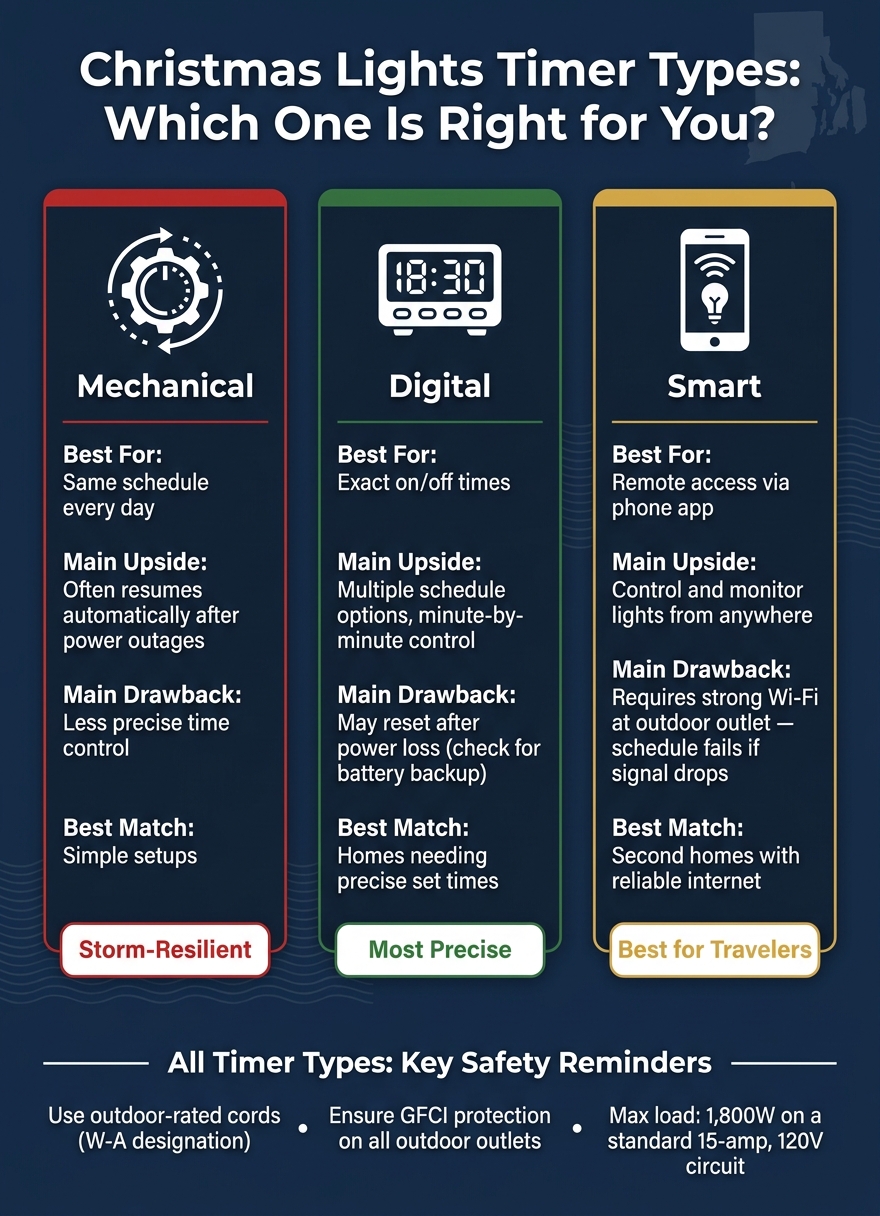
Christmas Lights Timer Types: Which One Is Right for You?
Not every timer works the same way, and that matters more than it might seem. In winter storm areas and vacant coastal homes, power outages can throw off your setup fast. In Rhode Island, outage recovery matters just as much as schedule control.
Mechanical timers for simple repeat schedules
Mechanical timers use a rotating dial and run the same schedule every day. They're a good fit if you want a simple setup that comes back on its own after a power outage.
As Darren Vader, Founder of The Christmas Light Emporium, explains:
"Mechanical timers resume their cycle automatically once power is restored - the physical schedule stays intact."
Digital timers for more precise control
Digital timers give you minute-by-minute control and can handle multiple schedules. But there's a catch: most reset after an outage unless they include battery backup. If you're buying for a storm-prone area, check the product specs first. That battery backup feature can make all the difference.
Smart timers for remote checks at second homes
Smart timers add app-based control, which can be handy for checking on lights at a second home. But they only work if Wi-Fi reaches the outdoor outlet. For a Rhode Island home that sits empty through part of the winter, remote access helps a lot - if the connection holds.
The Christmas Light Emporium puts it plainly:
"If your router goes down or the outdoor signal is weak near your outlet, the [smart] schedule won't fire."
Before you install a smart timer at a second home, test the Wi-Fi signal at the exact outdoor outlet. That's the part people often skip. A weak signal there can stop the timer from working, even if the Wi-Fi seems fine inside the house.
Once you choose a timer type, check the outdoor rating, load limits, and outage recovery before installation.
Setup and safety basics for outdoor use
Once you pick a timer, pair it with the right outlet, cords, and a simple storm-reset plan. In Rhode Island, that matters even more for empty coastal homes and winter outages that can reset a display overnight.
Use outdoor-rated equipment and a powered outlet
After choosing the timer, make sure the rest of the setup can handle outdoor conditions.
Some outdoor outlets are tied to an indoor wall switch, so check that the outlet stays on before you plug anything in.
Each part of the setup should be rated for outdoor use. Stick with outdoor extension cords marked with a W-A designation. For coastal homes, use weather-rated light strings in exposed seaside areas.
Check load limits and outlet protection before plugging in
A standard 15-amp, 120V circuit can handle up to 1,800 watts, which is usually plenty for a normal LED holiday display. Before plugging in, add up the wattage for every string and decoration. If a label lists amps instead, multiply that number by 120 to get an estimate in watts.
Rhode Island electrical code requires GFCI protection on all outdoor outlets. Use a weatherproof outlet box with a self-closing cover, and keep cord connections off the ground and away from snow or standing water.
For extension cords, match the gauge to the length of the run:
- 16-gauge for runs up to 50 feet
- 14-gauge for runs from 50 to 100 feet
Plan for outages and post-storm resets
Rhode Island storms can throw off even a solid setup, so it pays to check things after the power comes back.
After an outage, recheck the clock, schedule, and GFCI. That quick look can keep a dark house from staying dark after a storm. If you're dealing with a second home, add a short post-storm check to your routine.
It also helps to test the timer and light strands on the ground before installation. That way, you can catch a bad section or a tripped breaker before everything is already hanging on the roofline.
A short reset routine helps keep the display working through the whole season.
When a timer is the right call and what to do next
After you’ve picked a timer and checked that your outdoor setup is safe, one thing is left: does this make sense for your home?
Best fit for second homes, travelers, and busy households
A Christmas lights timer is a smart pick for Rhode Island homes that sit empty during the holidays, especially coastal properties in Newport, Narragansett, or South Kingstown. If you travel, a smart timer helps because you can change schedules from your phone. And if you’re just tired of turning lights on and off every night, even a basic mechanical timer takes that chore off your plate.
Key points before you set up your lights
People usually use a timer for two reasons: convenience and security. Your lights switch on at dusk, shut off at the hour you choose, and keep doing that whether you're home or not.
If your display is simple, adding a timer is an easy step. If your setup has more moving parts, slow down and map it out first. Before plugging anything in, check a few basics:
- Make sure your outdoor outlet is always on
- Use cords and timer hardware rated for outdoor use
- Test that your GFCI outlet is working
After a winter storm, take a minute to check that the timer is still in sync and that a digital model hasn't lost its programming. Downspout Services runs into timer resets and tripped GFCIs often after Rhode Island storms, which is one reason larger holiday light displays are worth planning around a professional circuit layout from the start.
If your home has a steep roofline, more than one story, or a layout that's hard to work around, it may make sense to hire a professional for the holiday light installation.
FAQs
Which timer is best after power outages?
For Rhode Island coastal homes that deal with winter power blips, mechanical timers are usually the safest bet. They pick up their normal cycle when the power comes back, so you don’t have to reset them after every outage.
If you want a digital or smart option, go with one that has battery backup. That way, your settings stay in place through storm-related outages.
Can a timer work without Wi‑Fi?
Yes. Traditional mechanical and digital timers work on their own, so they don’t rely on your home internet. Smart plugs, on the other hand, need Wi‑Fi if you want app control.
For Rhode Island coastal homes and second properties, mechanical and photocell timers are often a safer pick. If Wi‑Fi cuts out during winter storms, their schedule keeps running like nothing happened.
How many Christmas lights can one outlet handle?
For most LED displays, a 15-amp timer can handle up to 1,800 watts. That gives you a lot of room. A typical 100-count LED strand uses just 4 to 7 watts, so you’d need hundreds of strands to hit that limit.
Things change if you add any incandescent elements. Those use much more power, so it’s worth doing the math before you plug everything in. Add up the total wattage, check the full power draw, and use outdoor-rated equipment so you don’t overload the circuit.