Best Window Cleaning Methods for Streak-Free Results
Tools, squeegee techniques, and timing for spotless, streak-free windows—DIY tips and when to hire professionals.
Want streak-free windows? Here’s the secret: the right tools, proper techniques, and smart timing. Smudges, streaks, and residue often come down to simple mistakes like cleaning in direct sunlight or using the wrong materials. Here’s a quick rundown:
- Tools You’ll Need: A high-quality squeegee, microfiber cloths, distilled water, and a cleaning solution (vinegar and dish soap work great).
- Key Techniques: Use an S-shaped motion with your squeegee, clean on cloudy days, and dry edges with microfiber cloths.
- Avoid Common Mistakes: Don’t use paper towels (they leave lint) or tap water (it causes streaks). Replace squeegee blades regularly.
For stubborn stains like hard water spots, try vinegar or citric acid solutions. And if you’re dealing with tough jobs or high windows, professionals with purified water systems can deliver spotless results. Clean smarter, not harder!
How to Clean Exterior Windows Like a Pro! No Streaks or Spots
sbb-itb-634c8b2
Tools You Need for Clean Windows
Getting your windows spotless doesn't have to be a struggle. With the right tools, you can say goodbye to streaks and hello to sparkling glass. All it takes are a few essentials to tackle dirt, absorb moisture, and polish your windows to perfection.
Squeegees are the go-to tool for a streak-free finish. They swipe away cleaning solution and water in one smooth motion, leaving your glass dry and clear. For those hard-to-reach windows, extension poles (sometimes called telescopic poles) are a lifesaver. They let you clean second-story or tricky spots safely from the ground. If you're dealing with high or awkwardly positioned windows, U-shaped poles are especially helpful.
Microfiber cloths are another must-have. Unlike paper towels, which can leave behind lint or residue, microfiber cloths are gentle on glass and super absorbent.
When it comes to cleaning solutions, distilled water is your best friend. Tap water often contains minerals that can cause streaks or leave white spots, especially in areas with hard water. For an easy, eco-friendly cleaner, mix equal parts distilled water and white vinegar. Add a few drops of dish soap to cut through grime and fingerprints. In colder months, rubbing alcohol is a great alternative - it dries quickly and won’t freeze on the glass.
Finally, don’t forget scrapers. A razor blade scraper, used at a 45-degree angle on wet glass, can remove tough residues like paint or stickers without scratching (as long as the glass is lubricated with soapy water). Below, we’ll break down how each tool helps you achieve spotless windows.
Squeegees and Extension Poles
A high-quality squeegee with a sharp, flexible rubber blade is key to avoiding streaks. If you notice streaking, check the blade - it might be time for a replacement. Technique is just as important: use an S-shaped or zig-zag motion to keep the blade in constant contact with the glass and prevent liquid from pooling. After each pass, wipe the blade with a microfiber cloth to remove dirt and water.
Extension poles make cleaning high windows safer and easier. Telescopic poles are perfect for second-story windows, while U-shaped poles let you clean exterior glass from inside, which is handy when ladders aren’t an option.
Microfiber Cloths
Microfiber cloths are a game-changer. They’re lint-free, reusable, and highly absorbent, making them ideal for cleaning window frames, drying edges, and wiping squeegee blades. After your final pass with the squeegee, use a clean, dry microfiber cloth in circular motions to polish away any leftover water spots.
Some microfiber cloths even have anti-static and anti-bacterial properties, helping to repel dust and keep your windows cleaner for longer. It’s a good idea to have a few cloths on hand, each designated for a specific task, to get the best results.
Cleaning Solutions That Work
For a simple, non-toxic cleaner, mix equal parts distilled water and white vinegar with a few drops of dish soap. In colder weather, swap vinegar for rubbing alcohol - it dries faster and won’t freeze on the glass.
Avoid ammonia-based cleaners if your windows have wood or painted frames, as ammonia can damage these materials over time. Similarly, don’t use vinegar or lemon juice on windows with UV coatings, as the acidity could wear down the protective layer. If you prefer store-bought cleaners, make sure they’re free of harsh chemicals like phosphoric or hydrofluoric acid.
To tackle hard water stains, let vinegar sit on the affected area for a few minutes before gently scrubbing with a microfiber cloth. For stubborn paint or adhesive residue, a razor blade scraper on lubricated glass will do the trick without scratching.
How to Clean Windows Step-by-Step

Step-by-Step Guide to Streak-Free Window Cleaning
Once you’ve gathered your tools, it’s time to get started. Here’s how to achieve streak-free windows with ease.
Start by wiping down the frame and sill to clear away dust and debris. Then, apply your cleaning solution evenly, being careful not to overdo it - excess liquid can lead to drips. For smaller windows or mirrors, a 6-to-8-inch squeegee works best.
Choose a cloudy day for cleaning to avoid premature drying, and focus on one window at a time. Now, let’s dive into the techniques for using squeegees and microfiber cloths effectively.
Using a Squeegee
Mastering squeegee techniques can make all the difference. Here are two methods to try:
Top-to-Bottom Swipe Method (Great for Beginners):
- Start at the top-left corner of the window.
- Pull the squeegee straight down with steady pressure.
- Wipe the blade with a microfiber towel after each pass.
- Slightly overlap each stroke as you move across the glass.
- Use a towel to dry the edges and sill when finished.
S-Curve Method (Ideal for Larger Windows):
- Begin at the top-left corner and glide the squeegee in a smooth S-shaped motion across the glass.
- Keep the leading edge slightly angled toward the dry area.
- Clean the blade after every full pass to avoid streaks.
| Pro Tips for Success | Common Mistakes to Avoid |
|---|---|
| Dry the squeegee blade after each pass to prevent streaks. | Avoid paper towels - they leave lint behind. |
| Clean one window at a time to prevent the cleaner from drying prematurely. | Don’t over-soak the glass with solution. |
| Use microfiber cloths to dry edges and corners where moisture collects. | Don’t use a damaged or dirty squeegee blade. |
| Wipe down the frame before starting on the glass. | Skipping the frame can lead to grime transfer. |
Remember to replace squeegee blades regularly - a worn blade can leave streaks or skip over the surface. Opt for an ammonia-free, residue-free cleaner to avoid leaving a film that attracts dust or creates cloudiness.
Using Microfiber Cloths
If you’re looking for extra precision, microfiber cloths are your go-to tool for polishing and touch-ups.
Start with a dry cloth to remove loose dust and debris before applying any cleaning solution. This step prevents smearing dirt into the glass. For best results, spray the solution directly onto the cloth instead of the window. Use circular motions to lift grime, then switch to long, overlapping strokes - either vertical or horizontal - for the final wipe.
To maximize efficiency, fold the cloth frequently to expose a clean surface. Many professionals swear by a three-cloth system: one dry cloth for dusting, one dampened with cleaning solution, and a third for buffing the glass dry. Waffle-weave microfiber is excellent for scrubbing, while smooth-weave cloths are perfect for polishing.
After cleaning, use a completely dry microfiber polishing cloth to buff the surface in straight strokes from edge to edge. For best results, avoid washing microfiber cloths with fabric softeners, as they can reduce the fibers’ absorbency.
Removing Hard Water Stains
Hard water stains form when minerals bond to the glass surface. To tackle them, start by rinsing the window with water and squeegee off any loose debris. Then follow these steps:
For lighter stains, mix equal parts white vinegar and warm distilled water. Apply the solution and let it sit for 2 to 4 minutes, keeping the surface wet so the acid can break down the mineral deposits. Be careful not to let the solution dry on the glass.
For tougher stains, a 5% to 10% citric acid solution often works better than vinegar. Stubborn orange-brown stains caused by well-water irrigation respond well to oxalic-based cleaners. Once the solution has had time to work, gently scrub with a non-scratch pad or wet 0000 steel wool (only on uncoated glass).
Here’s an example: In March 2026, Advanced Power Wash restored a home near North Myrtle Beach with a 10-year haze on its south-facing windows. They used a citric acid cleaner followed by a cerium oxide polish to remove even the most persistent ghosting.
If ghost marks remain, apply a cerium oxide slurry (thick like heavy cream) with a felt pad to buff them out. Protect surrounding areas by masking off frames and sills with plastic film to prevent damage from acid runoff. After cleaning, rinse the glass with distilled or purified water to avoid reintroducing minerals. For added protection, apply a hydrophobic sealant to create a temporary barrier that can last 6 to 12 months, slowing down future mineral buildup.
How to Prevent Streaks and Keep Windows Clean
Streak-free windows start with understanding what causes streaks in the first place. Direct sunlight is a major culprit - it heats the glass, causing cleaning solutions to evaporate too quickly and leave behind residue. Temperature is another key factor. If the glass is too hot, the solution evaporates almost instantly, while in very cold conditions, it can freeze or thicken on the surface. For the best results, aim to clean your windows when the temperature is between 50°F and 70°F. This range gives you enough time to work without worrying about freezing or rapid evaporation.
These tips complement the squeegee and microfiber techniques mentioned earlier, but timing is just as important. Let’s explore when to clean your windows for the best results.
When to Clean Your Windows
Timing makes a big difference in how well your windows turn out. Aim for cloudy mornings or late afternoons, as these times reduce the risk of streaks caused by quick evaporation. If you’re cleaning on a sunny day, stick to early morning or late afternoon when the sun isn’t directly on the glass.
Weather conditions in your area also play a role. In humid climates, it’s best to wait until mid-morning, once any condensation has evaporated. In drier areas, start at sunrise before the heat of the day sets in. During winter, clean your windows around midday when the glass is warmer to avoid freezing solutions. In summer, focus on shaded windows or clean during the coolest part of the day.
Regular Cleaning Schedule
Consistency is just as important as timing when it comes to keeping your windows clear. A regular cleaning schedule prevents dirt and grime from building up, which can make cleaning more difficult over time.
- In urban or dusty areas, windows typically need cleaning once a month.
- In suburban or less dusty regions, cleaning every 2 to 3 months is usually enough.
- For commercial properties, a schedule of every 3 to 6 months works well, though high-traffic or particularly dusty areas may require quarterly cleaning.
Sticking to a consistent routine doesn’t just improve the appearance of your windows - it also protects them. Dirt, pollen, and grime can eventually cause permanent damage to the glass if left unchecked. By cleaning regularly, you’ll maintain both the clarity and longevity of your windows.
Professional Window Washing by Downspout Services

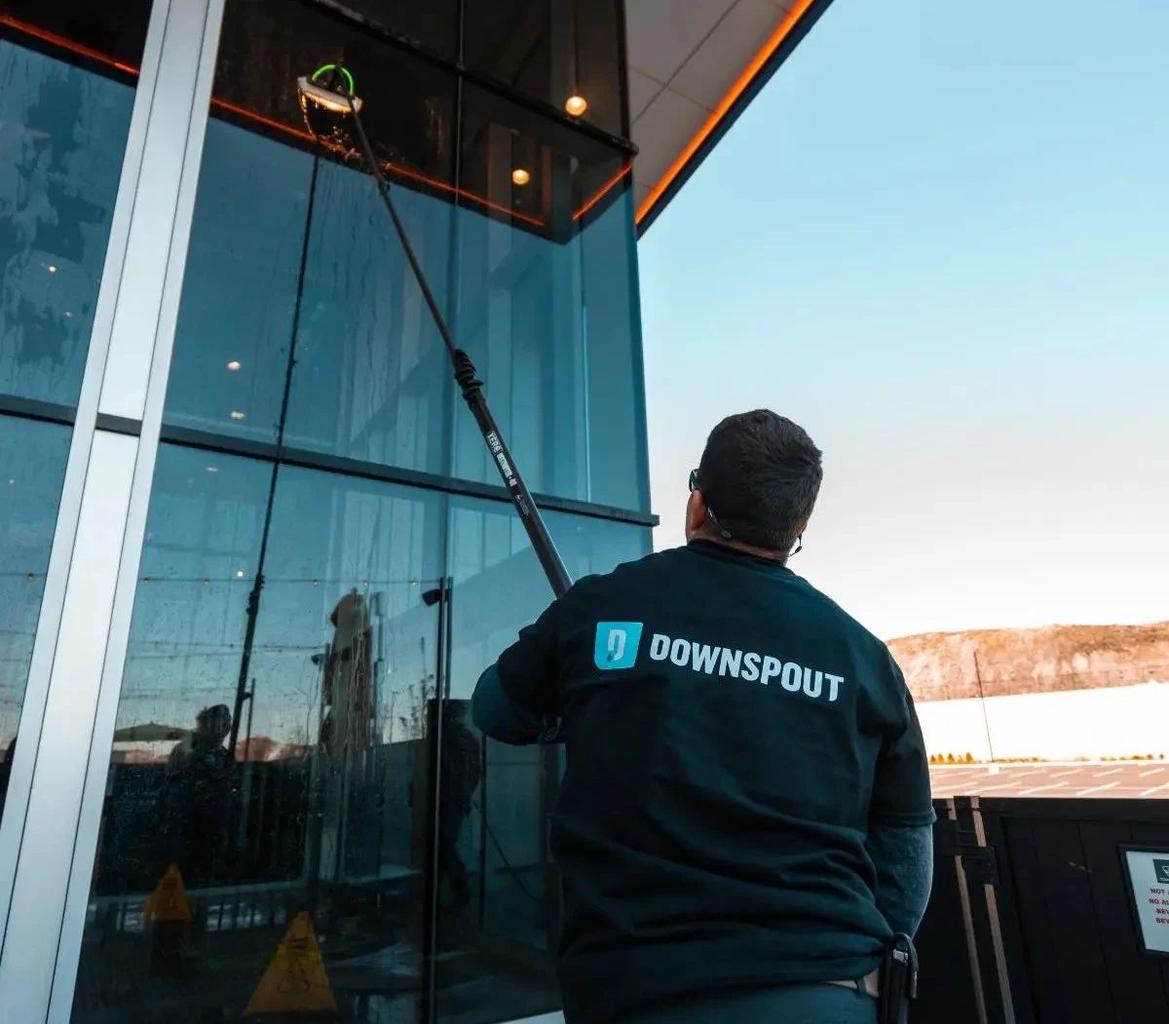
For properties requiring precision or dealing with hard-to-reach windows, professional cleaning offers results that DIY methods can't match. Using specialized tools, expert techniques, and purified water systems, professionals deliver streak-free windows that look flawless.
"Preventing streaks comes down to three key factors: purified water, proper technique, and the right equipment." – Off The Wall
Professional cleaners rely on water filtration systems to remove minerals like calcium and magnesium, which are responsible for the spots left behind when tap water dries. With purified water, windows can dry naturally without any residue. Experts also use a 45-degree squeegee angle and an S-pattern technique to ensure smooth, consistent cleaning without streaks or skips. For elevated or hard-to-reach windows, water-fed pole systems allow safe cleaning from the ground, reaching up to 70 feet high. This eliminates the risks associated with climbing ladders.
Why Choose Downspout Services?
Downspout Services provides professional window cleaning for both residential and commercial properties in Rhode Island and parts of Connecticut. Their team uses advanced equipment to guarantee spotless results, and their fully insured services protect your property and their crew.
They go beyond just cleaning the glass. Window frames, tracks, and sills are also cleaned to prevent dirt from dripping onto freshly cleaned panes. This thorough approach is especially important for properties near the ocean or busy roads, where salt spray and grime can accumulate more quickly.
Custom Cleaning Plans
Downspout Services offers tailored cleaning plans to address the specific needs of your property. These plans take into account local environmental conditions and unique challenges. For residential properties, services can include both interior and exterior cleaning, with recommended schedules based on factors like location and exposure. Commercial properties - such as office buildings, schools, medical facilities, and multi-unit residences - receive maintenance schedules designed to keep windows spotless year-round.
Pricing depends on the size and complexity of the property. As of 2026, residential cleaning costs range from $10–$18 per window (or $4–$8 per pane), with small homes (10–15 windows) typically costing $150–$275. Commercial properties are often priced by square footage at $0.10–$0.35 per square foot or by hourly rates of $50–$100. Additional services, like screen cleaning ($2–$5 per screen), track detailing ($3–$6 per window), and hard-water stain removal ($20–$75+), can also be included.
This detailed and adaptable approach ensures your windows stay clear and pristine all year long.
Conclusion
Achieving streak-free windows comes down to using the right tools, mastering effective techniques, and timing your efforts wisely. By incorporating distilled water, you can avoid mineral deposits, while a high-quality squeegee with a sharp blade, combined with microfiber cloths for finishing touches, ensures a polished result. Removing dust and debris beforehand prevents scratches and sets the stage for a smoother clean.
Choosing cooler, cloudy days - ideally between 50–70°F - keeps cleaning solutions from evaporating too fast, which helps prevent streaks. An S-shaped motion with the squeegee, followed by a quick buff with a dry microfiber cloth, can take your cleaning from decent to flawless.
For more challenging tasks, like high windows or stubborn stains, professional services bring the right tools and expertise to achieve outstanding results. Whether you decide to handle the job yourself or hire experts like Downspout Services, consistent window cleaning not only boosts your property’s curb appeal but also helps protect your investment over time. Clear, spotless windows create a lasting impression and keep your home looking its best.
FAQs
How do I pick the right squeegee size?
The size of your squeegee should match the type of window you're cleaning. For most residential windows, a 12-inch squeegee strikes a good balance between covering enough surface area and being easy to handle. If you're working on smaller, detailed spaces - like French panes - a 6-inch squeegee is a better fit. For larger windows or commercial properties, you might prefer a wider squeegee, typically 14 to 18 inches, for faster cleaning. That said, for everyday home use, the 12-inch option is usually your best bet.
Can I use vinegar on all types of windows?
Vinegar is a popular and effective choice for cleaning windows, but it’s important to use it carefully. The acetic acid in vinegar can irritate your lungs if inhaled, so make sure the area is well-ventilated while cleaning. While vinegar works well on most windows, certain surfaces or coatings might react poorly. To play it safe, test it on a small, hidden spot before tackling the entire window.
When should I hire a pro for window cleaning?
When it comes to cleaning windows that are high up, oversized, or covered in tough grime, hiring a professional window cleaner is a smart move. They have the tools and expertise to handle jobs that might involve safety risks or require advanced techniques. Plus, if you're aiming for streak-free, spotless windows without spending hours of your own time, professionals can deliver those results effortlessly. This is especially useful for large properties or commercial spaces where achieving a flawless, residue-free finish can be a real challenge on your own.