Does Hanging Christmas Lights Damage Your Gutters?
Use plastic clips and prep clean, secure gutters before hanging LED Christmas lights; avoid nails and match clips to guards.
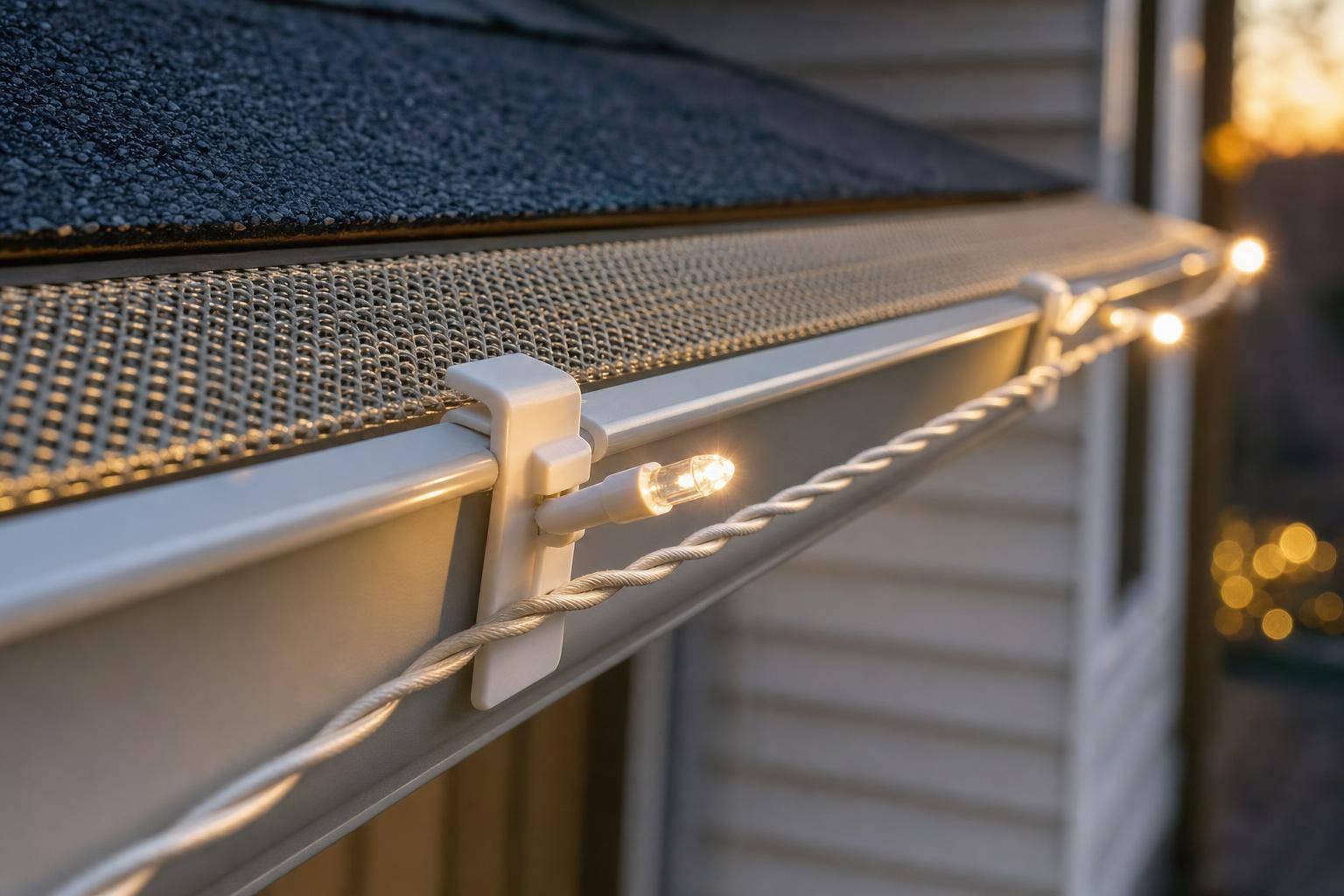
Usually not - if you use the right clips and your gutters are already in good shape.
Your lights are rarely the problem. A 100-bulb LED strand weighs about 0.5 lbs, while a 20-foot gutter filled with water can weigh more than 200 lbs. That means damage usually comes from clogs, ice, loose hangers, soft fascia, or the wrong fasteners - not from the lights alone.
Before you hang anything, focus on these points:
- Use plastic clips made for the gutter or roof edge
- Do not use nails, staples, or screws
- Check for clogs, sagging, and rot first
- Be extra careful with gutter guards, since the wrong clip can bend or loosen them
- Keep weight spread out so one small section does not carry too much load
If your gutters are weak, full of debris, or already pulling away from the house, holiday lights can make that damage show up faster. If they’re clean and secure, clip-on LED lights are usually a low-risk choice.
| Issue | What you should know |
|---|---|
| LED light weight | Very low |
| Water and ice weight | Much higher |
| Plastic gutter clips | Low risk on open gutters |
| Nails, staples, screws | High risk |
| Gutter guards | Need the right clip type |
| Weak or clogged gutters | More likely to fail |
This article comes down to one simple point: gutters get damaged by poor condition and winter load far more often than by Christmas lights.
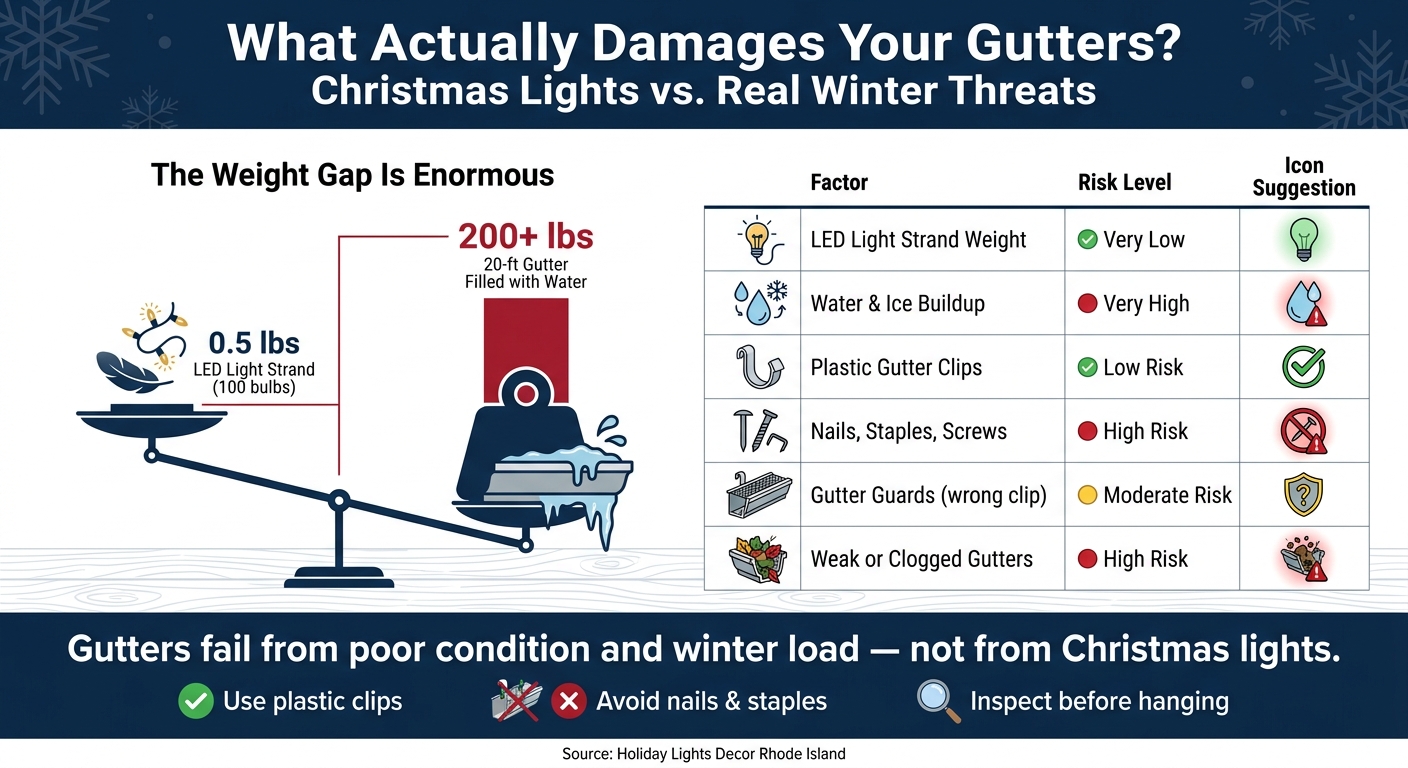
Christmas Lights vs. Gutter Load: What Actually Damages Your Gutters
How To Install Christmas Lights On A Gutter
sbb-itb-634c8b2
How Christmas Lights Add to Gutter Load During Rhode Island Winters
Holiday lights don't usually damage a gutter system that's in good shape. Trouble starts when the gutters are already weak from loose hangers, soft fascia, or winter debris.
Gutters attach to the fascia board with hangers, spikes, or brackets. So if the fascia or those fasteners are worn down, winter weight is much more likely to bring that problem into plain view.
Why Lightweight LED Strands Are Rarely the Problem
Holiday lights add very little weight next to what winter buildup can dump into a gutter. A 100-bulb LED string weighs about 0.5 lbs, while a 20-foot section of gutter filled with standing water can weigh more than 200 lbs.
That gap is huge.
On a gutter system that's still solid, clipped LED strands add almost nothing. In most cases, the condition of the gutter matters far more than the light strand hanging from it.
Why Weak, Clogged, or Ice-Prone Gutters Are More at Risk
Once winter weight is already there, clip placement starts to matter more. Leaves and grit hold water in place. Then Rhode Island's freeze-thaw cycles can turn that water into ice, creating heavy shifting loads that yank hangers loose and bend gutter runs out of shape.
Coastal Rhode Island adds another issue: salt air can corrode metal fasteners. And if the fascia is soft or water-damaged, the part holding everything together is already compromised.
"If the fascia is soft, splitting, or showing signs of water damage, no clip will hold reliably." - Holiday Lights Decor Rhode Island
In other words, the lights usually aren't the root problem. They just make an already stressed system harder to ignore, whether that stress comes from debris, standing water, or ice. That puts even more focus on how the lights are attached.
When Hanging Christmas Lights Can Actually Damage Gutters or Gutter Guards
Real damage usually happens in a few specific cases. Most of the time, it comes down to the wrong fastener, too much weight in one area, or forcing hardware onto a gutter guard system that was never meant to hold it.
Fasteners That Damage the Gutter
Problems start when the light attachment goes beyond the front lip and into the gutter body or fascia. Any puncture creates a path for water. Once moisture gets trapped there, it can wear down the fascia through the winter.
"Metal nails and staples can wear away at the PVC insulation surrounding the wires, creating both a shock and spark hazard." - Tom Silva, General Contractor
There’s another risk people miss: a ladder leaning on the gutter can crush aluminum gutters or dent gutter guards.
Heavy Light Runs, Poor Clip Placement, and Stressed Sections
The lights themselves aren’t always the issue. The bigger problem is how the load is spread out.
Multiple light runs, heavy icicle lights, or clips placed too far apart can create sagging sections. Those low points tend to catch wind and ice. If that weight builds up near a corner, a seam, or a hanger that’s already loose, it can pull the gutter away from the fascia.
In that case, the lights don’t create a new weakness. They expose one that was already there.
Safe vs. Risky Attachment Methods: Comparison Table
The way you hang the lights matters more than the lights themselves. And the right method depends on whether you have open gutters or gutter guards.
| Attachment Method | Typical Use | Damage Risk to Gutters | Damage Risk to Guards |
|---|---|---|---|
| Plastic Gutter Clips | Standard K-style gutters | Low on open K-style gutters | High - can bend or loosen guard panels |
| Staples / Nails / Screws | Wood fascia or trim | High - punctures cause rust and rot | High - permanent damage, voids most warranties |
| Shingle Tabs | Rooflines with guards | None - bypasses the gutter entirely | None - attaches to shingles only |
| S-Hooks | Reverse-curve guards | Low - slides into existing seams | Moderate - risk if hung from the outer "nose" instead of the lip |
On open K-style gutters, plastic clips are usually the low-risk choice. On guarded gutters, the clip needs to match the guard style. Don’t force a standard clip onto the edge and hope it holds.
And if the gutters are already clogged or loose, even a safe clip can turn into a problem.
How to Hang Christmas Lights Safely on Seamless and Guarded Gutters
For open K-style gutters, the job is pretty simple: pick the right clip, space it evenly, and don't put weight on the guard. That spreads the load across the run and helps protect the gutter itself, which is the main issue in this article.
Use Gutter Clips Made for Seamless K-Style Aluminum Gutters
Seamless K-style aluminum gutters are the most common profile on Rhode Island homes. Their curved front lip gives standard clips a firm place to hold. UV-stabilized plastic clips that grab the front lip without scratching the finish are the right fit here.
In coastal Rhode Island, corrosion-resistant hardware tends to hold up better against salt air and strong winter winds.
Once you have a clip that fits the gutter, spacing is the next piece of keeping the light run steady.
Space Clips to Reduce Point-Loading and Wind and Ice Buildup
One clip per foot is a good starting point. If you're using larger C7 or C9 bulbs, or hanging lights in windy coastal spots, tighter spacing helps keep the run steady and cuts down on sagging. The idea is simple: spread the load so one clip doesn't take the full hit from wind and ice buildup.
Corners need a little more care. Put one clip on each side of every turn, and leave a bit of slack so the strand can shift with wind and temperature changes. Route wires around downspouts, not through them. It also helps to pre-clip the strand on the ground. That keeps spacing even and means less time on the ladder.
If the roofline already has guards, the attachment method needs to fit the guard, not the gutter lip.
How to Hang Lights on Gutters with Guards Without Causing Damage
You can still hang lights when gutter guards are already in place, but the guard itself should never carry the load. That's the big thing here. The attachment point matters more than anything else.
The right hardware depends on the type of guard. Forcing a standard K-style clip onto a micro-mesh panel can bend the fine mesh and void the warranty. Match the clip to the guard style:
| Guard Type | Recommended Attachment | Avoid |
|---|---|---|
| Mesh / Screen | Metal hooks or specialized gutter guard clips | Adhesive clips |
| Micro-Mesh | Shingle tabs or drip-lip clips | Hooks forced into fine mesh |
| Reverse-Curve / Hood | Plastic S-hooks slid into the seam | Weight on the nose of the hood |
| Perforated Aluminum | Push-through aluminum hooks in the holes | Trough-lip clips |
| Foam or Brush | Shingle tabs or drip-edge clips | Clips pushed into the foam insert |
If you can't tell what kind of guard is installed, use shingle tabs. They bypass the guard and attach to the shingle or drip edge, so the guard doesn't carry any load at all.
Inspect and Prep Your Gutters Before Hanging Holiday Lights
Before you hang Christmas lights on your gutters, check the gutter run itself. Even the right clips won't help much if the gutter is clogged, loose, or already in bad shape.
Check for Clogs, Loose Hangers, and Fascia Problems First
Clear out debris, flush the gutters, and make sure the downspouts drain freely before you hang any lights.
"A gutter packed with last autumn's leaves, pine needles, and grit is a poor mounting surface and a hidden hazard." - Holiday Lights Decor Rhode Island
A quick check now can save you from finding a bigger issue later. Before you clip on anything, inspect the gutter run and look for these four trouble spots:
| Inspection Item | What to Look For | Why It Matters |
|---|---|---|
| Gutter Lip | Bends, cracks, or corrosion | A damaged lip can make lights sag or cause clips to slip off. |
| Fasteners | Loose spikes, sagging brackets, pulled screws | Sagging sections may not handle the added weight of ice and lights. |
| Fascia Board | Softness, rot, or peeling paint | Rotted wood may fail to support the gutter when wind and weight increase. |
| Gutter Trough | Standing water, debris buildup | Water can freeze and add weight, while debris can keep clips from sitting right. |
Press along the fascia board with your hand. If you feel soft spots, rot is already there. Fix that before the lights go up, not after. Peeling paint or water stains along the soffit are often the first signs that moisture has been getting behind the board.
It also helps to inspect and clean the gutters before cold weather sets in. Clips are harder to attach when temperatures drop, and plastic clips can turn brittle in the cold. Getting the gutters checked while the weather is still mild makes the job easier and safer.
Conclusion: Gutter Damage Comes from Condition and Total Winter Load, Not Clips Alone
Gutter damage usually comes from a weak or overloaded gutter system, not from clip-on lights by themselves. If the gutters need cleaning or repair, do that work first. Clean, secure gutters make all the difference between a safe holiday display and winter damage.
FAQs
Can I hang lights from gutters with gutter guards?
Yes - if you use the right clip and don’t put weight on the guard itself. The main thing is simple: match the clip to your guard type instead of trying to force a standard gutter clip onto a covered gutter.
Skip nails, screws, and adhesives. If the guard design makes clipping tough, attaching lights at the shingle line or fascia is a safe way to protect the gutter system.
How do I know if my gutters are too weak for lights?
Inspect your gutters before hanging lights. Look for:
- Sagging sections
- Bent or corroded gutter lips
- Standing water
These issues can point to loose fasteners, weak mounting spots, or extra weight caused by a clog or bad pitch. Fix any problems before installation.
What clips should I use for hanging Christmas lights on gutters?
The best clip depends on your gutter and guard setup, but plastic clips are usually the safest pick. They help you avoid scratched finishes and can reduce the chance of warranty problems.
For open gutters, use clips that slide onto the front edge. If you have gutter guards, match the clip to the guard style:
- Push-through hooks for perforated or screen guards
- S-hooks for reverse-curve hoods
- Shingle tabs or drip-edge clips for micro-mesh or foam inserts
Never use nails, staples, or screws.