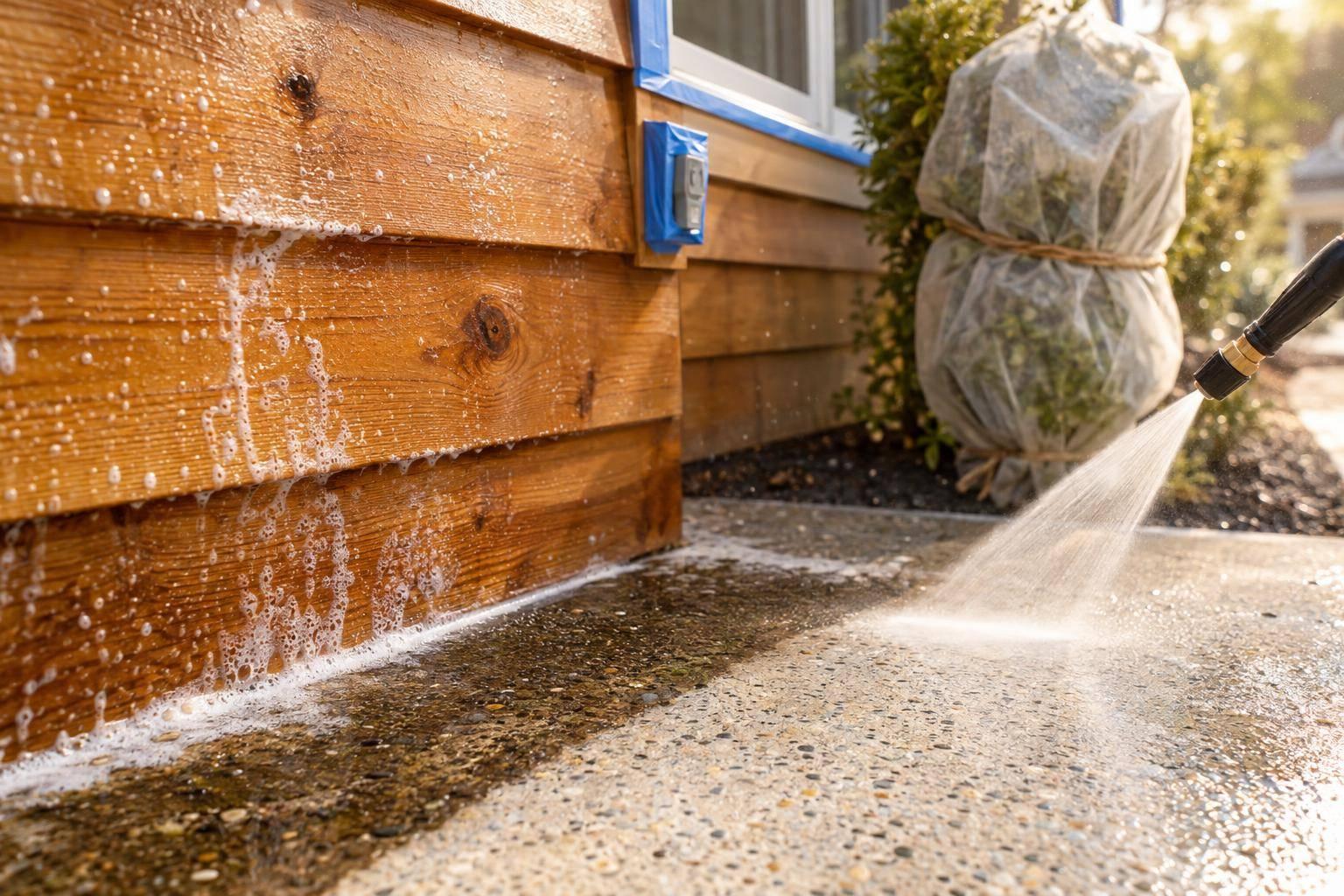
How Downspout Diverters Can Protect Your Landscaping
Routing downspout runoff to barrels, splash blocks, or dry wells prevents mulch washout, soaked roots, and foundation pooling.
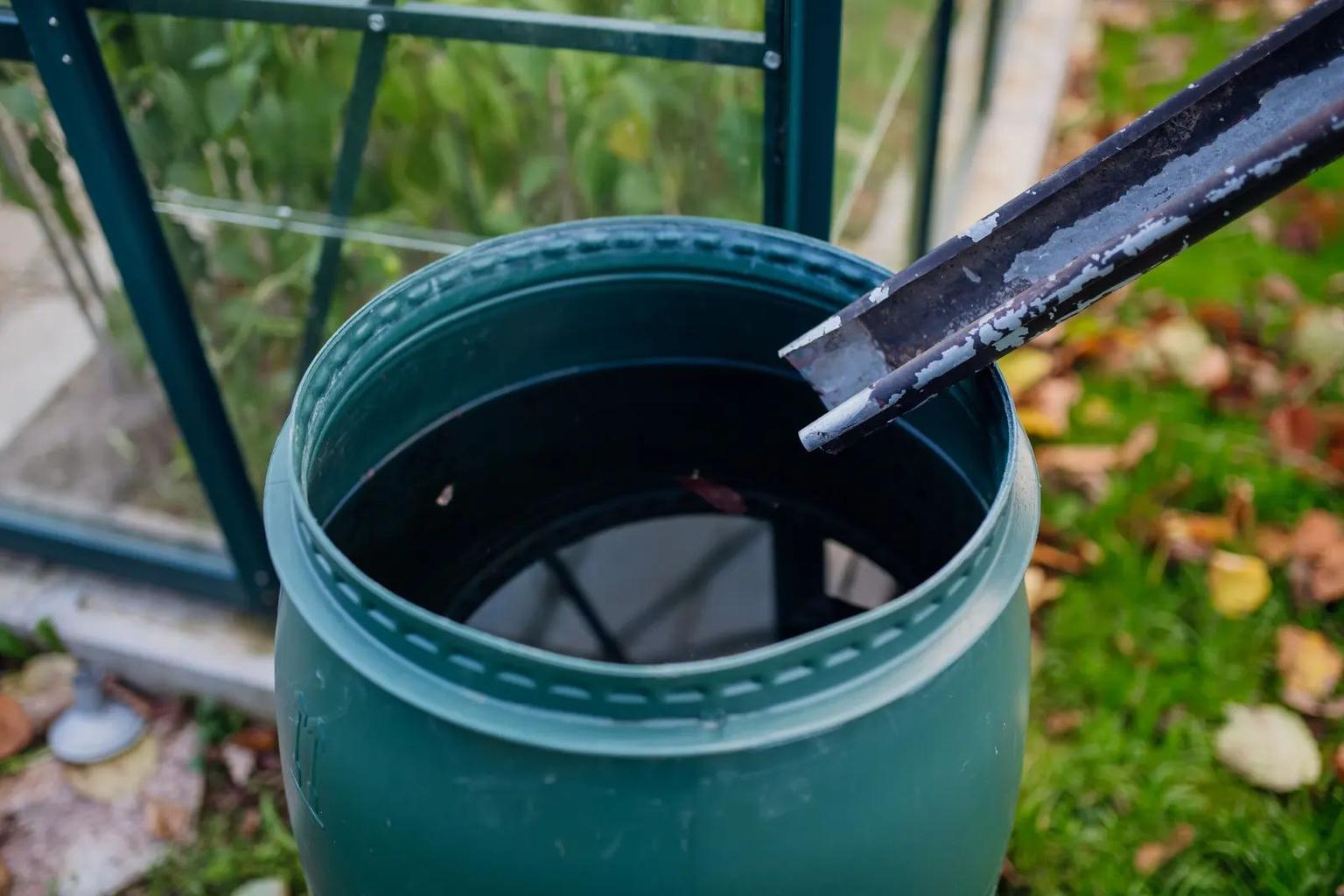
A downspout diverter helps stop water from tearing up mulch, drowning roots, and pooling near your house by sending runoff to a better spot.
If water keeps dumping into one small area, your yard can show the damage fast. A single downspout can send hundreds of gallons into one spot during a 1-inch rain, and even a 50-gallon rain barrel can fill from about 80 square feet of roof. That is why the setup matters as much as the downspout itself.
Here’s the short answer:
- Use a diverter when runoff keeps causing mud, washout, soggy beds, or puddles near doors and walkways.
- Send water to the right place: a rain barrel for later watering, a splash block for light surface flow, or a dry well for slow underground drainage.
- Check grade and placement: soil should slope away from the house, and beds close to the wall often get hit the hardest.
- Plan for overflow: when a barrel fills, extra water needs a clear path away from the house.
- Inspect before winter and after storms: clogs, leaks, and poor drainage can put water right back where it causes damage.
How to Control Gutter Runoff | Ask This Old House
Quick Comparison
| Option | What it does | Best use | Main watch-out |
|---|---|---|---|
| Rain barrel | Stores runoff for later use | Garden watering and small-yard water storage | Needs overflow and winter prep |
| Splash block | Spreads water over a short distance | Light runoff and well-draining soil | May not handle heavy flow or clay soil |
| Dry well | Moves water below ground to drain slowly | Pooling areas, clay soil, spots near hard surfaces | Needs correct sizing and placement |
You do not need a diverter at every downspout. But if runoff keeps hitting the same problem area, a diverter can help protect both your landscaping and the ground near your home.
What a downspout diverter does
A downspout diverter is an inline fitting that sits in the downspout, usually 1 to 3 feet above the ground. It catches roof runoff before the water hits the ground and sends it somewhere else, like a rain barrel, splash block, or dry well. That gives water a set path instead of letting it wash through mulch, soak roots, cut into bare soil, or collect near the base of the house.
Most diverters work with a valve or flap that switches the flow between the main downspout and a second outlet. That’s the big difference between a diverter and a basic extension. An extension only pushes water farther from the house. A diverter lets you choose where the water goes.
How a diverter routes water to a rain barrel, splash block, or dry well
Each outlet handles runoff in a different way:
| Destination | What It Does | Best For |
|---|---|---|
| Rain barrel | Captures runoff for later watering | Yards where stored water can replace hose watering |
| Splash block | Spreads water across a wider area | Reducing soil scouring and protecting plant roots near the outlet |
| Dry well | Stores runoff underground and releases it slowly | Getting large volumes of water away from sensitive surface areas |
A rain barrel stores water you can use later. A splash block spreads the flow so it doesn’t hit one spot like a fire hose. A dry well takes runoff below ground, where it can drain out over time. The best choice depends on how much water your yard gets and where that water needs to end up.
How diverters work with existing gutters
A diverter fits into the downspout you already have, so the gutter system itself stays the same. Water still runs off the roof, moves through the gutters, and drops down the pipe as usual. The diverter only changes the path at the lower part of the downspout.
Fit matters here. The diverter needs to match the downspout size, which is usually 2x3 or 3x4 inches, so you don’t end up with leaks or loose connections.
The right setup comes down to how your yard drains now and where runoff is already causing trouble. That kind of control helps most in spots where poor grading, planting beds, or pooling water put landscaping at risk.
sbb-itb-634c8b2
When a downspout diverter is worth installing
Not every yard needs a diverter. But if you keep seeing pooling, washout, or soggy beds after heavy rain, that usually means the water is landing in the wrong spot. The biggest red flags are poor grading, planting beds close to the house, and repeat puddling near hard surfaces.
When the grade slopes toward the foundation or planting beds
Proper grading should move water away from the house. Landscaped areas next to buildings should have a minimum slope of 2% - about 2 inches of drop over 8 feet. If the yard is flat or slopes the wrong way, downspout runoff can drift back toward the structure.
Even a small slope away from the house helps runoff move off instead of hanging around the foundation. A diverter helps by sending that water to a spot that can handle it safely, like a rain barrel, splash block, or dry well, instead of letting it build up near the house. Clay-heavy soil makes this worse because it tends to hold water against the foundation.
That same runoff gets rougher on nearby beds when plantings sit close to the house.
When planting beds sit within about three feet of the house
Foundation beds can take a beating when a downspout drains straight into them. Beds within 3 feet of the house get hit with concentrated runoff that washes away mulch and leaves roots sitting in water for too long.
Yellowing leaves on shrubs near the house are often a sign of root stress from oversaturation. If you're replacing mulch again and again, or the same plants keep struggling after wet weather, a diverter can send that water elsewhere before the bed gets damaged.
And that concentrated runoff doesn't just hurt plants. It often shows up as puddles near doors, walkways, and driveways.
When pooling forms near doors, walks, and driveways
Puddles that keep forming near front steps, side entries, or garage doors are a clear sign that runoff is landing where it shouldn't. Standing water on concrete and pavers can lead to slippery algae, and in winter, it can freeze right where people walk.
Water along paver edges and driveway joints can loosen the base underneath and lead to uneven settling. Redirecting the downspout discharge to a planted area helps spread out the flow and cuts back on wear to nearby hardscaping.
Choosing the right runoff destination for your yard
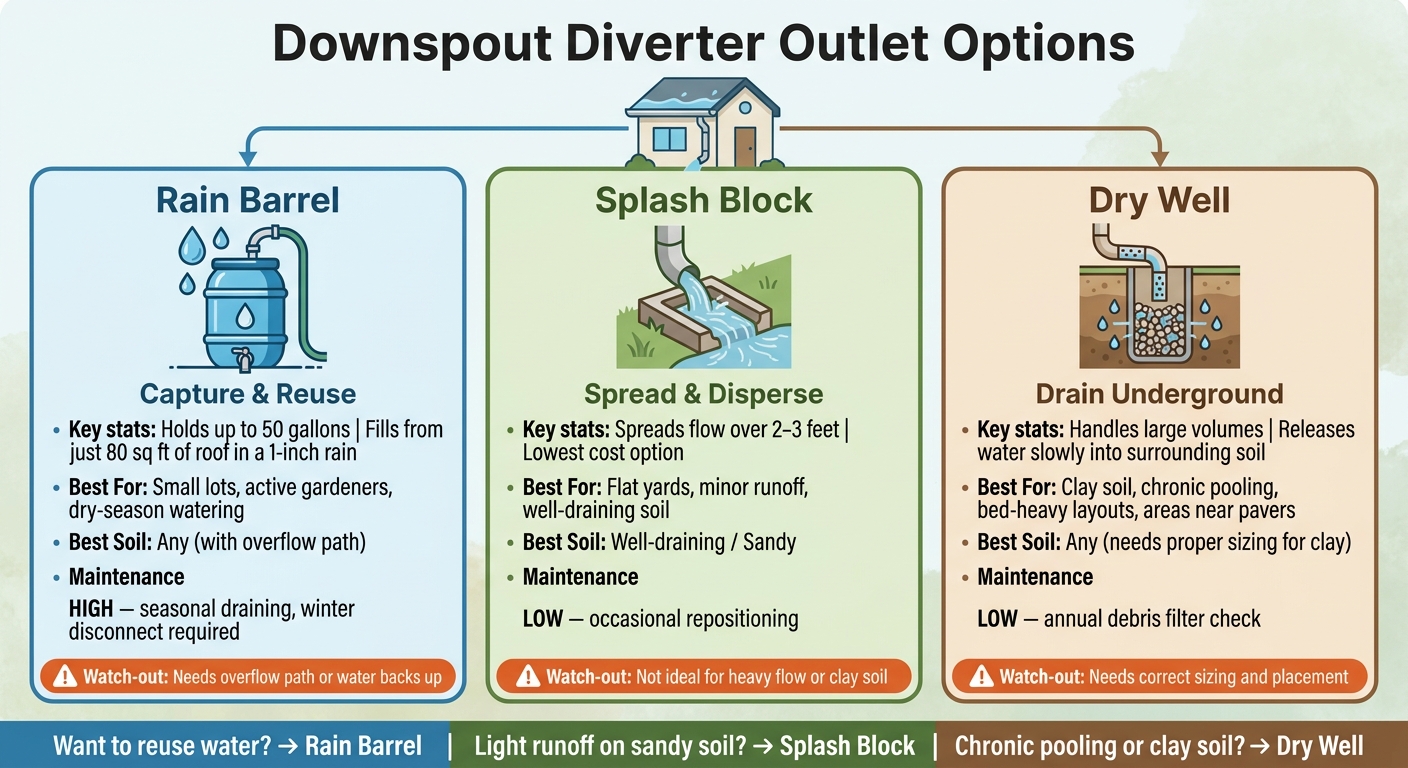
Downspout Diverter Outlet Options: Rain Barrel vs Splash Block vs Dry Well
Once runoff needs somewhere else to go, the outlet you pick should match the problem you're trying to fix. The right option depends on how much water your roof sends down, how fast your soil drains, and how much upkeep you're willing to handle.
Rain barrels for water capture and dry-season watering
A rain barrel makes sense if you want to save roof runoff and use it later on garden beds or planters during dry periods. Even a standard 50-gallon barrel can fill fast: just 80 square feet of roof can produce that much water during a 1-inch rain event.
That also means one thing: overflow matters. If the barrel fills up and the extra water has nowhere to go, it can back up into the downspout and spill at the gutter outlet. So the barrel itself isn't the whole setup. You also need a clear overflow path.
There's a bit of upkeep too. In cold climates, rain barrels should be drained and disconnected before winter so they don't crack. The diverter should also be set to bypass mode so the downspout keeps draining as usual.
Splash blocks and dry wells for surface or underground drainage
A splash block is the simplest option. It sits under the downspout and spreads water out over a short run, usually 2 to 3 feet. For light runoff on flat ground, especially where the soil drains well, that may be enough.
But splash blocks have limits. If your yard has heavy clay or your roof sends a lot of water through one downspout, water can still collect near the outlet. That's where a dry well comes in.
A dry well is a better fit for spots that stay soggy, yards with clay-heavy soil, or places near pavers and walkways that you don't want water damaging. It holds runoff below ground and lets it soak into the surrounding soil over time.
| Feature | Rain Barrel | Splash Block | Dry Well |
|---|---|---|---|
| Typical location | Above ground, near garden | Base of downspout | Underground, away from house |
| Effect on landscaping | Saves water for reuse | Helps stop soil washout at the exit | Stops pooling on the surface |
| Maintenance level | High (seasonal draining and winter prep) | Low (occasional repositioning) | Low (annual debris filter check) |
| Best soil type | Any (with overflow path) | Well-draining/sandy | Any (needs proper sizing for clay) |
| Best fit | Small lots, active gardeners | Flat yards, minor runoff | Clay soil, chronic pooling, bed-heavy layouts |
How a full rain barrel affects gutter performance
What happens when a barrel fills and backs up
If your rain barrel is where the runoff goes, overflow design matters a lot. The barrel does its job until it reaches capacity. After that, the water needs somewhere else to go.
If there’s no working overflow outlet or bypass, water can back up inside the downspout. From there, it may spill over the gutter edge or leak at the diverter joint. And that’s where trouble starts. Runoff can end up right at the base of the house, where it pools in planting beds, pushes mulch out of place, and wears away soil in the same spot the diverter was meant to protect. That’s why overflow control matters just as much as storage.
Design checks that protect both gutters and landscaping
Once the barrel is full, the system needs a fallback route. Put simply: overflow needs a clear way out.
Every rain barrel should have a dedicated overflow outlet that sends water to a splash block, dry well, or vegetated area so it can spread out safely away from the foundation. Automatic diverters return extra water to the original downspout when the barrel fills. Manual diverters need to be switched by hand.
A few checks go a long way:
- Size the barrel and overflow route based on the roof area feeding that downspout.
- After setup, run a simple hose test to make sure the barrel fills as expected, the overflow works, and water isn’t leaking at joints or pooling where it shouldn’t.
Keeping the system working
A diverter can help protect landscaping, but the parts need to work as one system: the barrel, overflow path, bypass mechanism, and discharge point. If one piece stops doing its job, runoff can end up right back where you were trying to keep it out.
Before freezing weather, drain the barrels and switch diverters to bypass mode. It also helps to inspect the system after heavy storms so overflow keeps moving away from the house. Downspout Services works with Rhode Island homeowners on drainage setups where the whole path matters, not just the gutter itself. Gutter installation that accounts for diverter placement and discharge points from the start saves a lot of troubleshooting later. Quick checks before winter can catch clogs, leaks, or poor drainage before they turn into a bigger problem.
FAQs
How do I know which downspouts need a diverter?
Consider a downspout diverter if you run into drainage issues during or after heavy rain, like:
- persistent pooling near entries
- a yard grade that slopes toward the foundation
- planting beds within 3 feet of the house washing out
A diverter can send runoff to a rain barrel or steer it away from trouble spots without the cost and mess of a complex underground system.
Can a downspout diverter work in clay soil?
Yes, but it depends on where the diverted water ends up.
Clay soil drains slowly and tends to hold moisture. That means you need to send the water far enough away so it doesn’t soak the area near your foundation.
A diverter can drain into a rain barrel, which is a good option. But if the barrel overflows, that extra water still needs to go beyond the foundation zone.
Dry wells usually aren’t the best fit for heavy clay. They can fill up, stay wet, and even back up instead of letting water move out the way you want.
What kind of overflow setup does a rain barrel need?
Every rain barrel needs an overflow hose. Without one, heavy storms or back-to-back rain can leave you with more water than the barrel can hold.
When the barrel fills up, the hose sends that extra water away from your home’s foundation. It can direct runoff to a vegetated area, a second container, or back into the gutter system. In most setups, the hose connects near the top of the barrel and runs to a drainage point.