How Often Should You Clean Windows in Rhode Island?
Clean RI windows at least twice yearly; coastal or tree-lined homes may need 3–6 cleanings. Seasonal tips, DIY vs pro, and damage prevention.
You should clean your windows in Rhode Island at least twice a year—similar to how often you should wash your house exterior - once in spring and again in fall. Homes near the coast or surrounded by trees may need 3–6 cleanings annually due to salt buildup, pollen, and grime. Regular cleaning prevents damage, improves natural light, and extends window lifespan.
Key factors affecting window cleaning frequency in Rhode Island:
- Coastal Proximity: Salt spray can etch glass and corrode frames. Clean 3–6 times a year if you're within 10 miles of the coast.
- Tree Coverage: Spring pollen and sap require 2–3 yearly cleanings for wooded areas.
- Seasonal Challenges: Winter road salt, summer humidity, and spring pollen all contribute to grime buildup.
For multi-story homes or stubborn stains, professional cleaning or using the best window cleaning methods is recommended. Costs range from $150 to $375 per visit, much cheaper than replacing damaged windows, which can cost $300–$700 per pane.
Pro Tip: Stick to a seasonal cleaning schedule (spring, summer, fall) to keep windows clear and avoid costly repairs.
How Often Should I Have My Windows Cleaned?
sbb-itb-634c8b2
How Rhode Island's Climate Affects Your Windows
Rhode Island's climate can be tough on windows. The mix of salty sea air, heavy pollen seasons, humid summers, and freezing winters creates a relentless cycle of buildup and wear. These conditions make regular window cleaning more critical than in many other regions. Let’s break down how the state's climate impacts your windows throughout the year.
Coastal Salt Spray and Ocean Proximity
Living near the ocean is beautiful, but it comes with a downside: salt air. In Rhode Island, airborne salt particles don't just create a hazy film on your windows - they can corrode metal components and damage window seals. Over time, this can even lead to permanent etching on the glass surface. For homeowners in coastal areas like Newport and Narragansett, freshly cleaned windows can show salt buildup again in just a few days.
The damage doesn’t stop at the glass. Aluminum and steel frames are especially at risk of corrosion from salt exposure. Once this process begins, reversing it is nearly impossible. If your home is within 10 miles of the coast, you’ll likely need to clean your windows three to four times a year - double the frequency recommended for inland homes.
But salt isn’t the only issue. Seasonal allergens also play a big role in window maintenance.
Spring Pollen and Tree Coverage
Rhode Island’s lush tree canopy, filled with oak, maple, and pine trees, produces a heavy pollen load each spring. Pollen levels peak in April and continue through July, leaving behind a yellow-green film that traps dust and grime on your windows.
Homes surrounded by trees often need exterior window cleaning three times a year instead of the usual twice. It’s also a good idea to clean tracks and sills during this season. Pollen buildup in these areas can interfere with how your windows operate.
As spring transitions to summer, the challenges shift from pollen to humidity and its effects.
Summer Humidity, Mold, and Film Buildup
Rhode Island summers are notoriously humid, and all that moisture creates a breeding ground for mold, mildew, and algae on windows and frames. North-facing windows are particularly vulnerable since they stay damp longer, often developing green or black stains by mid-summer. Meanwhile, south-facing windows face their own issue: grime gets baked onto the glass by the sun, making it harder to clean later.
A mid-summer cleaning can make a big difference. It prevents grime from becoming so stubborn that it requires heavy scrubbing by fall.
Once summer fades, winter brings its own set of challenges for your windows.
Winter Grime and Freeze-Thaw Cycles
Winter in Rhode Island introduces a whole new problem: road salt, gravel, and debris flung up by snowplows. This mix coats the lower sections of homes, leaving windows and frames covered in a corrosive mess. If left uncleaned, this winter grime can speed up the deterioration of frames and hardware, especially for homes near major roads or coastal areas.
The freeze-thaw cycles common in winter add to the strain. As temperatures rise and fall, window seals expand and contract, which can eventually lead to condensation between panes or even frame rot. Dirt and grime trapped in these areas only accelerate the damage. Spot-cleaning lower windows after heavy snowfalls can help prevent these issues from escalating.
How Often Should You Clean Your Windows in Rhode Island
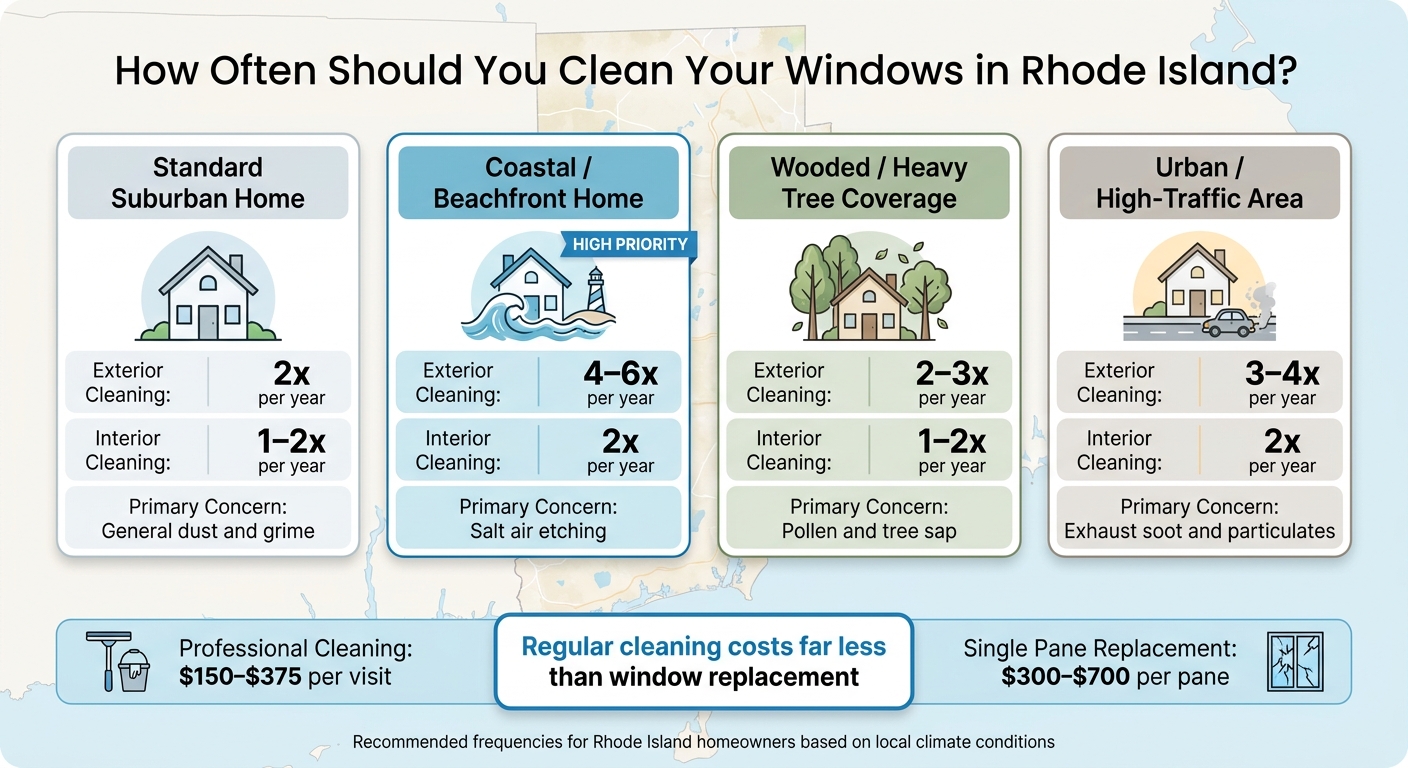
Rhode Island Window Cleaning Frequency by Property Type
Rhode Island's coastal air, pollen-heavy seasons, and humid summers can cause grime to accumulate on windows quickly. To keep them looking clear, sticking to a regular cleaning schedule is key. How often you clean depends on your location, environment, and whether your home has multiple stories.
Baseline Cleaning Frequency
For most homes in Rhode Island, cleaning windows twice a year - once in spring and again in fall - works well. These times address the buildup from winter and summer weather. As Brent Weingard, Owner of Expert Window Cleaners, says:
"Ideally, windows should be washed twice a year."
Interior windows can follow a similar pattern. For most homes, once or twice a year is fine, but if you have pets, kids, or a busy kitchen, you might find monthly spot-cleaning helpful. From there, tailor your schedule based on your home's surroundings.
Adjusting for Coastal Proximity and Tree Coverage
While twice yearly is a good starting point, your location might demand more frequent cleanings. Here's how different environments in Rhode Island influence your schedule:
| Property Type | Exterior Frequency | Interior Frequency | Primary Concern |
|---|---|---|---|
| Standard Suburban | 2× per year | 1–2× per year | General dust and grime |
| Coastal/Beachfront | 4–6× per year | 2× per year | Salt air etching |
| Wooded/Heavy Trees | 2–3× per year | 1–2× per year | Pollen and tree sap |
| Urban/High-Traffic | 3–4× per year | 2× per year | Exhaust soot and particulates |
Coastal homes face challenges like salt deposits, which can damage glass if not removed regularly. Meanwhile, homes surrounded by trees - especially oaks and maples - deal with sticky pollen and sap, particularly during spring months like March through June.
Single-Story vs. Multi-Story Homes
Your home's structure also affects how you approach window cleaning. For single-story homes, a DIY approach is often manageable. With the right tools, most homeowners can handle spring and fall cleanings safely and effectively.
For multi-story homes, however, cleaning upper-floor windows can be tricky - and risky. Climbing ladders to reach second or third floors is best left to professionals. They use specialized tools, like water-fed poles with purified water, to clean high windows safely. If your home has multiple stories, setting up a regular professional cleaning schedule is the safest and most efficient option.
A Season-by-Season Window Cleaning Plan for Rhode Island
Rhode Island’s weather changes drastically throughout the year, and each season leaves its mark on your windows. A tailored cleaning plan for each season ensures your windows stay clear and protected, no matter the weather.
Spring: Tackle Winter Grime and Pollen
Winter leaves behind salt, sand, and grime, making spring the perfect time for a thorough spring cleaning. Plus, it’s essential to prevent pollen from sticking to already-dirty surfaces.
Plan your cleaning for late April or early May. By this time, most tree pollen - especially from oak and maple trees, which peak between April and June in Rhode Island - has settled. Cleaning too early can be counterproductive, as fresh pollen can quickly create a visible film on your windows.
Don’t forget about your screens! Clean them separately to avoid rain redepositing minerals onto freshly cleaned glass.
"Spring and fall are ideal for window cleaning in Rhode Island because the weather is mild and there's less pollen or debris in the air." - Sun Pristine Maids
Once you’ve tackled the winter residue, your windows will be ready to handle summer’s humidity and storms.
Summer: Combat Humidity and Storm Residue
Summer in Rhode Island brings high humidity, coastal breezes, and thunderstorms - all of which can leave behind hazy films, insect debris, and salt spray. For homes near the coast, salt spray can start etching glass in just a few weeks.
To keep your windows looking their best, schedule a cleaning in July or August. Aim for early morning or late afternoon to avoid streaks caused by rapid evaporation.
As summer winds down, it’s time to shift gears and prepare for the challenges of fall and winter.
Fall: Clear Summer Residue Before Winter
By October, your windows are likely coated with summer’s dust, salt, and even tannins from decomposing leaves. These can form a stubborn, staining film.
October is the perfect time for professional window washing. Removing this buildup not only improves your windows’ appearance but also prevents long-term damage. As Duchesney Window Washing explains:
"Salt and sand can actually etch into your windows if left too long, making them permanently cloudy."
A clean window also maximizes natural light during Rhode Island’s shorter winter days. Dirty windows can block up to 40% of light, which is especially noticeable as daylight hours shrink in November and December.
Signs Your Windows Are Overdue for Cleaning or Repair
In Rhode Island, the combination of coastal salt and humidity can wreak havoc on windows if dirt and grime are left unchecked.
Visible Signs That Cleaning Is Overdue
One of the clearest indicators your windows need attention is a persistent haze that blocks natural light, even on sunny days. This haze isn't just dirt - it often reflects the environment around you. For example, coastal areas may see salt buildup, springtime brings pollen layers, and busier neighborhoods often deal with road exhaust residue. These deposits don’t just dull the view; they signal it’s time for a thorough cleaning.
Take a close look at the frames and sills. A green or black discoloration often means algae or mold have started to grow, especially on north-facing windows where moisture from humid summers tends to linger. Don’t forget to inspect the tracks - clogged weep holes can trap water, leading to stubborn stains that become harder to clean over time.
Catching these signs early can help prevent more serious damage to your windows' seals and frames.
When Grime Starts Damaging Seals and Frames
What starts as surface dirt can turn into a bigger problem when moisture gets involved. In Rhode Island's salty, humid air, this cycle becomes particularly destructive. Salt is especially harsh on silicone seals, while mold and algae can creep into the frame and weaken the bond between the glass and its surrounding structure.
Grime buildup in window tracks can also lead to operational issues. If your windows suddenly stick or feel difficult to open and close, it’s likely the tracks haven’t been cleaned in a while. This doesn’t necessarily mean the window itself is broken, but it’s a sign that maintenance is overdue.
Signs That Point to Repair or Replacement
Sometimes, cleaning won’t cut it. Certain signs indicate it’s time for repairs - or even a full replacement. For example, fogging or condensation between panes is a dead giveaway that the seal has failed. When this happens, the insulating gas escapes, and cleaning won’t fix the issue. This requires professional repair or replacement.
Another red flag is white or gray crusty deposits that remain after washing. These calcium or limescale deposits bond to the glass and, if left untreated, can etch tiny pits into the surface, causing permanent cloudiness. Removing these deposits requires a special descaling solution, which can add $50 to $150 to a standard cleaning bill. Ignoring them could mean replacing the glass entirely, which costs between $300 and $700 per pane.
A 2024 survey of 1,000 homeowners found that 26% replaced their windows due to glass damage, much of which stemmed from delayed maintenance. Additional warning signs include cracked frames, warped wood, or visible rot around the sill - all clear indicators that it’s time to move beyond cleaning.
Here’s a quick summary of common issues and recommended actions:
| Sign | Likely Cause | Next Step |
|---|---|---|
| Haze or salt film | Surface buildup | Standard cleaning |
| Green/black growth on frames | Algae or mold | Deep cleaning + moisture check |
| White/gray crusty deposits | Calcium or limescale | Professional descaling |
| Fogging between panes | Failed seal | Repair or sash replacement |
| Cracked frames or warped wood | Structural deterioration | Window replacement |
When to Call a Professional Window Cleaner in Rhode Island
After evaluating your window cleaning routine, it might be time to bring in a professional for tougher tasks like cleaning upper-story windows or removing stubborn buildup. While DIY methods can handle ground-floor interior windows, higher floors, salt deposits, or etched minerals often require specialized tools and expertise.
Safety and Access Issues on Multi-Story Homes
Cleaning windows on the second or third story with a ladder can be risky, especially with Rhode Island's coastal winds, which can make ladders unstable. Professionals eliminate this risk by using water-fed poles and other tools designed to safely clean hard-to-reach windows.
How Local Professionals Clean for Rhode Island Conditions
Rhode Island's environment presents unique challenges for window cleaning, and professionals have the tools and techniques to address them. For example, tap water often leaves mineral spots, especially in areas with hard water or high salt exposure. To avoid this, professionals use water treated through reverse osmosis or deionization filters, ensuring a streak-free finish that’s hard to achieve with DIY methods.
When windows already show white or gray deposits from salt or hard water, professionals turn to specialized solutions like oxalic acid or cerium oxide compounds. These products aren’t available at your local hardware store and require proper training to use effectively.
For homes within 10 miles of the coast, salt corrosion can be a persistent issue. In these cases, experts recommend professional cleaning three to four times a year to keep windows in good condition. Pricing for a medium-sized home in Rhode Island typically falls between $150 and $375 per visit, depending on whether you choose exterior-only or full interior and exterior cleaning services.
Beyond just cleaning windows, professionals can help streamline your home maintenance routine.
Bundling Window Cleaning with Other Home Maintenance
Combining window cleaning with other exterior maintenance tasks can save both time and money while tackling common Rhode Island issues like salt residue and pollen buildup. Pairing window cleaning with services like gutter cleaning, house washing, or roof washing not only reduces costs but also ensures a more thorough approach to home care.
This strategy is practical, too. For example, dirty gutters can overflow and stain window frames, while algae on unwashed exteriors can spread to window sills. Bundling services means you avoid duplicating efforts and keep your home in top shape. Companies like Downspout Services offer packages that include window washing along with gutter cleaning and house washing, making it easy to schedule these tasks as part of a seasonal maintenance plan.
Conclusion: Stick to a Window Cleaning Schedule That Works for Rhode Island
Rhode Island's unique climate can be tough on windows. Salt spray from the coast, pollen in the spring, summer's humidity, and winter road salt all contribute to a year-round buildup that generic cleaning advice often misses. Without regular attention, this buildup can lead to damage - affecting the glass, seals, and even window frames. That’s why having a cleaning schedule tailored to Rhode Island’s conditions is so important.
A survey found that 26% of homeowners replace windows due to glass damage. Considering that a single-pane replacement can cost between $300 and $700, while professional window cleaning typically ranges from $150 to $400 for a standard home in Rhode Island, it’s clear that regular cleaning can save money in the long run.
For most homeowners in the area, cleaning windows in spring and fall is enough to handle the basics. However, homes along the coast may require cleaning every 3 to 4 months. Windows that are north-facing or heavily shaded might also need extra attention to prevent issues like mildew or grime buildup.
When DIY efforts fall short, professional help can make all the difference. Companies like Downspout Services offer window washing as part of their broader exterior maintenance packages, simplifying the process and ensuring your home stays in top shape. A regular cleaning schedule doesn’t just keep your windows looking great - it also helps protect the overall condition of your home.
FAQs
Does rain clean my windows in Rhode Island?
Rain doesn’t actually clean your windows. Instead, it often leaves behind streaks, water spots, and residue because it carries dust, pollen, and other debris from the air. If your windows have metal screens, rain can even cause stubborn mineral stains as it flows through. For the best, streak-free results, it’s a good idea to clean your windows on clear days.
What’s the safest DIY way to clean second-story windows?
Cleaning second-story windows requires extra care to avoid accidents. Start with a sturdy ladder or scaffolding, making sure it's securely positioned - especially if you're dealing with Rhode Island's unpredictable winds. If you're using a ladder, safety gear like a harness can add an extra layer of protection.
For those who prefer to stay grounded, a telescopic pole is a handy tool for reaching high windows. However, if certain spots remain out of reach or the setup feels unsafe, it’s wise to call in professionals. Prioritizing safety can help you avoid unnecessary risks and injuries.
How can I tell if cloudy windows are dirty or permanently etched?
If your windows stay hazy or milky even after a deep cleaning, they might be permanently etched. While surface grime, pollen, and salt spray typically come off with cleaning, persistent cloudiness often points to chemical etching caused by coastal salt, hard water minerals, or acidic debris. If professional-grade cleaning products fail to restore the glass's clarity, it’s likely the damage is irreversible.