Does Ice Melt Damage Rhode Island Patio Pavers?
How ice-melt chemicals affect Rhode Island patio pavers and how to reduce damage with safe deicers and winter care.
Yes, ice melt can damage your Rhode Island patio pavers, but you can reduce the risk. Clear snow first, check your paver and sealer manufacturers' instructions, and use only the label's minimum effective amount. Coastal salt exposure, freeze-thaw cycles, and pooled meltwater can make damage worse.
Your choice among 3 common deicers matters:
- Rock salt: Avoid it on decorative concrete and natural stone; it can also damage some sealers.
- Calcium chloride: It works at colder temperatures, but can damage concrete, stain masonry, and corrode aluminum.
- Calcium magnesium acetate (CMA): It's chloride-free, but you still need to check compatibility with your pavers and sealer.
Don't chop bonded ice. Sweep up loose deicer and rinse residue only when water can drain without refreezing. Scheduling paver cleaning once a season keeps residue from sitting on the surface between storms. In spring, check for cracks, uneven pavers, worn joints, and peeling sealer. If the sealer is peeling or worn, a professional paver sealing job is worth booking before reapplying anything yourself. Get a professional assessment if damage or deposits keep returning.
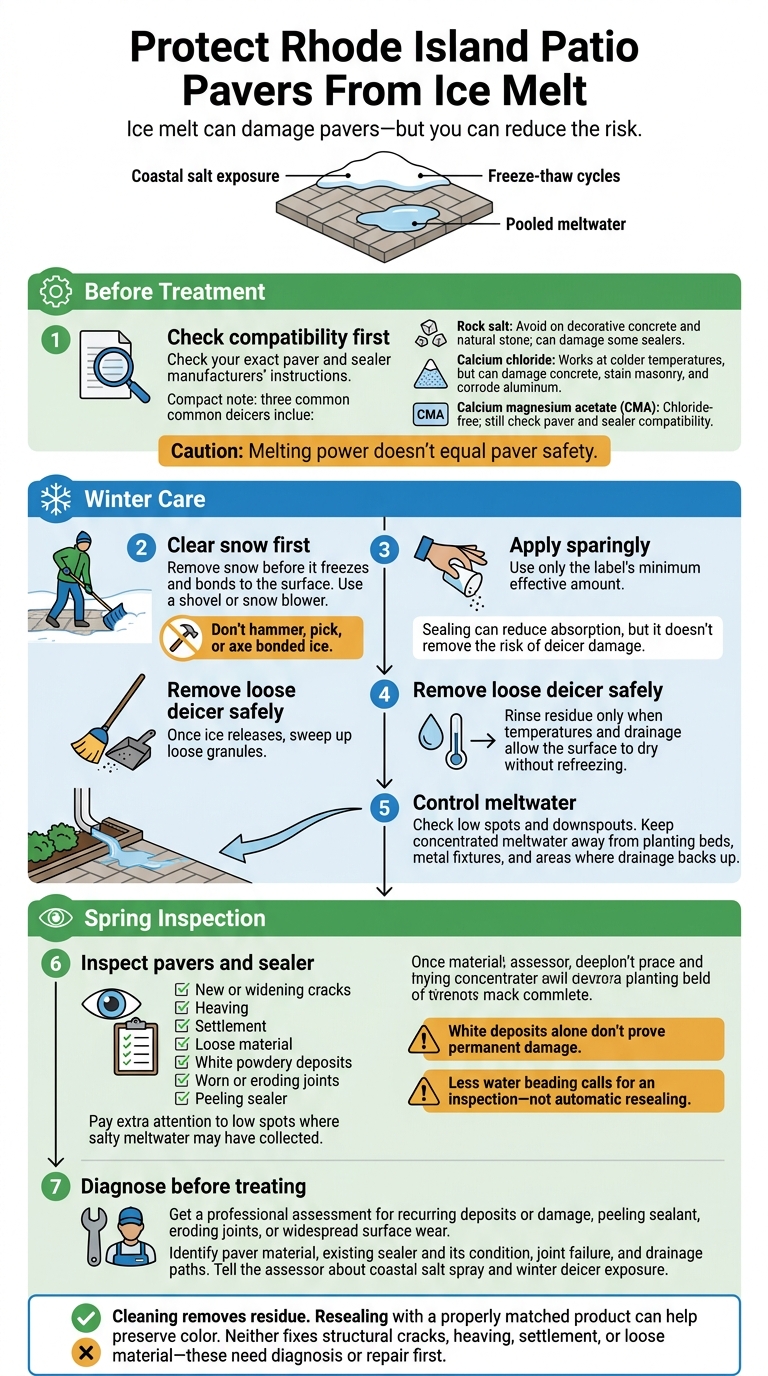
Protect Rhode Island Patio Pavers From Ice Melt
How to Care for Concrete Pavers in the Winter ❄️🥶
sbb-itb-634c8b2
Compare Rock Salt, Calcium Chloride, and CMA
If you’re already seeing residue or wear, your choice of deicer matters as much as how fast it melts ice.
Melting power doesn’t equal paver safety. Check how each product affects your pavers, nearby metal, and sealer.
| Check | Rock salt | Calcium chloride | Calcium magnesium acetate (CMA) |
|---|---|---|---|
| Active ingredient | Sodium chloride | Calcium chloride | Calcium magnesium acetate |
| Paver and masonry effects | Avoid on decorative concrete and natural stone | Can stain masonry and damage concrete | Chloride-free, but compatibility still depends on the paver |
| Sealant compatibility | Sodium chloride can damage some sealers | Check the sealer label. | Check the sealer label. |
| Residue and runoff | Chloride buildup can harm vegetation and corrode metals | Can corrode aluminum | Recommended near sensitive plantings to reduce chloride exposure |
Rock Salt vs. Calcium Chloride
Calcium chloride’s stronger cold-weather performance doesn’t make it safer for concrete. Rock salt is specifically discouraged on decorative concrete and natural stone. Calcium chloride can stain masonry, damage concrete, and corrode aluminum. In Rhode Island, coastal salt air adds corrosion stress to nearby metal.
Calcium Magnesium Acetate: Check the Evidence
CMA is chloride-free, but that alone doesn’t make it the right choice for every paver. Before using it, check compatibility with your exact material. Guidance for concrete doesn’t carry over to brick or stone.
Check Paver and Sealant Compatibility
Follow the manufacturer’s guidance for your exact paver type. Sealing can reduce absorption, but it doesn’t remove the risk of deicer damage. Apply deicer sparingly, even when it’s a suitable match.
Limit Deicer Exposure in Winter
Clear Snow Before Applying Ice Melt
Remove snow before it freezes and bonds to the surface. Use a shovel or snow blower, but don’t hammer, pick, or axe bonded ice. Even careful chipping can damage paver edges and surfaces.
Remove Excess Salt and Control Runoff
Once the ice releases, sweep up loose deicer granules. Rinse away residue only when temperatures and drainage allow the surface to dry without refreezing.
Check low spots on patios and walkways, and make sure downspouts aren’t directing meltwater onto walking surfaces. Keep concentrated meltwater away from planting beds, metal fixtures, and areas where drainage backs up.
Check Pavers After Winter
In spring, inspect pavers for new or widening cracks, heaving, settlement, loose material, and white powdery deposits. Give extra attention to low spots where salty meltwater may have collected.
Check the sealer’s appearance and water repellency, too. Less water beading calls for an inspection - not automatic resealing. Identify the paver and any existing sealer before choosing a treatment.
When to Consider Professional Cleaning or Resealing
If your spring inspection finds more than surface residue, get a professional assessment. White deposits that keep returning, peeling sealant, eroding joints, or surface wear across large areas need diagnosis. Drainage problems or movement beneath the surface may be to blame - not just staining. In Rhode Island, tell the assessor about coastal salt spray and winter deicer exposure. The assessment can help determine whether the surface needs cleaning, resealing, or repair.
Cleaning and Sealing Are Not Repairs
Cleaning removes residue. Resealing with a properly matched product can help preserve color. But neither fixes structural cracks, heaving, settlement, or loose material. Those problems need diagnosis or repair first.
Identify Materials Before Treatment
A professional assessment should document the paver material, the existing sealer and its condition, joint failure, and drainage paths. These details help separate ice melt damage and sealant breakdown from problems beneath the surface.
Conclusion: Reduce Exposure and Check Compatibility
In Rhode Island, coastal salt air and freeze-thaw cycles add to winter deicer exposure, increasing the risk of paver damage. Check compatibility before choosing a deicer. Rock salt, calcium chloride, and calcium magnesium acetate (CMA) affect pavers and sealers differently, so follow the exact instructions from both manufacturers.
Shovel snow before it hardens, apply only the minimum effective rate listed on the label, and sweep or rinse away residue when conditions allow. Don't chop bonded ice off pavers.
During your spring inspection, separate cleaning from repair. Downspout Services books seasonal paver cleaning and paver sealing jobs around this same spring window, since that's when winter residue and sealer wear are easiest to spot and address together. Cracked, heaved, or displaced pavers point to a structural issue instead, and that calls for a repair assessment rather than a routine cleaning or reseal.
FAQs
How can I tell salt residue from paver damage?
Check the surface: Salt residue usually looks like a white, chalky, or milky deposit. You can often remove it with a dedicated cleaner or pressure washing.
Actual paver damage looks different. It shows up as surface etching, pitting, or cracking - not just a deposit sitting on top of the pavers.
What if my paver manufacturer gives no deicer guidance?
If your paver manufacturer doesn’t provide deicer guidance, avoid rock salt (sodium chloride). Before using magnesium chloride or calcium chloride, confirm that it’s safe for both your pavers and sealant. Apply it sparingly. For traction, sand is an option.
Use a plastic shovel to help prevent scratches or chips. In Rhode Island, coastal salt air adds to winter salt exposure. Consider having a professional apply a high-quality, breathable, penetrating sealer.
Do coastal Rhode Island patios need extra winter care?
Yes. Freeze-thaw cycles, coastal salt air, and winter de-icing salt can all add to wear on sealers and pavers. Use plastic shovels to help prevent surface damage, and avoid rock salt. Use sand instead, or check that magnesium chloride is compatible with both your pavers and sealant before applying it.
Each March or April, check for frost heaving and refill joints with polymeric sand to help keep your patio stable.