Why We Don't Pressure Wash Every Coventry Home the Same Way
Match washing to each surface: soft wash for wood/cedar, adjusted pressure for sound concrete; inspect, repair, and protect plants and openings.
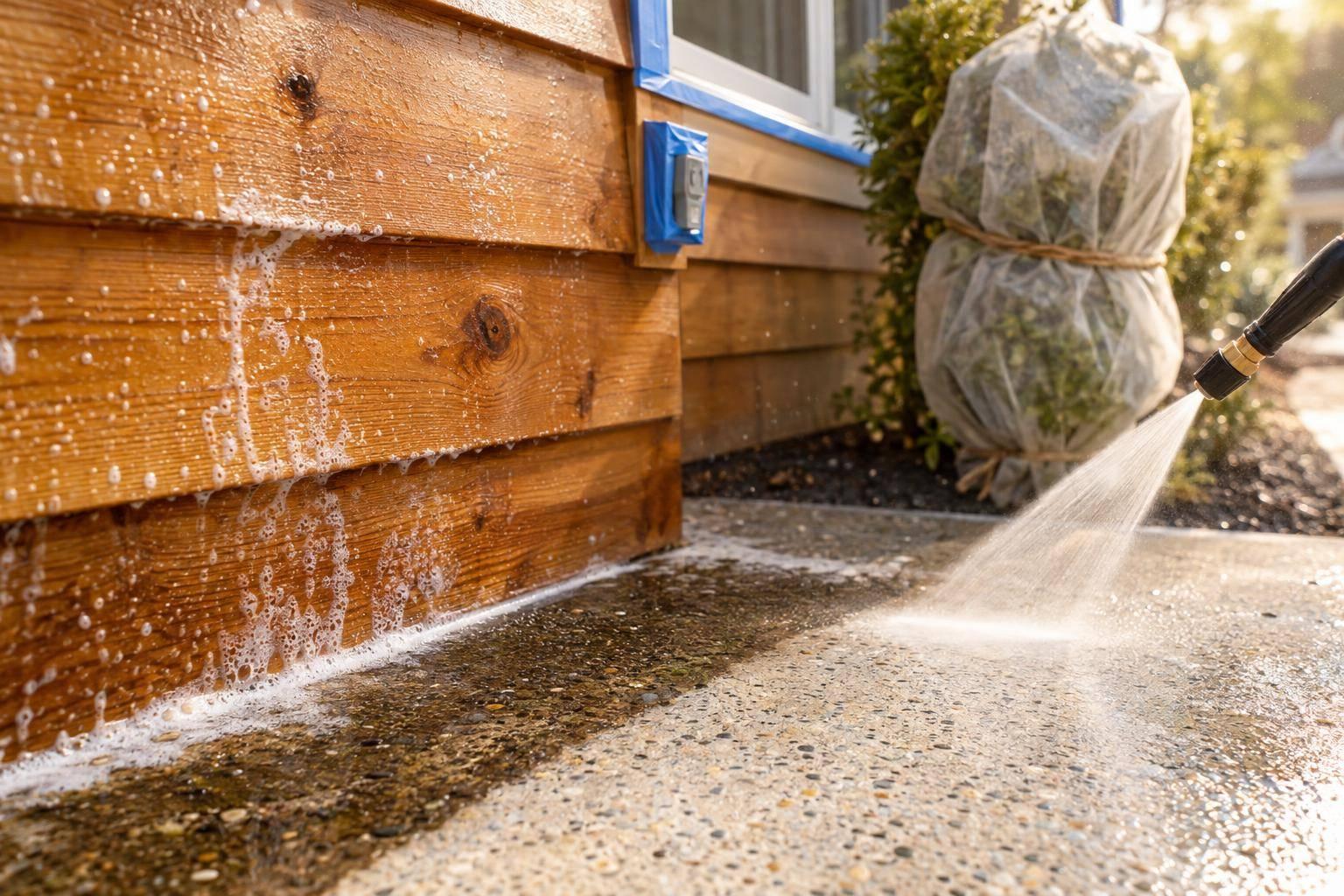
Your Coventry home needs a cleaning method matched to each surface - not more pressure for every stain. Start by checking for damage and testing a hidden spot: older wood and cedar usually need soft washing vs pressure washing depending on the surface, while sound concrete can handle adjusted pressure.
- Check the finish: Vinyl, shingles, painted wood, and sealed concrete need cleaners and methods that follow manufacturer instructions.
- Repair damage first: Rot, loose boards, failing paint, and leaking joints need attention before washing.
- Control the spray: Use a broad, downward pattern and keep water away from siding gaps, vents, and electrical fixtures.
- Protect the property: Shield plants and nearby surfaces, and manage cleaner runoff under local rules.
Coventry’s tree cover can keep surfaces damp longer, but heavy growth doesn’t mean higher pressure is safe. <u>A surface-by-surface inspection comes first</u>; an in-person estimate can help turn those checks into a cleaning plan for your property.
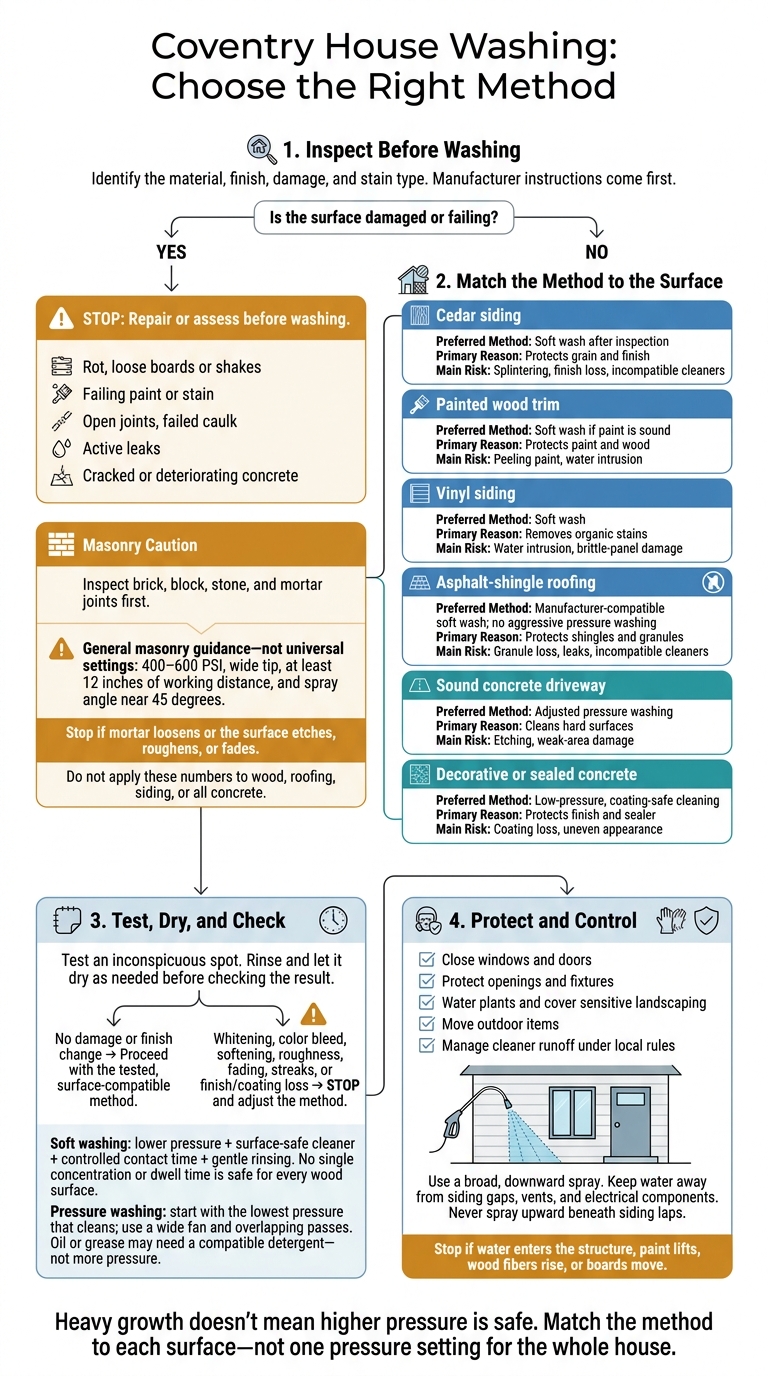
Coventry House Washing: Choose the Right Method
Clean Older Wood and Cedar With Care
Older cedar, painted trim, and weathered wood can splinter, fuzz, and trap water under concentrated spray. Soft washing is the safer default for these surfaces.
Water can also get behind boards and trim, slowing drying and contributing to hidden rot. These risks affect both the wood and its finishes.
Check Materials Before Soft Washing
Soft washing uses lower pressure, a surface-safe cleaner, controlled contact time, and gentle rinsing. Start by identifying the surface: unfinished cedar, painted wood, stained siding, or treated shakes. Follow the cleaner and coating manufacturers’ directions. Test a small area, then rinse it and let it dry before checking for whitening, color bleed, softening, or finish loss.
Use the mildest solution strength that works, and follow the label’s contact time. No single concentration or dwell time is safe for every wood surface. Work in small sections so the cleaner doesn’t dry on the wood. Rinse with a broad, downward spray, and never force water up under siding laps.
Address Damage Before Washing
If the wood is sound but delicate, clean gently. If it’s failing, stop and repair it first. Loose shakes, crumbly wood, failing paint or stain, open joints, and failed caulk need repair or further assessment before house washing.
Check window and door seals, and trace active leaks to gutters, flashing, or other entry points. Take dated photos of defects before cleaning. Stop if fibers lift, boards move, paint comes off unexpectedly, or water appears indoors.
sbb-itb-634c8b2
Use Pressure Washing on Sound Concrete and Suitable Masonry
Sound concrete driveways, walkways, and patios can usually handle pressure washing. It removes dirt, algae, mud, and tire marks better than rinsing alone. Oil or grease may need a compatible detergent - not just more pressure.
Match the pressure, nozzle, and working distance to the surface. Start with the lowest pressure that cleans, use a wide fan, and keep the wand moving in overlapping passes. A surface cleaner can help on large slabs, but only if the concrete is sound.
Masonry needs a lighter touch than plain concrete. Check the brick, block, or stone and its mortar joints before cleaning. Masonry guidance commonly recommends 400–600 PSI, a wide tip, at least 12 inches of working distance, and a spray angle near 45 degrees. Stop if mortar loosens or the surface starts to etch, roughen, or fade.
Check Concrete Condition and Coatings
Check concrete before washing, too. Look for cracks, spalling, scaling, loose edges, failed joints, and hollow-sounding areas. Make sure new concrete is fully cured. Painted, sealed, stamped, exposed-aggregate, and decorative concrete need a closer look: pressure can strip coatings, expose aggregate unevenly, or change the finish.
Test an inconspicuous spot before cleaning the whole slab. Let it dry as needed, then check for roughness, fading, streaks, or coating loss. If you see any of these changes, stop and adjust the cleaning method.
Choose a Cleaning Method for Each Surface
Once you identify the surface, finish, and stain, you can match them to house washing vs pressure washing methods. Choose based on the material, finish, damage, and stain type, then test a hidden spot. Manufacturer instructions come first; general advice comes second.
For tree-covered Coventry properties, match the cleaner to the stain before deciding on pressure. Older wood and cedar need gentler treatment. Lower pressure won’t make the wrong cleaner safe.
Compare Cleaning Methods by Surface
Use this table to choose the safest starting method - but only after inspecting the surface and checking manufacturer instructions.
| Surface | Preferred Method | Primary Reason | Main Risk |
|---|---|---|---|
| Cedar siding | Soft wash after inspection | Protects grain and finish | Splintering, finish loss, incompatible cleaners |
| Painted wood trim | Soft wash if paint is sound | Protects paint and wood | Peeling paint, water intrusion |
| Vinyl siding | Soft wash | Removes organic stains | Water intrusion, brittle-panel damage |
| [Asphalt-shingle roofing | Manufacturer-compatible soft wash; no aggressive pressure washing](https://www.downspoutservices.com/post/roof-soft-washing-vs-pressure-washing-ri-guide) | Protects shingles and granules | Granule loss, leaks, incompatible cleaners |
| Sound concrete driveway | Adjusted pressure washing | Cleans hard surfaces | Etching, weak-area damage |
| Decorative or sealed concrete | Low-pressure, coating-safe cleaning | Protects finish and sealer | Coating loss, uneven appearance |
Keep Water Out of Siding and Openings
After choosing a method, protect openings and aim the spray away from them. Before washing the house, close windows and doors. Check siding joints, window seals, vents, and fixture openings.
Direct spray downward and away from gaps. Never spray upward beneath siding laps or into vents and electrical components. Holding the nozzle too close, using a narrow stream, or applying too much pressure can force water where it doesn’t belong.
Keep a suitable working distance and use a broad spray pattern. Follow instructions for each surface rather than using one pressure setting for the whole house. Stop if water enters the structure, paint lifts, or wood fibers rise. Repairs may be needed before you continue washing. Use the right pressure and spray pattern to keep water out of siding and openings.
Conclusion: Match House Washing to the Property
Coventry’s tree cover keeps exteriors damp, so choose the washing method for each surface. Soft wash vulnerable cedar and older wood, and pressure wash sound concrete. Repair rot, failed caulk, or cracked concrete before cleaning.
Protect Plants and Nearby Surfaces
Before washing begins, water plants, cover sensitive landscaping, and move outdoor items. Protect openings, fixtures, and nearby surfaces from overspray.
Control runoff, and keep cleaner out of storm drains unless it’s collected or managed under local requirements.
Request an Estimate for Your Property
Request a free in-person estimate for your Coventry property from Downspout Services for a site-specific cleaning plan. Share your siding materials, visible damage, landscaping, and access needs so the plan matches each surface.
FAQs
How often should I wash my tree-shaded Coventry home?
Schedule professional cleaning by season. Spring cleaning clears away winter grime, while fall maintenance gets your exterior ready for freezing conditions. Coventry’s heavy tree cover means shaded homes collect organic debris and moisture faster. Regular cleaning helps prevent moss and algae buildup and long-term wear.
For delicate surfaces, such as older wood trim and cedar siding, soft washing is recommended. It removes buildup without the damage aggressive pressure washing can cause.
Will soft washing keep algae from returning?
Soft washing removes algae, mold, and mildew from your home’s exterior, but it doesn’t prevent new growth permanently. Algae can return in damp, shaded areas - conditions common on Coventry properties with heavy tree cover.
To help slow regrowth, trim shrubs near your home and clear organic debris from surfaces. These steps improve airflow and reduce moisture buildup.
Can I clean cedar siding and concrete in one visit?
Yes. Downspout Services can clean both cedar siding and concrete in one visit, making property maintenance easier.
Our technicians match the cleaning method to each surface. We use gentle soft washing to protect delicate cedar siding from damage and higher-pressure washing to remove deep-set stains from concrete.